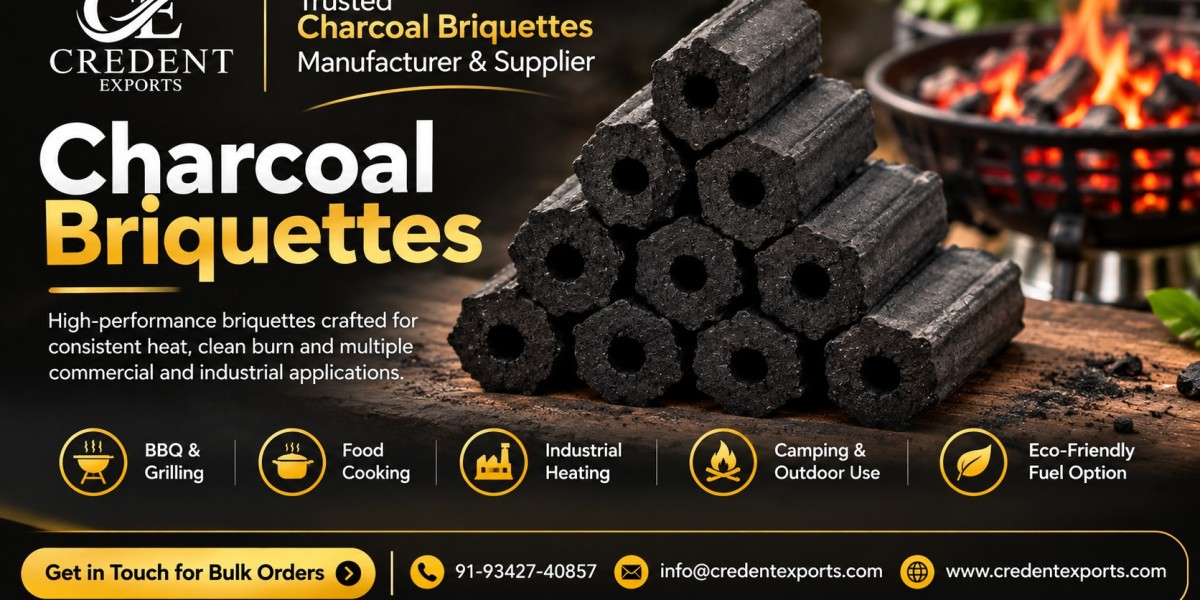


That sentence has ended more supplier relationships than price ever has. A buyer approves a polished 2 kg sample of Charcoal Briquettes, wires the advance, and opens 18 tonnes of crumbling, ash-heavy product forty days later. The sample was never the product. It was a performance. These 10 questions separate the factory that makes the same briquette every week from the one that makes a good briquette on request.
Specification: Five Questions About the Numbers on the Datasheet
Start with the paper. Every figure for Charcoal Briquettes should arrive with a test method and a lab report, not a brochure line.
1. What is the moisture at dispatch, and what will it be at my port?
Ask for both. A briquette that leaves at 6% can land at 10% after weeks in a humid container. The detail most buyers skip: moisture is quoted at the factory gate and never at the destination, so the supplier carries no risk and you carry all of it. Write a maximum moisture limit into the contract, measured on arrival.
2. What is the ash content, and who tested it?
Ash above 5% means less heat per kilo and white residue your customers will blame on your brand. Demand an independent lab report dated within the last 6 months. A certificate from the factory's own bench is a self-assessment.
3. What is the calorific value, gross or net?
A kcal/kg figure with no stated basis is decoration. Gross and net values for the same briquette differ, and some Charcoal Briquettes Suppliers quote whichever looks better on the quotation. Ask which one it is, and ask for the lab method.
4. How long does it burn, and under what test?
A 3-hour burn in a hookah and a 3-hour burn on a barbecue are different claims. Ask which test produced the number. Then run your own.
5. What binder is used, and how tight is the size tolerance?
Starch is the usual binder. Anything else needs a name and a safety data sheet. If cubes vary by more than 2 mm, your retail packs rattle and your packing line jams.
Objective: Five Criteria for Judging the Factory Behind the Datasheet
Specs describe a batch. These five questions describe a company. For each one, I've listed the bad answer, because that is usually what you hear first.
6. Can I audit the plant, or send a third party? Bad answer: "Photos are available." A real factory gives you a date.
7. What is your monthly capacity, and how much is already committed? Bad answer: "Unlimited." Nobody has unlimited capacity. A supplier who claims it will subcontract your order to a unit you never inspected.
8. Can you show export records from the last 12 months? Genuine Charcoal Briquettes Exporters can share redacted shipping documents and 2 buyer references. Bad answer: "That is confidential." Your advance payment is about to become confidential too.
9. What happens when a container fails inspection? Look for a written claim window, such as 15 days from unloading, and retained samples from every batch. Bad answer: "Our quality is never a problem." Every factory has problems. The good ones have a process.
10. What is included in the price, and how long is it valid? Bad answer: a per-tonne rate with no validity date and no mention of pallets, packing or documentation. Buyers who chase the lowest quote and skip this question deserve the surprise invoice that follows.
Benefits: What the Right Answers Protect
Good answers cost the supplier effort. They save you money. Working with vetted Charcoal Briquettes Manufacturers protects your margin in six specific ways:
Fewer rejected containers. A container held at port accrues demurrage daily, and no discount covers that.
Predictable burn time. Consistent product means repeat orders instead of complaints.
Faster claim settlement. Retained batch samples settle a dispute in days, not months of email.
Stable landed cost. A quote with a validity date shields your margin from a quiet price revision.
Cleaner packing runs. Tight size tolerance cuts rejects at your packing line.
Smoother customs clearance. Correct paperwork keeps a shipment out of the port yard.
Availability: Sourcing From India Without Sorting Through Traders
India has no shortage of production units, and that is the trouble. The number of Charcoal Briquettes Manufacturers in India keeps growing, and a good share of them are traders with a logo and a rented stockyard. Ask who owns the press, then ask to see it. Ask every quote to name the loading port too, because the inland haul to port is a cost line some quotes simply leave out.
About Us: Who We Are, and What We've Learned
We are Credent Exports, a B2B charcoal manufacturer and exporter based in India. We've shipped to buyers in 31 countries. That record taught us what a serious buyer asks on the second call, so we answer it on the first.
CTA: Send Us Your Specs and a Target Port
Send your target moisture, ash and packing requirements, plus your destination port, through the contact form on our website. We reply within 24 hours with a quote and a sample plan. Our minimum order is one 20-foot container. If our numbers can't meet yours, we'll say so in that first reply.
Conclusion: Run All Ten on the Next Quote
Ten questions won't guarantee a clean shipment. They will make a bad one visible before your advance leaves the bank. Any shortlist of serious Charcoal Briquettes Manufacturers should answer all ten without hesitation. Use them on your next quote, and by the second shipment you'll own a benchmark no brochure can give you.
FAQs
What moisture and ash limits should go into the contract?
Start with 8% moisture and 5% ash as hard maximums, then adjust by raw material. Coconut shell and hardwood behave differently, so one number for both is lazy. We'd be lying if we said tighter limits were free. They raise the price per tonne, and you'll see that in the quote.
How big should a trial order be?
A full 20-foot container, which is also our minimum. A pallet-sized trial hides stacking damage, humidity pickup and packing problems. The catch is capital. If that's too much for a first order, tell us, and we'll talk it through, but I won't promise a workaround before seeing your numbers.
What payment terms are normal on a first export order?
An advance with the balance against bill of lading copies is the common structure. Don't expect open credit on a first order. No serious exporter offers it. A letter of credit also works, though the bank charges land on your side.
How do I tell Charcoal Briquettes Suppliers in India from traders?
Ask for the plant address and the press model, then ask for a visit date. A trader dodges all three. One caution: some legitimate factories outsource peak-season volume, so ask what share, and get the answer in writing.
Do Charcoal Briquettes Wholesalers get different pricing from brand owners?
Volume and packing set the rate, not the title on your business card. A brand owner asking for private-label bags pays for printing and artwork approval time. Plain bulk bags usually cost less per tonne. The gap depends on the order, so I won't quote a percentage here.
Is bulk pricing different for Charcoal Briquettes Wholesalers in India and overseas importers?
In structure, yes. Export pricing carries export packing, documentation and port handling. A domestic price doesn't. Compare like with like, or a cheaper-looking domestic quote will mislead you. We'd rather quote both than guess which one fits.
What paperwork should Charcoal Briquettes Exporters in India send with every shipment?
At minimum: commercial invoice, packing list, bill of lading, certificate of origin and a batch lab report. If the lab report is missing, hold the balance payment until it arrives. Requirements vary by destination country, so confirm yours with your customs broker before the vessel sails.