

Payroll week shouldn't feel like a fire drill. Yet for many HR teams on ZingHR, it does — reports that take forever to load, dashboards missing the exact breakdown finance asked for, and employees flooding your inbox about missing payslips or attendance errors you have to untangle manually. When "real-time" dashboards can't actually answer real-time questions, something has to give.
If this sounds familiar, you're not alone — and you're not stuck. This guide walks through why HR teams are actively searching for a ZingHR alternative, what's driving the switch, and which platforms are worth evaluating in their place.
Why HR Teams Are Leaving ZingHR
Before recommending alternatives, it's worth understanding exactly what's pushing teams to look elsewhere. Patterns across review platforms and HR community discussions point to a consistent set of frustrations:
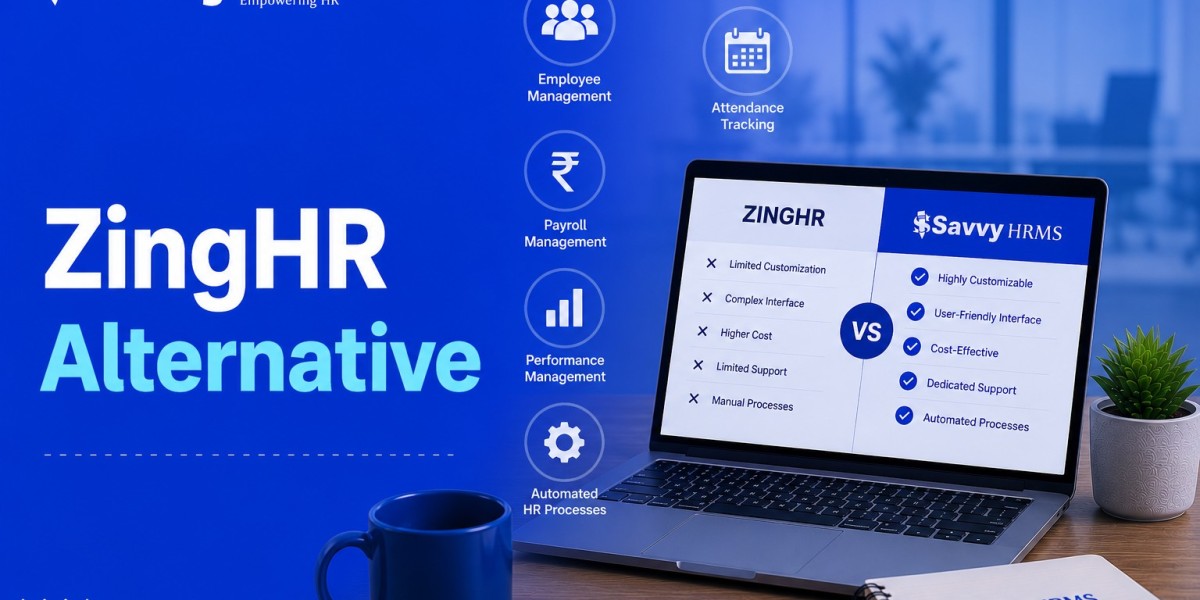
Performance issues. Slow report generation, occasional freezes, and general sluggishness — even on strong internet connections — show up repeatedly in user feedback.
Dated, unintuitive interface. Many HR admins describe spending extra time walking employees through basic tasks simply because the platform isn't self-explanatory.
Rigid configuration. Requests to adjust workflows or fields are often met with limitations, forcing teams to adapt their processes to the software instead of the other way around.
Slow, generic support. Response times stretching into days, often followed by the same suggested fix a team already tried, leave HR teams without timely help when payroll is on the line.
Weak integrations. Despite advertised connections to payroll, finance, and other systems, actual integration often falls back on manual CSV exports and imports.
Rocky implementation. Some organizations report long, poorly managed rollouts that left them with an incomplete or outdated final setup.
Session instability. Being logged out mid-task disrupts workflows and forces re-entry of information already completed.
Inconsistent mobile experience. Lag and errors on the mobile app make it unreliable for employees trying to manage attendance, leave, or payslips on the go.
None of these issues is a dealbreaker in isolation. Together, they add up to a system that HR teams end up working around rather than working with.
What to Look for in a ZingHR Alternative
Not every platform solves every pain point equally well. Before comparing specific tools, it helps to define what actually matters for your evaluation:
Payroll accuracy and compliance automation — especially handling of tax rules, statutory filings, and multi-location requirements without manual intervention.
A modern, genuinely intuitive interface — for both HR admins and employees, not just one or the other.
Real integration capability — not just advertised connectors, but working, low-maintenance links to accounting, biometric, and communication tools.
Responsive, knowledgeable support — ideally with a real person who understands your setup, not a generic ticket queue.
Transparent pricing — clear per-employee costs rather than pricing hidden behind sales calls.
Reliable mobile access — full functionality, not a stripped-down companion app.
Flexible configuration — the ability to adapt workflows to your process, not the reverse.
With that framework in mind, here's how the leading alternatives stack up.
Top ZingHR Alternatives to Consider
1. Savvy HRMS — Built for Teams That Want Software That Actually Works With Them
Savvy HRMS approaches HR and payroll with a simple premise: the software should adapt to how your team already works, not force your team to adapt to it. Instead of layering complexity on top of complexity, Savvy HRMS focuses on getting core workflows — payroll, attendance, leave, and employee self-service — right, with a clean interface that doesn't require a training manual to navigate.
What stands out:
Fast, responsive reporting that doesn't leave your finance team waiting when numbers are due
Configurable workflows that adapt to your existing approval chains rather than forcing a rigid structure
A genuinely mobile-friendly employee experience, so payslips, attendance, and leave requests work reliably on the go
Transparent, straightforward pricing without hidden module costs
Support that responds quickly and understands your specific setup, rather than offering generic copy-paste fixes
Best for: HR teams who are tired of fighting their software during payroll week and want a platform that stays fast, flexible, and genuinely usable as they grow.
2. Keka — Balanced All-in-One HRMS
Keka combines payroll, attendance, performance, and recruitment into a single connected platform. Its payroll engine is built to handle complex compliance requirements automatically, reducing the manual checks that eat up HR time. It also offers employee-facing tools like self-service portals and recognition features that encourage genuine adoption rather than reluctant use.
Best for: Small-to-mid-sized, tech-comfortable businesses that want payroll accuracy paired with a modern employee experience.
3. Zimyo — Employee Experience–Focused HR Suite
Zimyo covers the core HR fundamentals — payroll, attendance, recruitment, performance — while adding extras like asset management, policy workflows, and an internal helpdesk for employee queries. Its analytics are frequently praised for making attrition and workforce trends visible without manual spreadsheet work.
Best for: Growing companies willing to invest setup time in exchange for a wide range of built-in modules.
4. Deel — Global Payroll and Compliance Specialist
Deel is purpose-built for distributed teams, enabling hiring and payroll across a large number of countries without needing to establish local entities. It automates local tax rules, benefits, and compliance, along with dedicated contractor management tools.
Best for: Fast-growing companies with teams spread across many countries who need reliable multi-currency payroll and compliance support.
5. Paylocity — Scalable HR for the U.S. Mid-Market
Paylocity positions itself as an all-in-one HR, finance, and IT platform, particularly suited to U.S. compliance complexity — state taxes, garnishments, and benefits administration. Its self-service tools let employees manage much of their own HR needs without looping in HR staff for routine requests.
Best for: U.S.-based HR and finance teams managing multi-state payroll who also want built-in performance and engagement tools.
6. factoHR — Mobile-First HR and Payroll
factoHR is designed around mobile accessibility, giving both HR leaders and employees a phone-first way to manage payroll, attendance, and performance. Features like face-recognition login and geo-fenced attendance appeal to organizations with distributed or field-based teams.
Best for: Organizations with field staff who need mobile-first attendance tracking and fast, accessible employee tools.
7. Paychex — Reliable U.S.-Centric Payroll Platform
Paychex is best known for tightly connecting payroll with benefits and retirement plan administration, syncing deductions automatically rather than requiring separate management. It leans heavily into compliance support, handling tax filings and regulatory guidance.
Best for: Companies managing multi-state payroll alongside benefits like health insurance and 401(k) plans, where accurate syncing across systems is critical.
Quick Comparison at a Glance
Factor | Savvy HRMS | Keka | Zimyo | Deel | Paylocity | factoHR | Paychex |
Best for | Fast, flexible everyday HR | Balanced all-in-one | Feature-rich HR suite | Global distributed teams | U.S. mid-market | Mobile-first field teams | U.S. payroll + benefits |
Pricing transparency | Clear, upfront | Transparent | Tiered | Per seat | Quote-based | Tiered | Tiered |
Mobile experience | Strong | Full-featured | Good | Growing | Good | Advanced | Good |
Support responsiveness | Fast, personalized | Quick, practical | Hands-on during setup | Prompt for issues | Strong, knowledgeable | Helpful | Reliable |
Why Teams Are Choosing Savvy HRMS Over ZingHR
Several of ZingHR's most common complaints map directly to areas where Savvy HRMS was deliberately built to be different:
1. Speed that holds up during payroll week. Reports and dashboards are built to stay responsive even during high-load periods, rather than becoming a bottleneck exactly when accuracy and speed matter most.
2. A workflow that bends to your process. Instead of forcing HR teams into rigid, pre-set structures, Savvy HRMS supports configuration changes that actually reflect how your organization approves, tracks, and reports on HR data.
3. Support that doesn't leave you waiting. Rather than generic, delayed responses, Savvy HRMS support engages with your specific setup, aiming to resolve issues without the days-long back-and-forth many ZingHR users describe.
4. An interface people don't need training to use. Both HR admins and employees benefit from a design that prioritizes clarity, meaning less time spent explaining basic navigation and more time spent on actual HR work.
5. Reliable mobile access. Employees can handle attendance, leave, and payslip access on their phones without the lag or inconsistency that undermines trust in a mobile app.
How to Evaluate Your Shortlist
Once you've narrowed down a few contenders, a structured evaluation will serve you better than a feature checklist alone:
Request a live demo focused on your actual workflows — payroll runs, attendance reconciliation, and reporting — not just a generic feature tour.
Ask about implementation timelines and support during rollout. A platform that takes months to deploy delays every benefit you're switching for.
Check integration depth, not just integration claims. Ask specifically how the platform connects to your accounting software, biometric devices, or communication tools.
Talk to references or read verified reviews on platforms like G2 and Capterra, focusing on comments about reliability during peak periods like month-end payroll.
Confirm pricing in writing, including what's included in the base plan versus what requires paid add-ons.
Final Thoughts
ZingHR isn't necessarily a bad starting point — but for many growing HR teams, its performance issues, rigid configuration, and inconsistent support eventually outweigh the convenience of staying put. The good news is that switching doesn't mean settling for another set of compromises.
Whether your priority is global payroll compliance, mobile-first attendance, or an all-in-one HR suite, there's a genuinely better fit available. If what you're really after is software that adapts to your team instead of forcing your team to adapt to it, Savvy HRMS is built with exactly that in mind — and it's worth seeing for yourself before your next payroll cycle rolls around.
Conclusion
ZingHR isn't necessarily a bad starting point — but for many growing HR teams, its performance issues, rigid configuration, and inconsistent support eventually outweigh the convenience of staying put. The good news is that switching doesn't mean settling for another set of compromises.
Each alternative on this list solves a different piece of the puzzle. Deel simplifies global payroll across borders. Paylocity balances HR, finance, and IT for the U.S. mid-market. factoHR gives field-based teams a mobile-first edge. Paychex ties payroll tightly to benefits and compliance. Zimyo and Keka both offer broad, feature-rich suites for teams ready to invest in setup.
Then there's Savvy HRMS, which focuses on getting the everyday fundamentals right: fast reporting that holds up during payroll week, workflows that bend to your process instead of the other way around, and support that actually responds when you need it. If what you're really after is software that adapts to your team instead of forcing your team to adapt to it, Savvy HRMS is built with exactly that in mind — and it's worth seeing for yourself before your next payroll cycle rolls around.
Frequently Asked Questions
1. Why do HR teams look for a ZingHR alternative?
Most switches are driven by a combination of slow performance during high-load periods like payroll week, a dated and unintuitive interface, rigid configuration options, and support that responds too slowly to resolve time-sensitive issues.
2. Is Savvy HRMS a good fit for small and mid-sized businesses?
Yes. Savvy HRMS is built to stay fast and easy to configure as teams grow, making it a practical fit for small and mid-sized businesses that want reliable payroll and attendance management without the complexity of enterprise-heavy platforms.
3. How does Savvy HRMS compare to ZingHR on support?
Where ZingHR users commonly report multi-day waits and generic fixes, Savvy HRMS is designed around faster, more personalized support that engages directly with your specific setup rather than routing you through a generic ticket queue.
4. Which ZingHR alternative is best for global or distributed teams?
Deel is generally the strongest fit for organizations hiring and paying employees or contractors across many countries, thanks to its built-in local compliance and multi-currency payroll handling.
5. Which alternative offers the most transparent pricing?
Savvy HRMS and Keka both publish clear, upfront per-employee pricing, making it easier to budget accurately compared to platforms that require a sales call to get a quote.
6. Do these alternatives support mobile access for employees?
Yes, all the platforms covered offer employee-facing mobile apps for tasks like attendance, leave requests, and payslip access — though reliability and feature depth vary. Savvy HRMS and Keka are noted for consistent, full-featured mobile performance.
7. How long does it typically take to switch from ZingHR to a new HRMS?
Implementation timelines vary by platform and company size, but a well-managed switch — with clean data migration and phased rollout — can often be completed in a few weeks. It's worth asking any vendor for a realistic timeline specific to your team before committing.