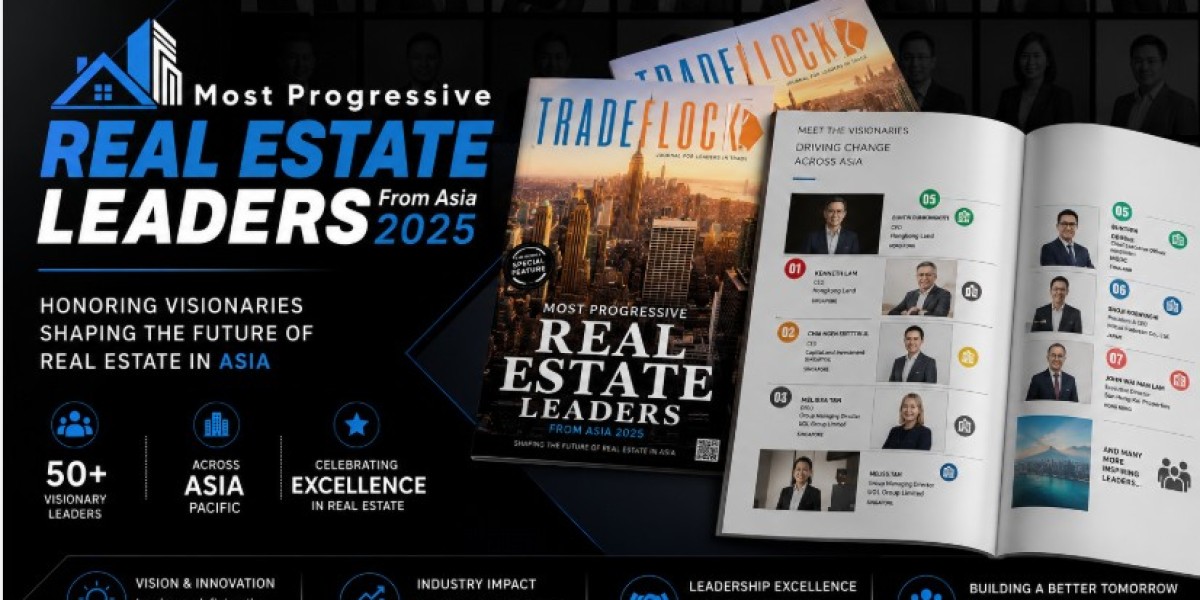


Read the full feature and see who made this year's list: Real Estate Leaders from Asia 2025.
Real estate in Asia has always been closely tied to the region's rapid economic growth, but 2025 marks a turning point where sustainability and technology are becoming just as important as square footage and location. The Real Estate Leaders from Asia 2025 list reflects this evolution, featuring developers and executives who are integrating smart building technology, energy-efficient design, and community-focused planning into their projects rather than defaulting to conventional high-density development that has historically defined much of the region's urban growth.
Land Scarcity as a Catalyst for Innovation
Nowhere is this shift more visible than in Singapore, where extreme land scarcity has forced developers to innovate out of necessity rather than choice. Vertical greenery, mixed-use zoning, and integrated public-private developments have become standard practice rather than novelty features. Leaders featured on this list from Singapore have effectively turned constraint into a competitive advantage, developing expertise in dense, sustainable urban design that's now being exported to other land-constrained markets across the region.
Addressing Housing Affordability at Scale
In contrast, markets like India face a different but equally pressing challenge: rapidly expanding urban populations combined with significant affordable housing shortages. The leaders recognized on this list working in the Indian market have taken varied approaches to this problem, from large-scale affordable housing developments to innovative financing models that make homeownership more accessible to middle and lower-income buyers. Several have also become influential voices in policy conversations, working directly with government housing initiatives to shape regulatory frameworks around urban development.
This kind of public-private collaboration is becoming increasingly common across the list, with developers moving beyond pure commercial interests to take on a more active role in addressing systemic housing challenges facing their respective countries.
The Rise of Proptech
A notable trend among this year's honorees is the accelerating adoption of proptech solutions — technology platforms designed to make real estate transactions more transparent, efficient, and accessible. AI-driven property management systems are helping developers optimize energy usage and maintenance costs across large portfolios, while blockchain-based transaction platforms are beginning to address longstanding issues around transparency in property ownership records.
This technological shift is particularly significant in markets like Indonesia and the Philippines, where digital property records are still catching up to more developed neighbors, and where opaque, paper-heavy transaction processes have historically created friction and opportunities for fraud. Leaders pioneering proptech adoption in these markets are effectively modernizing systems that, in some cases, hadn't seen meaningful update in decades.
Sustainability as Core Strategy, Not Marketing
It's worth noting that sustainability commitments across this year's list go well beyond marketing language. Many featured developers have committed to specific, measurable green building certifications across their portfolios, and several have begun incorporating climate resilience planning into new developments — an increasingly necessary consideration given the region's exposure to flooding, extreme heat, and other climate-related risks.
This represents a meaningful shift from the past, where sustainability was often treated as a premium feature for high-end developments rather than a baseline expectation across all price points and project types.
Mixed-Use Development and Changing Urban Lifestyles
Another consistent theme is the move toward mixed-use developments that integrate residential, commercial, and recreational spaces within single projects. This approach reflects changing urban lifestyle preferences, particularly among younger buyers who increasingly prioritize walkability and integrated amenities over the traditional model of separate residential suburbs and commercial districts.
Developers leading this shift are essentially betting on a longer-term change in how Asian cities function, moving away from car-dependent sprawl toward more compact, amenity-rich urban environments.
Looking Ahead
The Real Estate Leaders from Asia 2025 list ultimately reflects an industry grappling with genuine complexity — balancing rapid urbanization demands with sustainability commitments, affordability concerns with commercial viability, and traditional development practices with emerging technology. The leaders featured have found different ways to navigate these tensions, offering a useful cross-section of where Asian real estate development is heading.








