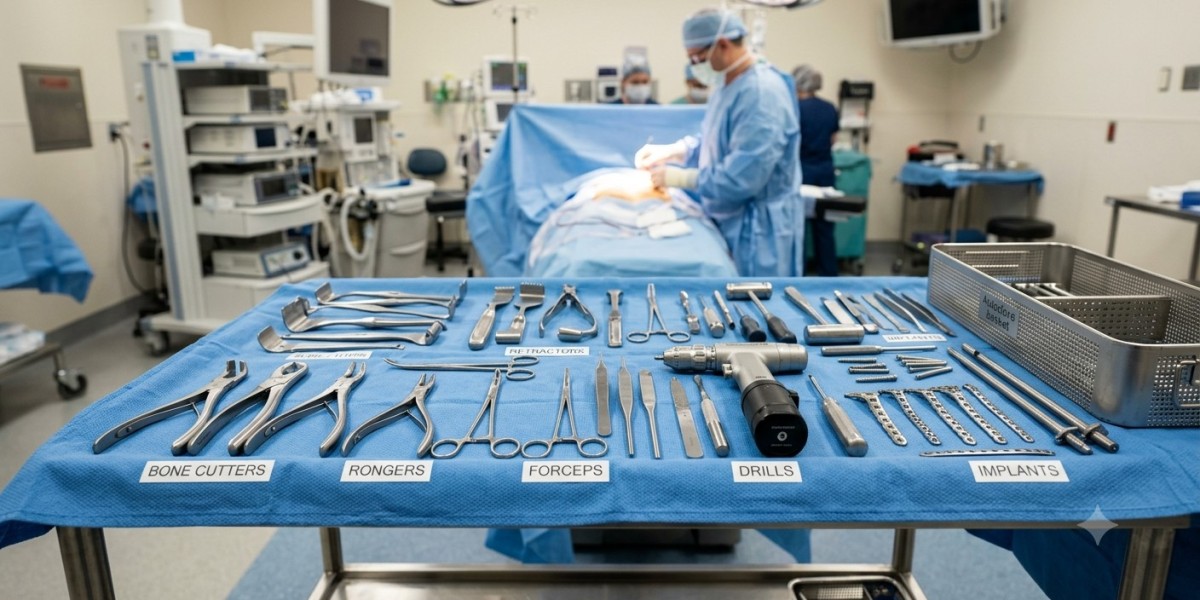


Orthopedic instruments are essential surgical tools used to diagnose, repair, and treat conditions affecting the bones, joints, muscles, ligaments, and tendons. These instruments allow surgeons to perform procedures with greater precision, safety, and confidence. Whether treating a simple fracture or performing a complex joint replacement, orthopedic instruments play a key role in helping patients recover and return to their normal lives.
The healthcare industry depends on high-quality surgical tools because they improve treatment results and reduce the risk of complications. Orthopedic instruments are carefully designed for different types of bone and joint procedures and are made from durable medical-grade materials. Along with Cardiovascular Instruments and ENT Instruments, these tools are an important part of every well-equipped operating room.
What Are Orthopedic Instruments?
Orthopedic instruments are specialized surgical tools designed for procedures involving the musculoskeletal system. They help surgeons cut, drill, shape, hold, measure, and repair bones and surrounding tissues during surgery.
Each instrument serves a specific purpose. Some tools stabilize broken bones, while others prepare bone surfaces for implants or remove damaged tissue. Their design allows surgeons to work with greater accuracy while protecting healthy tissues.
Modern orthopedic instruments are built to withstand repeated sterilization and maintain excellent performance throughout many surgical procedures.
Uses in Fracture Repair
One of the most common uses of orthopedic instruments is fracture repair. Broken bones often require surgical treatment when they cannot heal properly on their own.
Surgeons use bone holding forceps to position fractured bones correctly before securing them with screws, plates, rods, or pins. Bone drills create precise holes for fixation devices, while measuring instruments help ensure proper alignment.
Accurate fracture repair supports faster healing, improves bone stability, and helps patients regain normal movement more quickly.
Uses in Joint Replacement Surgery
Joint replacement surgery is another important area where orthopedic instruments are widely used. Patients suffering from severe arthritis or joint damage may require replacement of the hip, knee, shoulder, or other joints.
Specialized instruments help surgeons remove damaged bone, prepare the joint, and position artificial implants accurately. Measuring devices assist in selecting the correct implant size for each patient.
Proper use of orthopedic instruments improves implant positioning, reduces pain, restores movement, and increases the long-term success of joint replacement procedures.
Uses in Spinal Surgery
Orthopedic instruments are also used during spinal surgery to treat conditions such as spinal fractures, deformities, disc problems, and spinal instability.
Surgeons use specialized retractors, drills, forceps, and fixation instruments to access the spine safely and stabilize affected areas. Precision is especially important because the spinal cord and surrounding nerves are highly sensitive.
Reliable orthopedic instruments allow surgeons to perform these delicate procedures while reducing the risk of complications.
Uses in Sports Injury Treatment
Sports injuries are common among professional athletes and active individuals. Torn ligaments, damaged tendons, dislocated joints, and bone fractures often require orthopedic surgery.
Orthopedic instruments support procedures that repair damaged tissues and restore joint stability. Surgeons use these tools to reconstruct ligaments, repair tendons, and stabilize fractured bones.
Successful treatment allows patients to recover safely and return to sports or daily physical activities with improved strength and movement.
Uses in Bone Reconstruction
Some patients require bone reconstruction after serious injuries, infections, or tumor removal. Orthopedic instruments are essential during these complex procedures.
Surgeons use cutting tools, drills, bone graft instruments, and fixation devices to rebuild damaged bone structures. Careful shaping and positioning help restore normal function while improving patient mobility.
Bone reconstruction often requires high precision, making reliable orthopedic instruments essential for successful outcomes.
Uses in Correcting Bone Deformities
Orthopedic instruments are used to correct bone deformities caused by birth conditions, injuries, or diseases. These procedures help improve bone alignment, joint function, and overall movement.
During corrective surgery, surgeons reshape bones, adjust joint positions, and secure the corrected structures using specialized instruments. Accurate measurements ensure that the bones heal in the proper position.
These procedures help patients experience better mobility, reduced pain, and improved quality of life.
Uses in Implant Placement
Orthopedic implants such as screws, plates, rods, and artificial joints are commonly used to support bone healing and joint replacement. Orthopedic instruments help place these implants accurately.
Specialized measuring tools, drills, and alignment devices ensure that implants fit properly and remain secure. Proper implant placement reduces complications and improves long-term surgical success.
Accurate positioning also helps patients recover more comfortably while restoring normal movement.
Importance of Sterilization During Instrument Use
The safe use of orthopedic instruments depends on proper cleaning and sterilization. Every instrument must be thoroughly cleaned after surgery to remove blood, tissue, and other materials.
Hospitals use approved sterilization methods to eliminate bacteria and reduce the risk of infection. Medical staff also inspect instruments regularly to ensure they remain in excellent condition.
Proper maintenance extends the life of orthopedic instruments while protecting both patients and healthcare professionals.
Comparison with Other Surgical Instruments
Every surgical specialty requires instruments designed for specific procedures. While orthopedic instruments focus on bone and joint surgery, Cardiovascular Instruments are used for operations involving the heart and blood vessels. These instruments are designed to work with delicate cardiovascular tissues and support highly specialized procedures.
Likewise, ENT Instruments are used during surgeries involving the ear, nose, and throat. Their smaller size and fine design allow surgeons to work accurately in narrow surgical areas.
Although these instruments serve different medical fields, they all contribute to safe surgery and improved patient care.
Future Uses of Orthopedic Instruments
Medical technology continues to expand the uses of orthopedic instruments. Robotic surgery, computer-assisted navigation, and three-dimensional imaging are improving surgical precision and helping surgeons perform more advanced procedures.
New manufacturing techniques are producing lighter, stronger, and more durable instruments that improve surgeon comfort and patient safety. These improvements allow healthcare providers to perform increasingly complex orthopedic surgeries with greater confidence.
At the same time, Cardiovascular Instruments and ENT Instruments are also benefiting from technological advances that improve treatment quality across many medical specialties.
The future of orthopedic surgery will continue to depend on innovative instruments that support better patient outcomes and faster recovery.
Conclusion
Orthopedic instruments have many important uses in modern healthcare. They support fracture repair, joint replacement, spinal surgery, sports injury treatment, bone reconstruction, deformity correction, and implant placement. Their precision allows surgeons to perform complex procedures safely while improving patient recovery and long-term treatment success.
Proper sterilization, careful maintenance, and the use of high-quality materials ensure that these instruments remain reliable for repeated surgical use. Alongside Cardiovascular Instruments and ENT Instruments, orthopedic instruments continue to play a vital role in delivering safe and effective medical care.
As technology advances, the uses of orthopedic instruments will continue to expand, helping surgeons perform more accurate procedures and providing patients with better treatment outcomes for many years to come.
More info: AMG Medical








