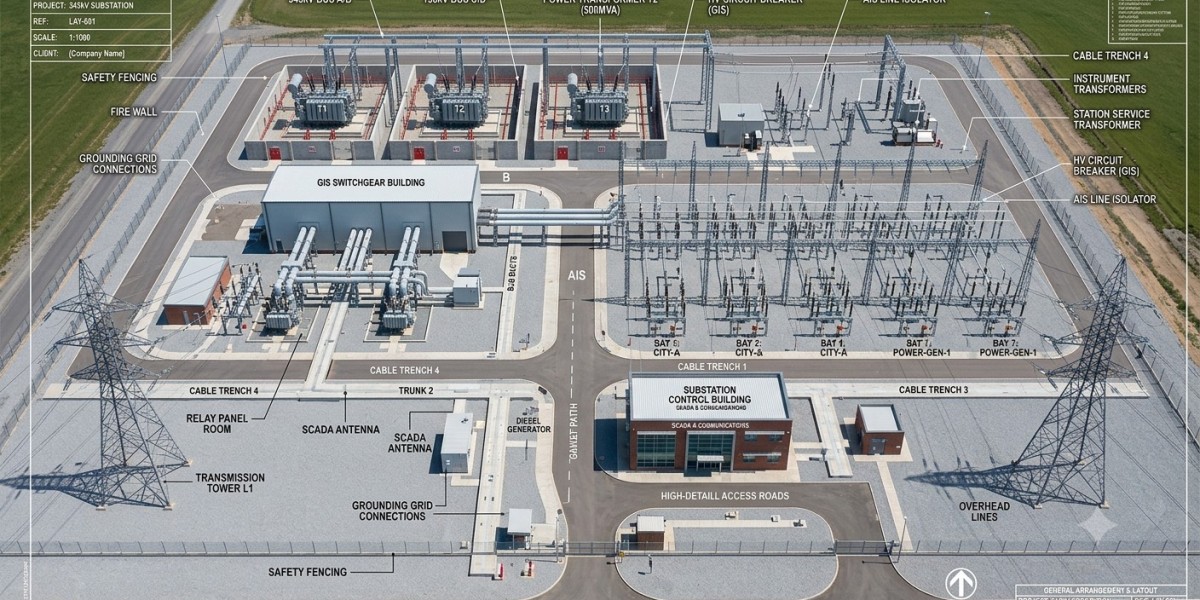


As electricity demand continues to grow, utilities and industrial facilities face increasing pressure to build reliable, efficient, and compact power infrastructure. Expanding cities, renewable energy integration, and aging electrical assets have created new challenges for transmission and distribution networks. Traditional air-insulated substations have served the industry well for decades, but they are not always the best solution where land is limited or environmental conditions are demanding.
This is where the gas insulated system has become a game changer. Modern gas insulated substation (GIS) technology delivers exceptional reliability while significantly reducing the physical footprint of high-voltage installations. Today, utilities around the world rely on GIS power system solutions to improve grid resilience, simplify maintenance, and support long-term infrastructure expansion.
In this article, we'll explore why gas insulated technology is transforming high-voltage networks and why it has become an essential part of modern power engineering.
What Is a Gas Insulated System?
A gas insulated system is a high-voltage electrical installation where key components—including circuit breakers, disconnect switches, busbars, current transformers, and voltage transformers—are enclosed within grounded metal compartments filled with insulating gas.
Unlike conventional air-insulated substations that require large clearances between energized components, GIS equipment uses highly effective insulation inside sealed enclosures. This compact design allows equipment to be installed much closer together while maintaining excellent electrical performance.
A modern gas insulated substation can operate across voltage levels ranging from medium voltage to extra-high voltage transmission systems, making it suitable for utilities, industrial plants, renewable energy projects, offshore facilities, and urban substations.
Why Utilities Are Choosing GIS Power Systems
The growing popularity of the GIS power system is driven by several practical advantages that directly improve project performance.
Compact Design
One of GIS technology's greatest strengths is its remarkably small footprint.
Compared to traditional substations, a gas insulated substation may require up to 80% less land, making it ideal for:
- Dense urban developments
- Industrial facilities
- Offshore platforms
- Underground substations
- Renewable energy sites
- Mountainous or difficult terrain
Where land availability is limited or expensive, GIS provides a practical engineering solution.
Superior Reliability
Reliability remains one of the most important performance indicators for any transmission network.
Because a gas insulated system seals energized components inside grounded metal enclosures, they are protected from:
- Dust
- Moisture
- Salt contamination
- Pollution
- Wildlife interference
- Extreme weather
This protection significantly reduces the likelihood of external faults and improves long-term operational stability.
Supporting Renewable Energy Integration
Renewable energy projects require flexible and dependable electrical infrastructure.
Large solar farms, wind power facilities, battery energy storage systems, and hybrid generation plants often connect to transmission networks through compact substations.
A GIS power system offers several benefits for renewable energy developers:
- High availability
- Fast installation
- Reduced maintenance
- Excellent fault performance
- Flexible modular expansion
As renewable generation continues to expand worldwide, GIS technology provides the dependable switching and protection needed to maintain stable grid operation.
Lower Maintenance and Longer Equipment Life
One of the major operational benefits of a gas insulated substation is reduced maintenance.
Traditional air-insulated substations require frequent inspections due to exposure to environmental conditions. Dust accumulation, corrosion, humidity, and wildlife can all affect equipment performance.
By comparison, GIS equipment is factory-assembled, sealed, and protected from outside contaminants.
Benefits include:
- Fewer routine inspections
- Reduced cleaning requirements
- Lower maintenance costs
- Improved equipment lifespan
- Higher system availability
These advantages are particularly valuable for remote substations where maintenance visits can be expensive and time-consuming.
Improved Safety for Personnel and Equipment
Safety is a critical priority in every high-voltage project.
A gas insulated system enhances workplace safety because energized components remain enclosed within grounded metal housings.
This design offers several important benefits:
- Reduced risk of accidental contact
- Better arc fault containment
- Enhanced protection against environmental hazards
- Improved operational security
- Lower exposure during maintenance activities
Modern GIS installations also integrate advanced protection relays, digital monitoring systems, and intelligent automation platforms that further improve operational safety.
Digitalization Is Making GIS Even Smarter
The power industry is rapidly embracing digital technologies.
Today's GIS power system installations increasingly include:
- Online condition monitoring
- Partial discharge detection
- Digital substations
- Remote diagnostics
- SCADA integration
- Predictive maintenance
- Intelligent asset management
These technologies allow utilities to monitor equipment health in real time, identify developing issues before failures occur, and optimize maintenance schedules based on actual operating conditions.
Digital GIS solutions also improve asset utilization while reducing operational costs over the entire lifecycle of the substation.
Engineering Considerations for Successful GIS Projects
Although GIS offers numerous benefits, successful implementation depends on careful engineering and planning.
Key design considerations include:
- Electrical system studies
- Short-circuit analysis
- Protection coordination
- Grounding design
- Equipment layout optimization
- Environmental compliance
- Cable routing
- Future expansion planning
Comprehensive engineering studies ensure that the gas insulated substation integrates seamlessly with the surrounding transmission network while meeting reliability, safety, and regulatory requirements.
Experienced engineering partners can also help utilities evaluate lifecycle costs, optimize equipment selection, and ensure compliance with international standards.
Conclusion
The transition toward smarter, cleaner, and more reliable electrical infrastructure is accelerating across the global energy sector. As utilities modernize aging networks and integrate increasing amounts of renewable generation, compact and dependable substation technologies have become more important than ever.
A gas insulated system offers exceptional reliability, space efficiency, improved safety, and lower maintenance requirements compared to conventional air-insulated designs. These advantages make the gas insulated substation a preferred solution for urban developments, industrial facilities, renewable energy projects, and critical transmission infrastructure.
Combined with digital monitoring, intelligent automation, and advanced engineering practices, the modern GIS power system is helping utilities build resilient high-voltage networks capable of meeting tomorrow's energy demands. Organizations investing in GIS technology today are positioning themselves for greater operational efficiency, enhanced grid reliability, and sustainable long-term growth in an increasingly electrified world.








