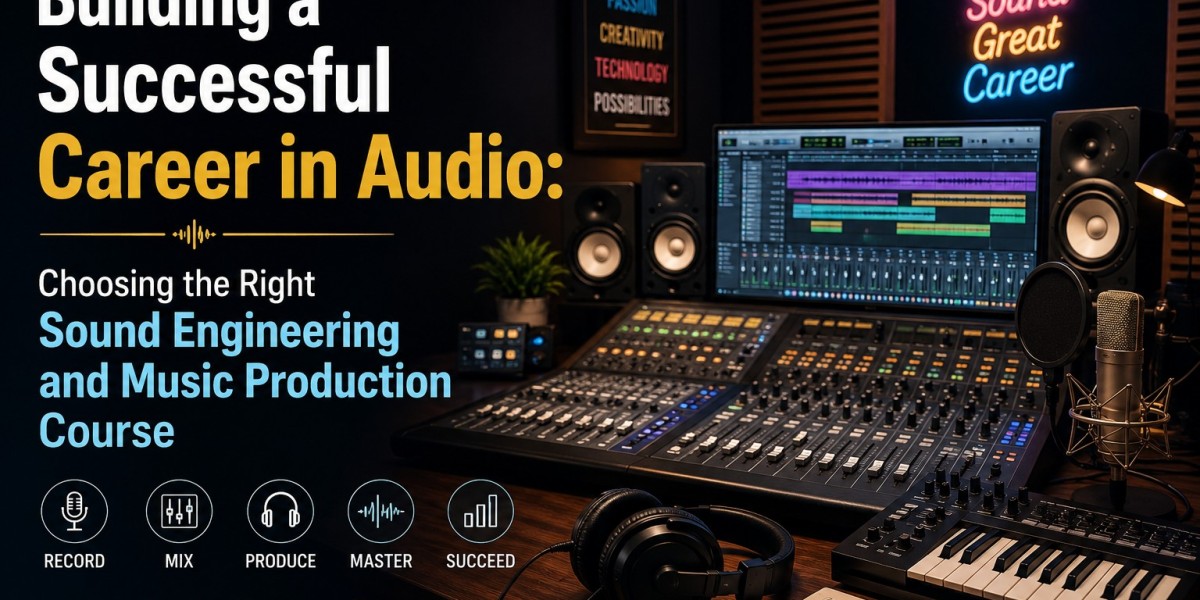


Develop Technical Expertise and Creative Skills for the Modern Audio Industry
The audio industry has expanded significantly with the growth of music streaming, films, television, advertising, gaming, podcasts, and digital content. This growth has created exciting opportunities for individuals who are passionate about sound and want to build professional careers in audio production. However, entering this competitive field requires more than creativity alone. Students need technical knowledge, practical experience, and an understanding of modern audio technology.
Professional education can help aspiring audio professionals develop the skills required to work with recording equipment, digital audio workstations, microphones, mixing consoles, and other studio tools. A well-structured course can also introduce students to different aspects of the audio industry, helping them identify their interests and choose suitable career paths.
Understanding the Role of Sound Engineering Education
Sound engineering involves the technical and creative management of audio. Sound engineers may work in recording studios, film production, television, radio, live concerts, advertising, gaming, and other media industries. Their responsibilities can include recording, editing, mixing, sound reinforcement, and maintaining audio quality throughout a production.
A strong educational foundation can help students understand the science and technology behind sound. Topics such as acoustics, signal flow, microphone techniques, audio equipment, digital recording, and studio operations are often important parts of professional audio education.
Students can also benefit from learning how different audio components interact with one another. Understanding signal routing, frequency response, gain structure, and audio processing can help them approach production tasks with greater confidence.
Developing Practical Studio Skills
Audio production is a practical field, and hands-on experience plays an important role in professional development. Classroom learning can provide theoretical knowledge, but practical sessions allow students to apply those concepts to real projects.
Students can gain experience in setting up recording sessions, selecting appropriate microphones, managing audio tracks, editing recordings, and creating balanced mixes. They may also work with different types of audio equipment and software, allowing them to become familiar with professional workflows.
Practical training can also encourage students to experiment with sound. Through regular projects and assignments, they can explore different recording techniques, mixing approaches, and creative production methods. This experience can help them identify their strengths and gradually develop an individual style.
Exploring Sound Engineering Colleges in Bangalore
Bangalore has developed into an important hub for technology, entertainment, media, and creative industries. Its vibrant professional environment makes it an attractive destination for students interested in pursuing careers related to audio and music.
Sound Engineering Colleges in Bangalore can provide students with opportunities to learn essential concepts related to audio production and sound engineering. Depending on the program, students may study areas such as recording engineering, mixing, mastering, live sound, acoustics, sound design, and post-production.
The city's growing media ecosystem can also provide exposure to different forms of professional audio work. Students interested in sound engineering can explore potential career paths in music production, film audio, television, advertising, gaming, broadcasting, and digital media.
When selecting an institution, students should consider the course curriculum, practical training facilities, studio access, equipment, faculty experience, and project-based learning opportunities. A program that balances theoretical concepts with hands-on practice can help students develop a more complete understanding of the profession.
Understanding the Importance of Music Production
Music production is another exciting area within the broader audio industry. A music producer may be involved in developing a musical idea, arranging compositions, recording performers, editing tracks, and shaping the overall sound of a production.
Modern producers often work with digital audio workstations, virtual instruments, MIDI controllers, synthesizers, audio plugins, and other creative tools. Learning to use these technologies effectively can help students turn creative concepts into professional productions.
Music production also requires an understanding of composition and arrangement. Students can benefit from learning about melody, harmony, rhythm, song structure, instrumentation, and creative direction. These skills can help them communicate effectively with musicians and contribute meaningfully to collaborative projects.
Building Skills in Recording, Mixing, and Mastering
Recording is one of the fundamental stages of music production. Students can learn how to capture vocals and instruments effectively by understanding microphone selection, placement, room acoustics, and recording techniques.
Mixing involves bringing different audio elements together to create a balanced and engaging final track. Students can explore techniques involving equalization, compression, reverb, delay, automation, and stereo imaging. These tools can help producers shape the character and clarity of individual tracks.
Mastering represents another important stage in the production process. It involves preparing a final mix for distribution while maintaining suitable clarity, dynamics, and consistency. Understanding these stages can give aspiring producers a complete view of the production workflow.
The Value of Music Production Courses in Chennai
Chennai has a strong cultural and creative heritage, making it an appealing location for individuals interested in music and audio careers. The city's entertainment and media sectors offer opportunities for people with professional production skills.
Music Production Courses in Chennai can help aspiring producers develop practical knowledge of modern music creation. Students may learn about recording, composition, arrangement, editing, mixing, mastering, sound design, and digital production workflows.
Hands-on learning can be especially valuable because students can apply theoretical concepts to actual projects. Working on individual productions and collaborating with other creative professionals can help them improve their technical abilities while building confidence.
Students can also benefit from creating a portfolio during their education. Original compositions, recorded sessions, mixes, and other projects can demonstrate their skills to potential employers, clients, and collaborators. A strong portfolio can be useful for those planning to pursue freelance work or independent music careers.
Career Opportunities in the Audio Industry
Professional training in sound engineering and music production can open doors to several career possibilities. Depending on their interests and specialization, graduates may explore roles such as recording engineer, mixing engineer, mastering engineer, music producer, sound designer, audio editor, live sound engineer, or post-production professional.
The skills gained through audio education can also be applied to industries beyond traditional music. Film production, television, advertising, gaming, podcasting, online media, and broadcasting all require professionals who understand sound.
Some professionals may choose to work with established studios and production companies, while others may develop independent careers. Freelancing can provide opportunities to work with artists, filmmakers, content creators, and businesses on a variety of projects.
Choosing the Right Course for Career Goals
Selecting the right course requires careful consideration of individual interests and career objectives. Students should evaluate the curriculum and determine whether it covers the subjects that align with their ambitions.
Practical studio access, experienced instructors, modern equipment, and project-based assignments can significantly improve the learning experience. Students should also consider opportunities to collaborate with musicians, filmmakers, and other creative professionals.
Continuous learning is equally important in the audio industry. Technology continues to evolve, and professionals need to stay familiar with new software, production techniques, and industry trends. Developing a habit of experimentation and regular practice can help students remain adaptable throughout their careers.
Conclusion
A career in sound engineering or music production can combine creativity, technology, and professional growth. The right educational program can provide students with a strong foundation while helping them develop practical skills and industry awareness. By gaining hands-on experience, building a portfolio, and continuously improving their knowledge, aspiring audio professionals can prepare themselves for diverse opportunities across the modern entertainment and media landscape.








