

Quick Answer
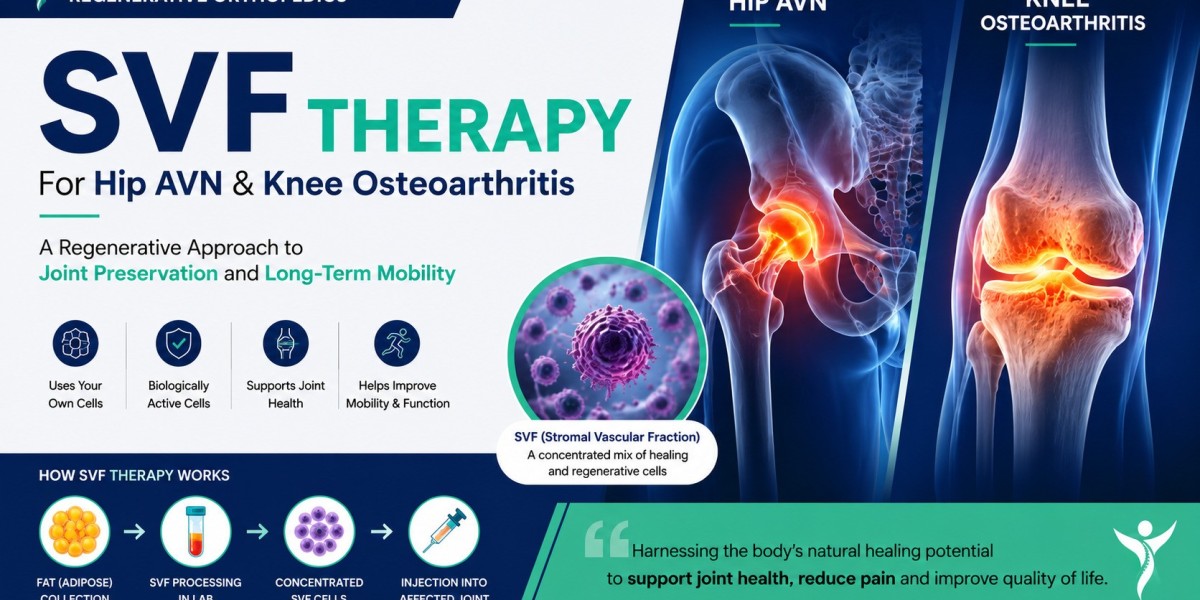
SVF (Stromal Vascular Fraction) therapy is becoming an increasingly recognized regenerative treatment approach for selected patients with Hip Avascular Necrosis (AVN) and Knee Osteoarthritis in India. By utilizing regenerative cells obtained from a patient's own adipose (fat) tissue, SVF therapy is being integrated into modern orthopedic care with the goal of preserving natural joints, supporting mobility, and delivering personalized treatment based on individual clinical needs.
A New Chapter in Orthopedic Medicine
Orthopedic treatment has traditionally focused on relieving pain, restoring movement, and performing surgery when joint damage became severe.
Today, the approach is much broader.
Specialists now recognize the importance of identifying joint diseases at an early stage and developing treatment plans that preserve natural joint structures whenever medically appropriate. This philosophy has accelerated the adoption of regenerative medicine within orthopedic practice.
Among the regenerative options available today, SVF therapy has become one of the most discussed treatments for selected patients with Hip AVN and Knee Osteoarthritis.
Understanding SVF Therapy
SVF, or Stromal Vascular Fraction, is a regenerative cellular fraction obtained from adipose tissue.
Unlike conventional therapies that primarily focus on symptom control, SVF therapy utilizes biologically active cells naturally present within a patient's own fat tissue.
The stromal vascular fraction may contain:
- Mesenchymal stromal cells
- Endothelial progenitor cells
- Pericytes
- Fibroblasts
- Immune-modulating cells
- Vascular-associated cells
These cellular components continue to be studied for their role in supporting tissue biology, vascular health, and regenerative processes.
Why Has SVF Therapy Become Increasingly Relevant?
The growing recognition of SVF therapy reflects major advances in both orthopedic science and regenerative medicine.
Several factors have contributed to its expanding role:
- Earlier diagnosis through high-resolution MRI
- Better understanding of musculoskeletal biology
- Increased focus on preserving natural joints
- Personalized treatment planning
- Growing physician experience with regenerative procedures
As these developments continue, SVF therapy has become an important part of discussions surrounding modern orthopedic care.
Why Hip AVN Requires an Individualized Approach
Hip AVN develops when blood supply to the femoral head becomes compromised.
Reduced circulation may gradually weaken the bone and eventually affect hip function.
Patients commonly report:
- Hip pain
- Groin pain
- Stiffness
- Difficulty walking
- Reduced range of motion
Because disease progression varies considerably, no single treatment is appropriate for every patient.
Modern orthopedic care relies on MRI findings, disease staging, and functional assessment before developing an individualized treatment strategy.
For selected patients, SVF therapy may become part of these discussions as specialists evaluate regenerative approaches aimed at preserving the natural hip joint.
Why Knee Osteoarthritis Is Also Benefiting from Regenerative Thinking
The understanding of Knee Osteoarthritis has changed significantly.
It is now recognized as a disease affecting the entire joint rather than cartilage alone.
Research has demonstrated changes involving:
- Articular cartilage
- Bone
- Synovial membrane
- Ligaments
- Joint capsule
- Overall joint biology
This broader understanding has encouraged orthopedic specialists to consider regenerative therapies that support the complete joint environment.
SVF therapy has therefore become one of the regenerative treatment options discussed for carefully selected Knee Osteoarthritis patients.
Why More Patients Are Choosing SVF Therapy Consultations
Patients today are actively involved in treatment planning.
Rather than waiting until symptoms become severe, many individuals seek orthopedic consultation soon after diagnosis to understand every available option.
Common questions include:
- Can the natural joint be preserved?
- Is regenerative medicine suitable for my condition?
- What treatment options exist before major surgery?
- Am I an appropriate candidate for SVF therapy?
This proactive approach has significantly increased awareness of regenerative orthopedic care throughout India.
Evidence-Based Medicine Remains the Foundation
Although regenerative medicine continues to advance rapidly, treatment recommendations should always be based on careful medical evaluation.
Orthopedic specialists assess:
- Clinical examination
- MRI findings
- Disease stage
- Functional ability
- Lifestyle requirements
- Overall health
This evidence-based process ensures that SVF therapy is considered only after a comprehensive evaluation and appropriate patient selection.
Why SVF Therapy Continues to Gain Recognition
The increasing acceptance of SVF therapy reflects the combined impact of scientific research, physician expertise, and patient education.
As regenerative medicine becomes more integrated into orthopedic practice, both clinicians and patients are developing a deeper understanding of biologically based treatment strategies.
This has positioned SVF therapy as one of the most recognized regenerative approaches for selected patients with Hip AVN and Knee Osteoarthritis in India.
Looking Ahead
The future of orthopedic medicine is expected to combine traditional orthopedic principles with advances in regenerative science.
Rather than replacing established treatments, regenerative therapies such as SVF are becoming part of comprehensive, patient-centered care plans.
As clinical research, physician expertise, and patient awareness continue to grow, SVF therapy is likely to remain an important component of modern orthopedic treatment discussions focused on preserving mobility and improving long-term joint health.
Conclusion
SVF therapy is steadily establishing itself as an important regenerative treatment approach for selected patients with Hip AVN and Knee Osteoarthritis in India. Its growing role reflects advances in regenerative medicine, improved diagnostic capabilities, personalized treatment planning, and the increasing emphasis on joint preservation.
As orthopedic care continues to evolve, SVF therapy is expected to remain a valuable part of evidence-informed regenerative orthopedic practice, helping patients and specialists explore treatment strategies that prioritize natural joint preservation, mobility, and long-term musculoskeletal function.
TL;DR
SVF therapy uses regenerative cells obtained from a patient's own adipose tissue and is increasingly recognized in India for selected patients with Hip AVN and Knee Osteoarthritis. Growing research, physician experience, and personalized orthopedic care continue to strengthen its role in modern regenerative medicine and joint preservation.