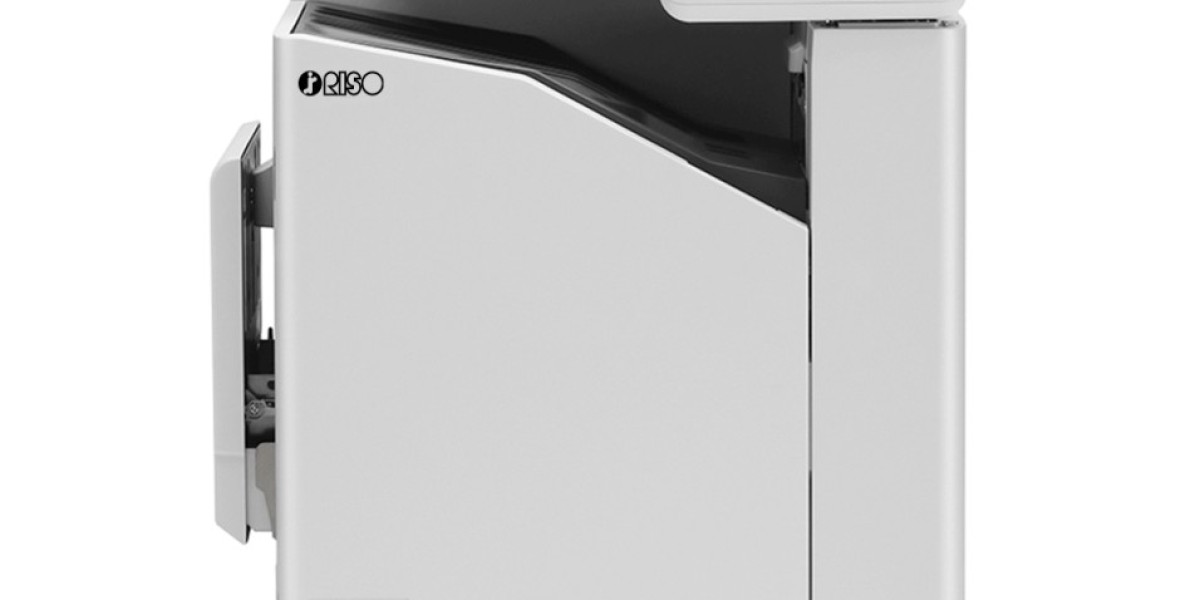


In the modern workplace, efficiency and cost-effectiveness are two pillars of success. While companies invest heavily in software, collaboration tools, and automation systems, one area that often gets overlooked is printing. Yet, for many organizations, printing remains a daily necessity whether it’s reports, marketing materials, manuals, or contracts. This is where a production printer comes into play.
Unlike standard office printers that are built for light use, production printers are designed for heavy-duty tasks, handling thousands of pages daily while maintaining speed and quality. More importantly, they don’t just enhance printing capabilities; they directly impact workflow efficiency and cost reduction two factors that every business values.
Streamlining Workflow with Production Printers
Workflows often slow down when employees are forced to wait for printers to finish jobs, fix paper jams, or manage multiple devices for different tasks. A production printer solves these issues by providing:
High-Speed Output
Production printers are engineered to handle hundreds of pages per minute. This ensures that large printing tasks are completed quickly, freeing employees to focus on higher-value work.Multifunctional Capabilities
Many production printers don’t just print they also scan, copy, and finish documents (stapling, folding, binding). This consolidates multiple processes into one streamlined device, improving efficiency.Automated Workflows
Modern production printers integrate with digital systems, allowing businesses to automate repetitive printing tasks. For example, reports can be sent directly from software systems to the printer without manual intervention.Reduced Downtime
Built for durability, production printers are less likely to experience breakdowns. This reliability ensures uninterrupted workflows, a crucial factor in industries where deadlines are non-negotiable.
How Production Printers Reduce Business Costs
Lower Outsourcing Expenses
Outsourcing large print jobs to external providers can be costly. With a production printer, companies can handle these tasks in-house, saving money while retaining control over deadlines and quality.Reduced Cost per Page
Production printers are optimized for efficiency, using toner and paper more effectively. Over time, the cost per page is significantly lower than with traditional office printers.Energy Efficiency
Despite their size and power, many modern production printers are designed to consume less energy than running multiple smaller printers. This translates into lower utility bills.Less Waste
Advanced calibration and precise printing reduce paper and ink wastage. Duplex (double-sided) printing also helps minimize unnecessary paper use.Long-Term ROI
While the initial investment in a production printer may seem high, the savings from reduced outsourcing, lower per-page costs, and higher efficiency quickly outweigh the upfront price.
Industries That Benefit Most from Production Printers
Education: Schools and universities print exams, coursework, and student materials in large volumes. Production printers ensure quick turnaround without sacrificing quality.
Marketing & Advertising: Agencies often require high-quality brochures, posters, and flyers. Production printers provide vibrant, professional prints on demand.
Corporate Enterprises: From annual reports to training manuals, production printers support high-volume document needs seamlessly.
Publishing: Small publishing houses use production printers for short-run books, magazines, and catalogs.
Healthcare: Hospitals and clinics handle a constant flow of patient records and forms, requiring efficiency and security.
In all these sectors, production printers not only improve productivity but also reduce operational costs.
Integration with Digital Systems
A key feature of modern production printers is their ability to integrate with digital workflows. They connect with enterprise resource planning (ERP) systems, customer relationship management (CRM) platforms, and cloud storage solutions. This means employees can send documents directly to the printer from anywhere, even via mobile devices.
The result? Faster document processing, fewer errors, and improved collaboration across teams. This integration also supports secure printing, ensuring sensitive documents are only accessed by authorized personnel.
Sustainability and Eco-Friendly Printing
Cost savings aren’t just financial; environmental sustainability also contributes to long-term efficiency. Production printers are increasingly designed with eco-friendly features:
Recyclable materials for cartridges and components.
Energy-saving modes to reduce power consumption.
Precision toner use to minimize waste.
Paper optimization tools that encourage double-sided and efficient printing.
Businesses today are judged not only on profitability but also on environmental responsibility. By adopting eco-conscious production printers, companies can meet sustainability goals while saving money.
Case Example: Xerox Production Printers
When it comes to workflow efficiency and cost savings, Xerox is a global leader. Xerox production printers combine speed, durability, and innovative features that make them ideal for businesses of all sizes.
Key advantages include:
Advanced automation that reduces manual handling.
Superior colour accuracy for marketing materials.
Predictive maintenance tools that prevent breakdowns.
Flexible finishing options for booklets, brochures, and reports.
For businesses in the UAE, MPS UAE provides a full range of Xerox production printers, ensuring companies have access to world-class solutions backed by expert local support.
Overcoming Common Office Challenges with Production Printers
Challenge: High Outsourcing Costs
Solution: In-house production printing eliminates third-party expenses.Challenge: Slow Workflows
Solution: High-speed printing and automation streamline operations.Challenge: Inconsistent Quality
Solution: Production printers deliver professional, uniform results every time.Challenge: Equipment Downtime
Solution: Durable, reliable machines reduce maintenance issues.
By solving these pain points, production printers help businesses work smarter, faster, and more cost-effectively.
The Future of Production Printing
The role of production printers is evolving. Beyond printing, they are becoming central to digital transformation strategies. With AI-driven efficiency, cloud-based printing, and real-time analytics, future production printers will provide insights into printing patterns, helping businesses optimize usage even further.
Companies that adopt these technologies today are positioning themselves for a future where efficiency and cost-effectiveness go hand in hand.
Conclusion
A production printer is not just another office machine, it's a strategic tool that improves workflow and reduces costs. By consolidating tasks, reducing outsourcing, and delivering consistent quality, it directly impacts both productivity and profitability.
For companies in the UAE, MPS UAE offers a range of production printers, including trusted Xerox models, to help businesses achieve their efficiency and cost-saving goals. With the right production printer, your organization can work smarter, save more, and position itself for long-term success.