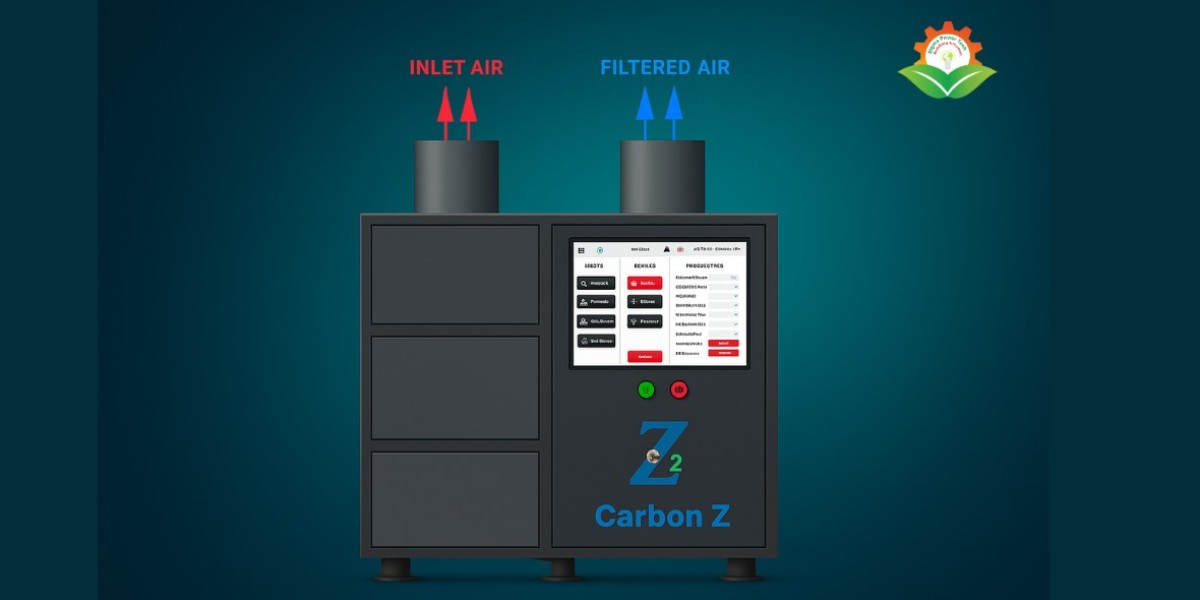


A border security underground installation finalizes its 2026 environmental control upgrade. The team has already specified NBC filtration for contamination defence. What's still being debated is which CO2 scrubbing technology actually belongs alongside it.
This is the exact gap that catches even experienced facility planners. Air purification, in the sealed-shelter sense, isn't one system doing one job — it's filtration excluding external threats and a separate CO2 removal system managing what occupants generate from the inside.
Choosing the right one for 2026 means understanding both halves of that equation clearly.
Why "Air Purification" Means Two Different Things in Sealed Spaces
In open environments, air purification usually refers to removing particulates, allergens, or pollutants. In sealed bunkers, shelters, and confined industrial spaces, it means something more specific: keeping occupant-generated CO2 from accumulating to dangerous levels while filtration handles everything coming from outside.
A CO2 scrubber for air management in these settings does a job that general air purifiers were never designed for.
Why Filtration Alone Doesn't Cover This
Positive-pressure NBC filtration excludes contamination and maintains airtight integrity. It does nothing about the CO2 every occupant exhales continuously into that same sealed volume.
This is the single most important distinction in this buyer's guide: filtration and CO2 scrubbing solve different problems and need to be selected and engineered separately, even though they share the same airspace.
Calculate Occupancy-Based CO2 Generation
Before comparing any equipment, calculate your maximum expected occupancy multiplied by typical CO2 exhalation rate — roughly 0.3 to 0.5 liters per minute per resting adult — against your sealed space volume and intended duration.
This number, not a generic capacity rating, should drive every subsequent equipment decision.
Match Absorption Technology to Your Duration Profile
Chemical absorption systems using lithium hydroxide or soda lime suit defined-duration occupancy with predictable replacement scheduling — straightforward and well-validated for shorter sheltering events.
Regenerative scrubbers cycle absorption media for reuse, better suited to facilities with frequent or extended occupancy where consumable replacement logistics become impractical.
Molecular sieve systems offer compact, energy-efficient performance, particularly relevant where power budgets are constrained.
Why 2026 Buyers Should Weight Integration Capability Heavily
Modern sealed-facility design increasingly expects CO2 scrubbing and NBC filtration to be engineered together rather than installed as separate afterthoughts. When comparing systems this year, prioritize manufacturers who can document how their equipment coordinates airflow with existing pressurization systems — not just standalone performance claims.
Confirm Real-Time Monitoring Capability
A genuinely effective CO2 removal system includes real-time concentration monitoring with configurable alarm thresholds. This isn't an optional upgrade — it's what gives occupants and operators the lead time to respond before CO2 buildup causes cognitive impairment or worse.
Confirm thresholds can be calibrated to your specific safety margins rather than fixed at a generic factory setting.
Verify Power Requirements Against Available Backup
Continuous-duty scrubbing requires uninterrupted power. Check actual measured power draw against your facility's backup power infrastructure — generator capacity, battery reserves, or redundant grid connections — before finalizing any selection.
Assess Construction Quality for Your Operating Environment
For equipment that may sit in sealed readiness between active use, corrosion-resistant construction and proven long-term durability matter as much as day-one performance. This is especially relevant for CO2 scrubber for bunker installations in variable climate conditions.
Application-Specific Considerations
For home and small shelters: Prioritize compact footprint, quiet operation, and simple monitoring suited to non-specialist occupants over high continuous-duty capacity.
For industrial settings: A CO2 scrubber industrial installation needs robust, continuous-duty construction with integration into existing facility safety monitoring.
For military and defence facilities: Integration with NBC filtration, compliance with relevant defence standards, and documented testing under realistic worst-case occupancy take priority over headline specifications.
What This Should Cost in 2026
CO2 scrubber price varies based on absorption technology, capacity, and monitoring sophistication. Lifecycle cost — including consumable replacement or regeneration cycles, maintenance, and integration support — matters more for long-term value than the upfront figure alone.
Evaluating Manufacturers Before You Buy
Look for documented engineering experience in life-support or defence-grade air management, transparent testing and validation procedures, relevant compliance certifications, and genuine customization capability for your specific occupancy profile.
Anyone identifying the best CO2 removal system in India or internationally for 2026 should request realistic occupancy test data and integration documentation directly from manufacturers, including the CO2 Removal System category broadly, before comparing specifications side by side.
Key Features That Define a Strong 2026 Buying Decision
Real-time monitoring with properly calibrated alarm thresholds
Absorption media matched precisely to occupancy and duration
Demonstrated integration with NBC filtration and pressurization systems
Low power consumption with reliable backup power continuity
Corrosion-resistant, low-maintenance construction
Modular design that scales with changing occupancy needs
Common Mistakes to Avoid This Year
Assuming general air purification covers occupant-generated CO2
Sizing by space volume instead of occupancy-based generation
Choosing equipment on price without lifecycle cost analysis
Skipping integration verification with existing filtration systems
Failing to test and commission systems under realistic occupancy
Final Word
The best CO2 scrubber for air purification in a sealed environment isn't the one with the most impressive brochure — it's the one correctly matched to your occupancy, duration, and integration requirements, backed by real testing data. A properly specified CO2 removal system is what actually keeps sealed air breathable, not just filtered.
Apply this framework in 2026, and the buying decision stops being guesswork — it becomes a straightforward match between documented performance and your facility's real operational needs.