

Introduction
Finding the best oil for hair growth is a common goal for people looking to improve the health, strength, and appearance of their hair. While no oil can instantly transform hair or guarantee rapid growth, the right natural oils can support a healthy scalp, reduce dryness, minimize breakage, and create the ideal environment for stronger-looking hair over time. As interest in natural hair care continues to rise, plant-based oils have become an essential part of many daily beauty routines. When combined with proper nutrition, gentle hair care practices, and consistency, quality hair oils can contribute to healthier and more manageable hair.
Understanding Hair Growth
Hair naturally grows in cycles that include growth, transition, resting, and shedding phases. Genetics, age, nutrition, stress, hormones, and overall scalp health all influence how quickly and effectively hair grows. Although oils cannot change your natural growth cycle, they can help nourish the scalp and protect the hair shaft from damage.
Healthy hair begins with a healthy scalp. Keeping the scalp moisturized and clean while reducing unnecessary dryness or irritation may help create better conditions for stronger hair over time.
What Makes the Best Oil for Hair Growth?
The best oil for hair growth is one that suits your hair type and supports overall scalp health. High-quality natural oils often contain vitamins, essential fatty acids, and antioxidants that nourish both the scalp and hair strands.
Some oils are lightweight and ideal for fine hair, while others provide deeper nourishment for dry, thick, or curly hair. Choosing pure, minimally processed oils helps ensure you receive the greatest benefit from their natural nutrients.
Popular Natural Oils for Healthy Hair
Several natural oils have earned a strong reputation for supporting healthy-looking hair because of their nourishing properties.
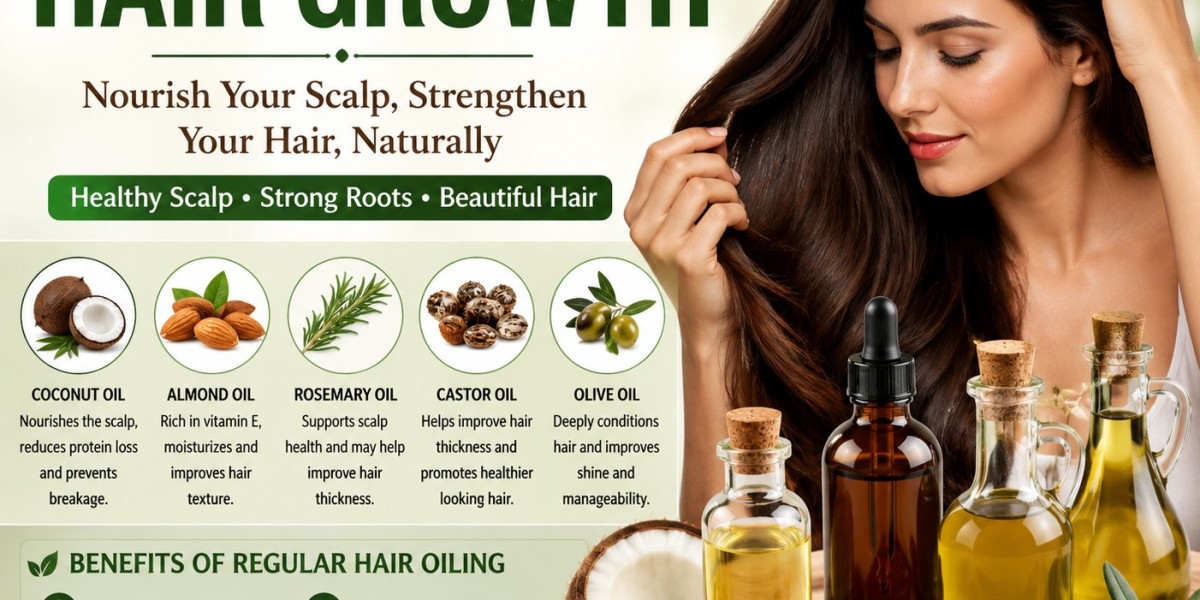
Coconut oil is known for helping reduce protein loss and improving hair softness. Argan oil is rich in vitamin E and is often used to add shine while reducing frizz. Castor oil is popular among individuals seeking thicker-looking hair because of its rich texture. Rosemary oil has gained attention through recent studies for its potential role in supporting scalp health when properly diluted. Almond oil helps moisturize dry hair, while olive oil provides deep conditioning and improves manageability.
Rather than relying on one miracle ingredient, many people achieve the best results by selecting an oil that matches their hair's individual needs.
Benefits of Regular Hair Oiling
Consistent use of natural oils may improve the overall condition of both the scalp and hair. While results vary from person to person, regular oiling remains an important tradition in many cultures because of its practical benefits.
Some commonly appreciated benefits include:
Helping reduce dryness of the scalp.
Supporting softer and smoother hair.
Minimizing breakage caused by dryness.
Improving the appearance of shine.
Nourishing the scalp with natural plant-based nutrients.
Supporting healthier-looking hair over time.
Hair oil works best as part of a complete hair care routine rather than as a standalone solution.
How to Apply Hair Oil Correctly
Applying oil properly can improve the overall experience and help distribute nutrients more evenly across the scalp and hair. Begin by using a small amount of oil and gently massage it into the scalp using your fingertips. Continue applying the remaining oil through the lengths of your hair, paying extra attention to dry ends.
Allow the oil to remain on the hair for at least thirty minutes before washing with a mild shampoo. Some people prefer overnight treatments, while others include oiling as a weekly self-care routine. The ideal frequency depends on individual hair type and personal preference.
Choosing High-Quality Hair Oils
Not every hair oil delivers the same quality. Selecting pure oils without unnecessary artificial fragrances or fillers can make a noticeable difference in both performance and overall experience.
When choosing hair oil, consider the following:
Select oils with minimal processing.
Read the ingredient list carefully.
Choose products packaged in sealed containers.
Store oils away from direct sunlight and excessive heat.
Purchase from trusted suppliers with transparent labeling.
Perform a patch test before regular use, especially if you have sensitive skin.
These simple practices help maintain product quality and encourage safer everyday use.
Current Hair Care Trends
The beauty industry continues to shift toward natural and plant-based ingredients. Consumers are becoming more informed about scalp health and the importance of preventive hair care rather than relying only on cosmetic treatments.
Current trends include:
Increased demand for natural hair care products.
Greater focus on scalp wellness.
Growth of herbal and botanical ingredients.
Preference for clean beauty formulations.
Rising popularity of traditional oil massage techniques.
Interest in sustainable and naturally sourced ingredients.
These developments have encouraged more people to include nourishing oils as part of their regular hair care routines.
Conclusion
Choosing the best oil for hair growth involves understanding your hair's unique needs rather than searching for a single miracle solution. Natural oils such as coconut, almond, rosemary, olive, castor, and argan oil each offer their own benefits for nourishing the scalp, reducing dryness, and improving the appearance of healthy hair. While oils alone cannot guarantee faster hair growth, they can support stronger, softer, and more manageable hair when combined with a balanced diet, proper hair care, and consistency. By selecting high-quality natural oils and using them correctly, you can build a routine that promotes healthier-looking hair and long-term scalp wellness.






