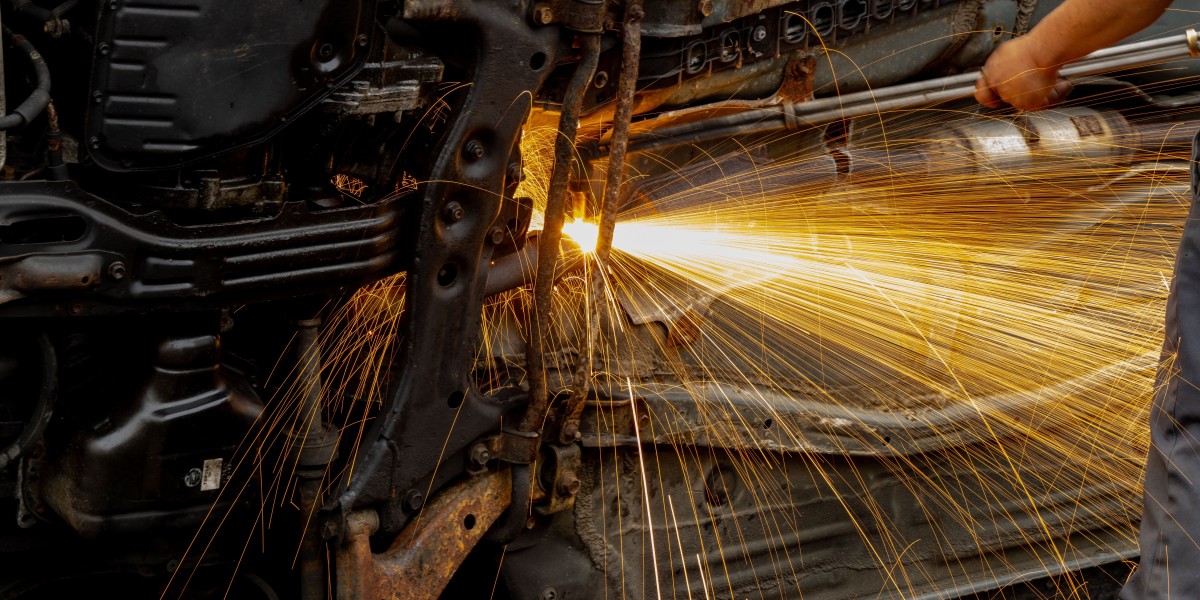


The Welding Guns Market is influenced by a combination of manufacturing activity, automation investment, material innovation, production efficiency requirements, and changing industrial quality standards. Welding guns are essential tools used to deliver controlled heat and electrical energy during welding operations, enabling the permanent joining of metal components. Their importance extends across automotive manufacturing, heavy equipment production, aerospace, construction, shipbuilding, rail transport, and general fabrication.
Market dynamics describe the forces that accelerate demand, reshape product development, alter competitive conditions, or create operational challenges. In the Welding Guns Market, these forces are increasingly connected to the broader transformation of industrial production. Manufacturers are seeking equipment that improves weld consistency, reduces downtime, supports automated workflows, and operates efficiently under demanding conditions. As production environments become more advanced, welding guns are evolving from basic joining tools into integrated components of intelligent manufacturing systems.
Industrial Automation Strengthens Market Momentum
Automation is one of the most influential forces shaping the Welding Guns Market. High-volume manufacturers are adopting robotic welding systems to improve production speed, repeatability, and workplace safety. Welding guns designed for robotic applications must provide precise movement, stable performance, compact construction, and compatibility with automated control systems.
Automotive production remains a major driver of this transition. Vehicle manufacturers use large numbers of welds during body assembly, component fabrication, and structural production. Automated welding cells equipped with advanced guns can perform repetitive tasks with greater consistency than manual operations. This helps manufacturers maintain quality while reducing production variability.
The expansion of automated factories is also increasing demand for lightweight and flexible welding guns. Reduced equipment weight can improve robot movement, lower mechanical stress, and support faster operating cycles. As manufacturers modernize production facilities, the need for automation-ready welding equipment is expected to remain an important market influence.
Automotive Manufacturing Creates Sustained Demand
The automotive industry has a strong effect on Welding Guns Market dynamics because welding is central to vehicle assembly. Traditional steel structures, high-strength alloys, aluminum components, and mixed-material designs require carefully selected joining technologies. Welding guns must deliver reliable performance while adapting to changes in material thickness, coating, and component geometry.
The growth of electric vehicle production is adding another dimension to demand. Electric vehicles use specialized battery enclosures, lightweight structures, electrical components, and redesigned body systems. These changes may create demand for welding equipment capable of supporting new materials and advanced manufacturing processes.
Automotive producers also place high importance on production speed. Welding guns that reduce cycle times, improve electrode alignment, or support rapid maintenance can contribute directly to operational efficiency. As a result, equipment suppliers are focusing on designs that combine durability with high-speed performance.
Product Innovation Improves Operational Capabilities
Technological innovation is reshaping product competition within the Welding Guns Market. Manufacturers are developing equipment with improved cooling systems, enhanced power delivery, advanced sensors, and more efficient mechanical structures. These improvements can help extend service life and maintain stable performance during continuous production.
Smart monitoring is becoming increasingly relevant. Sensors may be used to track temperature, pressure, electrical performance, electrode wear, and operational conditions. The resulting data can support predictive maintenance by identifying potential equipment issues before they cause unexpected downtime.
Digital integration also allows welding systems to communicate with factory management platforms. Production teams can use equipment data to evaluate weld quality, monitor productivity, and optimize maintenance schedules. This shift supports the development of connected manufacturing environments in which welding guns contribute information as well as perform joining tasks.
Demand for Energy Efficiency Influences Equipment Design
Energy consumption is an important consideration in modern manufacturing. Industrial facilities are seeking ways to reduce operating costs and improve resource efficiency without compromising production quality. This trend is encouraging the development of welding guns that use energy more effectively and minimize unnecessary power losses.
Efficient cooling systems can also support better performance. Excessive heat may accelerate component wear and affect welding consistency. Improved thermal management helps maintain stable operating conditions while reducing the risk of equipment damage.
Energy-efficient designs may provide long-term value even when their initial purchase cost is higher. Manufacturers often evaluate equipment based on total ownership costs, including energy use, maintenance requirements, replacement parts, and expected service life. This broader evaluation is influencing purchasing decisions across the Welding Guns Market.
Material Changes Create New Technical Requirements
The use of lightweight and advanced materials is changing welding requirements. Manufacturers are increasingly using high-strength steel, aluminum alloys, and multi-material structures to reduce product weight and improve performance. These materials may require different welding parameters and specialized equipment configurations.
Welding guns must provide accurate force control and stable electrical contact to achieve dependable results. In some applications, conventional equipment may need to be modified or replaced to accommodate new material combinations.
This trend creates opportunities for suppliers that can offer application-specific solutions. Custom-designed welding guns may be required for complex production lines, unusual component shapes, or specialized joining processes. The ability to provide engineering support can therefore become an important competitive advantage.
Maintenance Requirements Affect Purchasing Decisions
Equipment reliability strongly influences Welding Guns Market demand. Production interruptions can create significant costs, particularly in high-volume industries. Manufacturers prefer welding guns that are durable, easy to inspect, and designed for efficient maintenance.
Wear components such as electrodes, cables, connectors, and mechanical parts require regular attention. Equipment designs that allow quick replacement can reduce downtime and improve productivity. Modular construction is becoming more attractive because individual components can be serviced without replacing the complete system.
Preventive and predictive maintenance strategies are also changing the market. Data-driven monitoring can help maintenance teams identify performance changes and schedule repairs before failures occur. Suppliers that combine equipment with diagnostic services may strengthen long-term customer relationships.
Cost Pressures Create Competitive Challenges
Price competition remains a significant market dynamic. Buyers often compare equipment based on purchase cost, operating efficiency, reliability, and expected lifespan. Low-cost products may appeal to smaller fabrication businesses, while large manufacturers may prioritize performance and long-term operating value.
Raw material price fluctuations can affect production costs. Welding guns contain metals, electrical components, insulation materials, and precision-engineered parts. Changes in the cost or availability of these inputs may influence product pricing and supplier profitability.
Manufacturers must balance affordability with quality. Reducing production costs without weakening durability or precision requires efficient design, advanced manufacturing methods, and effective supply chain management.
Skilled Labor Gaps Encourage Technology Adoption
A shortage of experienced welders and technical personnel is encouraging manufacturers to invest in automation. Automated welding systems can reduce dependence on manual labor for repetitive production tasks while improving consistency.
However, automation also creates demand for employees with expertise in robotics, programming, equipment maintenance, and data analysis. This changes the role of welding professionals rather than eliminating the need for technical knowledge.
Suppliers may support adoption by providing training, installation services, software assistance, and ongoing technical support. These services can influence purchasing decisions, especially among companies introducing automated welding systems for the first time.
Regional Manufacturing Growth Expands Opportunities
Industrial expansion in developing economies is contributing to demand for welding equipment. Growth in transportation infrastructure, construction, vehicle production, machinery manufacturing, and metal fabrication can increase the need for dependable welding solutions.
Established industrial regions continue to generate demand through factory modernization and equipment replacement. Older production systems may be upgraded to improve efficiency, support automation, and meet new quality requirements.
Regional market conditions vary according to manufacturing capacity, labor availability, infrastructure investment, and industrial policy. Suppliers may need localized distribution networks and service capabilities to respond effectively to different customer requirements.
Competitive Differentiation Moves Beyond Equipment
Competition in the Welding Guns Market is increasingly based on complete value rather than product specifications alone. Customers may evaluate technical support, maintenance availability, system compatibility, customization, delivery reliability, and lifecycle costs.
Companies that offer integrated solutions can create stronger customer relationships. A supplier may provide welding guns alongside controllers, robotic interfaces, monitoring tools, replacement parts, and technical services. This approach can simplify procurement and improve system coordination.
Product reliability remains essential, but service quality is becoming a major differentiator. Fast technical assistance and dependable access to spare parts can reduce operational risks for industrial users.
Future Outlook for Market Dynamics
The Welding Guns Market is expected to remain closely connected to the evolution of industrial manufacturing. Automation, digital monitoring, lightweight materials, energy efficiency, and advanced production systems will continue to influence equipment development.
Future welding guns are likely to become more intelligent, adaptable, and connected. Sensors and software may support real-time performance monitoring, while improved designs could increase precision and reduce maintenance requirements. Demand for customized equipment may also grow as manufacturers adopt more complex products and flexible production methods.
Overall, market dynamics will be shaped by the need to achieve greater productivity without sacrificing quality or operational reliability. Companies that combine engineering innovation, efficient manufacturing, strong service capabilities, and application-specific expertise will be well positioned to respond to changing industrial requirements. As manufacturing systems become more automated and data-driven, welding guns will remain essential tools within modern production environments.






