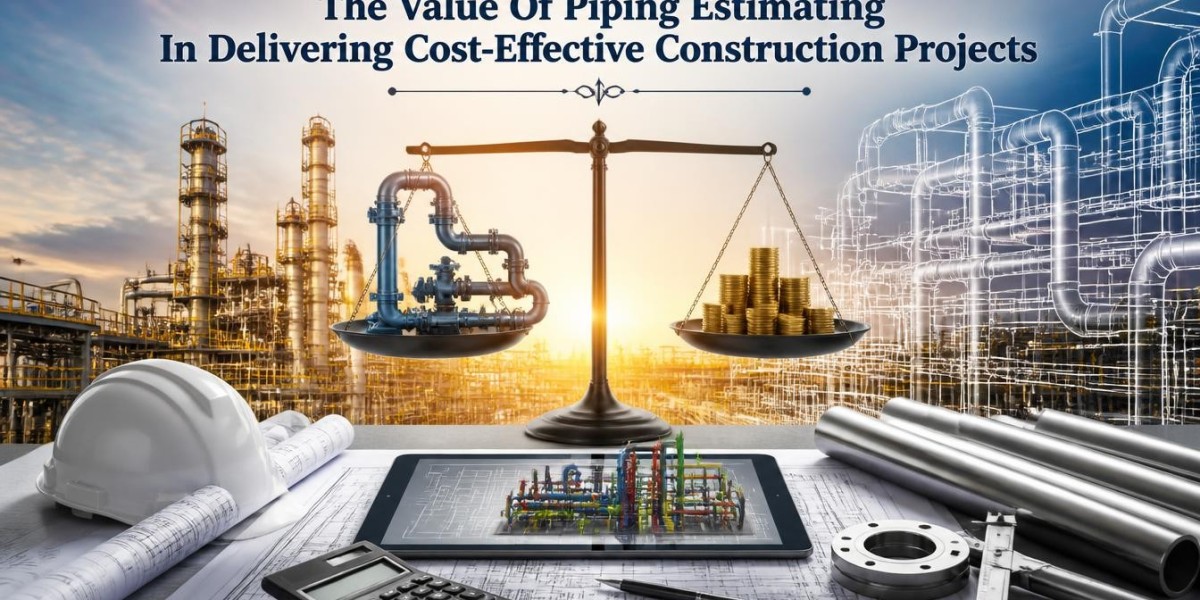


Piping Estimating refers to the process of determining the costs of components that are needed for a piping system. These include materials, labor, and equipment. This estimation is done before installation and fabrication. A small miscalculation in the number of flanges can lead to a serious budget overrun. That is why piping estimation demands special attention, but it is often neglected.
What Is Piping Estimating, And Why Is It Important?
Piping estimating is the process of breaking down the cost of components of a piping system. It includes the length and diameter of pipes, numbers of fittings, valves, and supports, and labor hours needed for its construction. A piping system usually accounts for a significant portion of the construction cost. This is why errors in these details result in budget overruns.
What Is The Proportion Of The Cost Of Piping?
According to Piping Cost Engineering, piping usually accounts for 20% of the capital costs of a process plant. It may also be equal to two-thirds of the purchased equipment. At the same time, in pipeline projects, pipe cost and installation may account for up to 80% of the capital cost. Cost control in construction is essential to control the budget.
What Are Causes Of Wrong Piping Estimates?
Errors in estimation are transferred to each phase of a project. This causes delays, rework, and additional costs at every step. McKinsey stated that in large-scale projects, 98% of projects cost overruns of more than 30%, and 77% were more than 40% delayed.
Construction field rework is costly. According to the research agency Construction Industry Institute, it represents approximately 5% of the contract value. On the other hand, the Standish Group reported that one-third of all construction project failures result from miscommunication. Clearly, errors in estimation cause costly rework.
Do Industrial Piping Takeoffs Need Specialists?
Industrial piping estimation is different from commercial project estimation. Industrial piping estimates involve more complex piping systems. Refineries, petrochemical plants, and power plants require piping systems to transport gases, liquids, or fluids with high pressure and temperature. Therefore, this piping system has to meet strict standards such as ASME B31.3. As a result, an industrial piping estimator should have more expertise in the materials that are used in the piping. For example, an estimator should know the cost of specialty metals that are used in industrial pipelines.
What Are The Components Of A Good Piping Estimation Service?
In addition to labor and materials, Piping Estimating Services cover other costs associated with pipe fabrication and installation. For example, a good estimator will provide detailed information on insulation, supports, and hangers, along with budgets for potential project-specific costs.
How To Reduce The Cost Of Pipe Installation By Improving Estimation?
Installation of a pipeline requires labor in the process. Bureau of Labor Statistics stated that the annual salary of pipefitters, plumbers, and steamfitters was $62,970 in 2024. The hourly pay was $39.28. In May 2025, the hourly pay became $34.70 for the same occupation.
Clearly, pipe installation cost is a significant portion of the overall cost of a pipeline. At the same time, the ability to control and reduce costs is restricted by specific standards and the availability of skilled workers. A precise estimate allows for controlling costs during the construction phase. This helps avoid costly change orders and establish realistic contracts with subcontractors and suppliers. This is where Universe Estimating adds value. Their skilled piping estimators can take your project to the next level.
Conclusion
Piping Estimating is an important part of any construction project. It helps to control costs during the planning and design phases. It is usually not considered important; a careful and accurate estimate can help avoid costly changes and rework during construction. This is especially important for large-scale construction projects because they account for the highest percentage of cost overruns.








