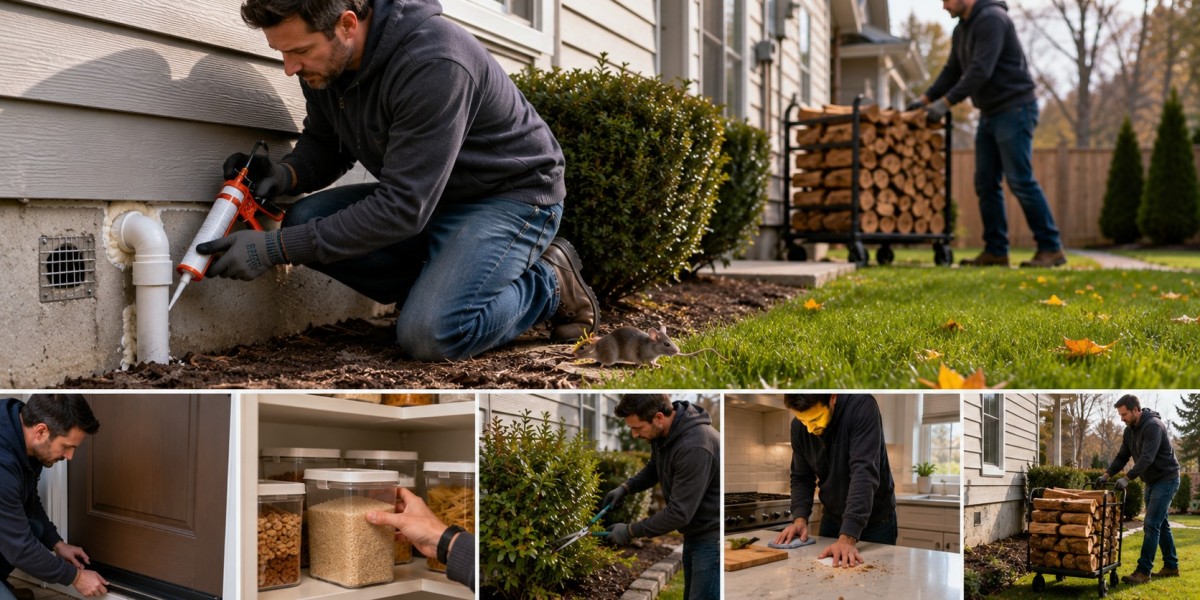


The best rodent control services in Toronto combine a licensed inspection, entry-point sealing (exclusion), targeted trapping or baiting, and a follow-up monitoring plan. Reputable Toronto rodent control companies — including Pest Troopers, serving Toronto, Vaughan, Brampton, Mississauga, King City, Barrie, and Bradford — follow Integrated Pest Management (IPM) practices that combine sanitation, exclusion, and humane removal rather than relying on chemicals alone.
If you've heard scratching in the walls at night, found droppings under the sink, or noticed gnaw marks near the pantry, you're not imagining things — and you're far from alone. Rodents have become one of the most common pest complaints across the Greater Toronto Area, and the City of Toronto has responded by rolling out a dedicated Rat Response Plan aimed at tackling the issue at a municipal level, including rat "academies," inspection blitzes, and coordination between city divisions.
This guide walks through how professional rodent control actually works, what separates a genuinely effective service from a quick fix, what it typically costs, and how homeowners and property managers across Toronto, Vaughan, Brampton, Mississauga, King City, Barrie, and Bradford can protect their properties year-round.
Table of Contents
Why Rodents Are a Growing Problem in Toronto and the GTA
House Mice, Norway Rats, and Roof Rats: Know Your Pest
Health and Property Risks of a Rodent Infestation
What Professional Rodent Control Actually Involves
DIY vs. Professional Rodent Control: Comparison Table
Signs You Need Rodent Control Now
Rodent Control Costs in Toronto and the GTA
How to Choose a Rodent Control Company
Rodent Prevention Tips for Every Season
Key Takeaways
Frequently Asked Questions
Conclusion and Next Steps
Why Rodents Are a Growing Problem in Toronto and the GTA
Rodent complaints haven't just felt like they're increasing — city data backs it up. Toronto's Rat Response Plan describes rapid construction activity, warming winters, and dense waste-generating neighbourhoods as conditions that have combined to create what one city councillor called a "perfect rat storm." Construction sites in particular can displace existing rat colonies, pushing them into nearby homes and businesses as they search for new shelter.
The same pressures apply across the wider region. Vaughan, Brampton, Mississauga, Barrie, King City, and Bradford have all seen new residential and commercial development in recent years, and rodents are opportunistic — they follow food, warmth, and disturbed ground wherever it appears. Older housing stock in central Toronto neighbourhoods adds another layer of risk, since aging foundations, brick, and utility penetrations offer more entry points than newer construction.
House Mice, Norway Rats, and Roof Rats: Know Your Pest
Not all rodents behave the same way, and effective treatment depends on identifying the species correctly.
House mice (Mus musculus) are small, curious, and can squeeze through openings roughly the size of a dime. They nest close to food sources and reproduce quickly.
Norway rats (Rattus norvegicus) are the larger, burrowing rats most commonly found in Toronto's older infrastructure, sewers, and building foundations.
Roof rats (Rattus rattus) are strong climbers that tend to nest higher up — attics, rooflines, and upper floors — and are less common but still present in the GTA.
A technician's first job during an inspection is confirming which species is present, since bait selection, trap placement, and exclusion work all differ by species and by how the animal moves through a structure.
Health and Property Risks of a Rodent Infestation
Beyond the obvious disruption, rodents carry real health and structural risks:
Property damage. Mice and rats gnaw continuously to keep their teeth from overgrowing, which means chewed wiring, insulation, drywall, and even plumbing lines.
Contamination. Droppings, urine, and nesting materials can contaminate food storage areas and surfaces.
Disease exposure. Rodents are associated with several pathogens, including Salmonella. Wild rodents — most notably the deer mouse, which is more common in rural and cottage settings than in dense urban housing — can also carry hantavirus. According to the Government of Canada, hantavirus spreads mainly through contact with the urine, droppings, or saliva of infected rodents, and prevention centres on keeping rodents out of buildings and safely cleaning any contaminated areas rather than sweeping or vacuuming droppings directly.
Regulatory risk. Under Toronto Municipal Code Chapter 629 (Property Standards), property owners are required to keep their properties free of rodents and other pests, and unresolved complaints can escalate through the City's 311 system to formal enforcement.
None of this is meant to cause alarm — rodent problems are common and very manageable — but it explains why waiting is the costliest mistake homeowners make.
What Professional Rodent Control Actually Involves
A quality rodent control service is rarely just "setting some traps." It typically follows an Integrated Pest Management (IPM) approach with four connected stages:
1. Inspection. A technician identifies the species, locates entry points, droppings, gnaw marks, and nesting sites, and assesses conducive conditions like moisture, clutter, or exposed food.
2. Exclusion. This is the step most DIY efforts skip — physically sealing the gaps rodents are using to get in, using materials like steel wool, metal mesh, and sealant, since rodents can chew through most plastics and basic caulk alone.
3. Trapping and baiting. Depending on the severity and location, technicians place snap traps, tamper-resistant bait stations, or a combination, positioned along the runways rodents actually use rather than at random.
4. Monitoring and follow-up. A single visit rarely resolves an established infestation. Reputable providers schedule follow-up visits to confirm activity has stopped and adjust the plan if needed.
Pest Troopers' residential pest control services in Toronto follow this exact structure, and for homeowners who want ongoing protection rather than a one-time visit, the Home Pest Shield Programs build inspection and exclusion work into a recurring, subscription-based plan.
DIY vs. Professional Rodent Control: Comparison Table
Factor | DIY Rodent Control | Professional Rodent Control |
Species identification | Often guessed, not confirmed | Confirmed by a trained technician |
Entry-point sealing | Frequently incomplete or missed | Full exterior and interior exclusion |
Equipment | Store-bought traps and bait | Commercial-grade traps, tamper-resistant stations |
Safety around children/pets | Depends on product used | Pet- and family-conscious placement |
Follow-up monitoring | Rarely done consistently | Scheduled inspections |
Regulatory compliance | Not verified | Aligned with Toronto Municipal Code Ch. 629 |
Best suited for | A single mouse sighting, early action | Ongoing activity, multiple sightings, commercial properties |
DIY prevention (sealing an obvious gap, cleaning up food sources) is genuinely useful and worth doing regardless. But once there's an active infestation — multiple sightings, droppings in more than one room, or sounds at night — professional intervention becomes far more cost-effective than repeated store-bought attempts.
Signs You Need Rodent Control Now
Droppings near food storage, along baseboards, or in drawers
Gnaw marks on food packaging, wood, or wiring
Scratching or scurrying sounds, especially at night
A persistent musky odour in enclosed spaces
Grease marks along walls where rodents repeatedly travel the same path
Nesting materials (shredded paper, fabric, insulation) in hidden corners
A single sighting rarely means a single rodent. Mice in particular breed quickly, so what looks like a minor issue in week one can become a much larger one within a month or two if left unaddressed.
Rodent Control Costs in Toronto and the GTA
Pricing varies based on property size, severity, and whether the issue is residential or commercial, but a few general patterns hold true across the GTA:
Inspection-only visits are the lowest-cost entry point and are useful for confirming activity before committing to a full treatment plan.
Standard treatment plans (inspection, exclusion, trapping, one follow-up) cost more but resolve the majority of residential cases.
Severe or recurring infestations — particularly in older homes, multi-unit buildings, or commercial kitchens — cost more due to the additional exclusion work and monitoring required.
Subscription-based programs, like ongoing pest shield plans, often work out cheaper over a year than paying for repeat one-off visits, since they build prevention into the price rather than treating the same recurring problem each season.
For an exact quote based on your property and location — whether in Toronto, Vaughan, Brampton, Mississauga, King City, Barrie, or Bradford — a technician-led inspection is the only reliable way to get accurate pricing.
How to Choose a Rodent Control Company
Not all pest control providers approach rodents the same way. When comparing options in the GTA, look for:
Licensing. Confirm the technician is licensed to apply pesticides and rodenticides in Ontario.
Exclusion work, not just bait. Ask directly whether the service includes physically sealing entry points, not only placing traps or bait.
Follow-up included. A single visit with no scheduled check-in is a red flag for anything beyond a very minor issue.
Local experience. A company familiar with your specific neighbourhood's housing stock — century homes in central Toronto versus newer builds in Vaughan or Barrie — will recognize conducive conditions faster.
Clear, upfront pricing. Transparent quotes before work begins, with no vague "we'll assess and let you know" pricing.
Humane and eco-conscious methods where appropriate, particularly for properties with children or pets.
Rodent Prevention Tips for Every Season
Spring: Inspect foundations for cracks widened by winter freeze-thaw cycles; clear early nesting material from gardens and sheds.
Summer: Keep compost bins and bird feeders away from the home; manage overgrown vegetation that provides cover.
Fall: Seal utility penetrations and gaps before rodents actively seek indoor shelter for winter; install or repair door sweeps.
Winter: Continue monitoring attics, basements, and crawl spaces, since indoor heat allows rodents to keep breeding even in cold months.
Key Takeaways
Rodent activity is rising across Toronto and the GTA, driven by construction, aging infrastructure, and seasonal shelter-seeking behaviour.
Effective rodent control combines inspection, exclusion (sealing entry points), trapping or baiting, and follow-up monitoring — not traps alone.
Toronto property owners have a legal obligation under Municipal Code Chapter 629 to keep properties rodent-free.
DIY measures help with prevention but rarely resolve an established infestation on their own.
Ongoing plans, like a Home Pest Shield Program, are typically more cost-effective than repeated one-off treatments.
Frequently Asked Questions
1. What is the best way to get rid of rodents in a Toronto home?
The most reliable approach combines a professional inspection, sealing entry points (exclusion), targeted trapping or baiting, and a follow-up visit to confirm the activity has stopped. Store-bought traps alone rarely resolve an established infestation.
2. How much does rodent control cost in Toronto?
Costs vary by property size and severity, ranging from lower-cost inspection visits to more involved treatment plans for severe or recurring infestations. A technician-led inspection is the most accurate way to get a firm quote.
3. Are mice or rats more common in Toronto?
Both are common. House mice tend to be the most frequent indoor pest across the GTA, while Norway rats are more associated with older infrastructure, sewers, and building foundations in central Toronto.
4. Can rodents make you sick?
Rodents can carry pathogens such as Salmonella, and wild rodents like the deer mouse can carry hantavirus, though hantavirus risk is more associated with rural areas, cottages, and sheds than typical urban housing. The Government of Canada recommends preventing rodent entry and safely cleaning contaminated areas rather than sweeping or vacuuming droppings directly.
5. Is DIY rodent control effective?
DIY prevention — sealing obvious gaps, removing food sources, basic traps — helps, especially early on. Once there's an active, established infestation, professional exclusion and monitoring are usually needed for a lasting solution.
6. How do I know if I have mice or rats?
Droppings, gnaw marks, and nest locations differ by species; a professional inspection is the most reliable way to confirm which rodent is present and where it's entering.
7. Do I need rodent control if I only saw one mouse?
Yes, it's worth acting on. Mice rarely live alone, and a single sighting often indicates a small colony nearby that hasn't been fully detected yet.
8. Is Toronto rodent control regulated?
Yes. Under Toronto Municipal Code Chapter 629, property owners are required to keep properties free of rodents and other pests, with complaints handled through the City's 311 system if issues go unresolved.
9. What areas does Pest Troopers serve for rodent control?
Pest Troopers provides rodent control across Toronto and the surrounding GTA, including Vaughan, Brampton, Mississauga, King City, Barrie, and Bradford.
10. How often should a property be inspected for rodents?
Seasonal inspections — particularly in early spring and fall, when rodent activity typically increases — help catch problems before they become established, especially for older homes or properties with a history of pest issues.
Conclusion and Next Steps
Rodent problems in Toronto and across the GTA are rarely about one unlucky sighting — they're usually a sign of a wider pattern shaped by construction, seasonal weather shifts, and how a property is built and maintained. The good news is that the same pattern makes rodent activity predictable, and predictable problems are the easiest ones to prevent.
Whether you're dealing with an active infestation or want to get ahead of one before it starts, Pest Troopers offers licensed, IPM-based rodent control across Toronto, Vaughan, Brampton, Mississauga, King City, Barrie, and Bradford — with both one-time treatment plans and ongoing Home Pest Shield options for year-round protection. Book an inspection today to find out exactly what's happening on your property and what it will take to fix it.








