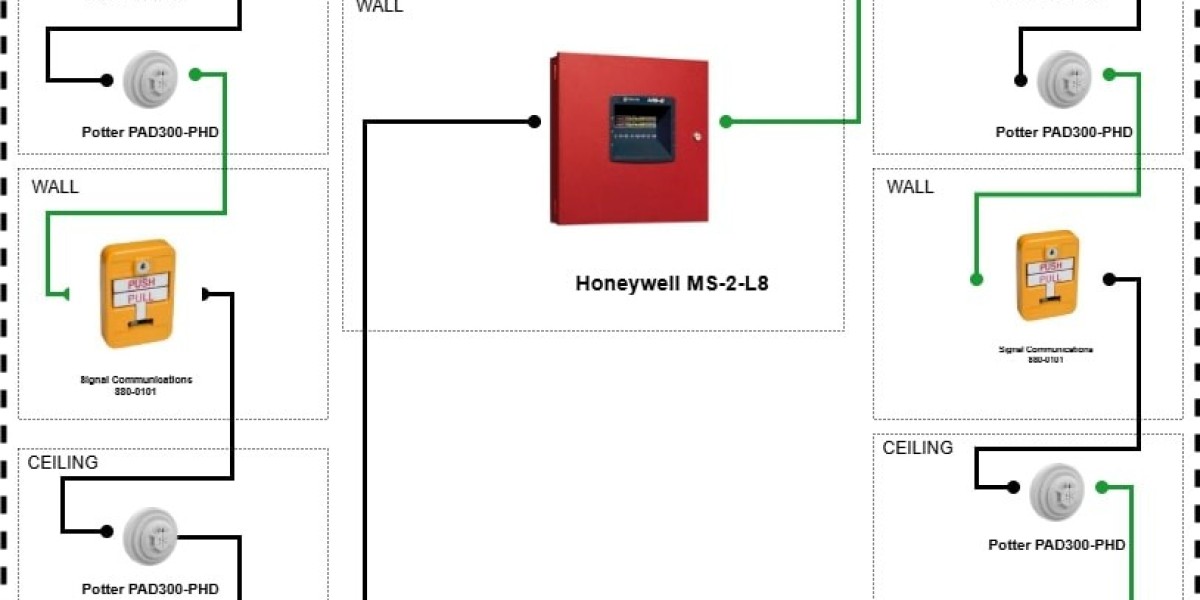


A fire alarm system is a critical part of any building's safety infrastructure. Understanding how it works begins with the ability to read and draw fire alarm circuit diagrams. These diagrams provide a visual representation of the system, showing how detectors, alarms, control panels, and wiring are interconnected. Proper interpretation and creation of these diagrams are essential for installation, troubleshooting, maintenance, and upgrades. In 2025, Fire Alarm System Design Software makes it easier than ever to generate accurate and professional diagrams, streamlining the entire design process. XTEN-AV provides tools that simplify drawing and reading fire alarm circuits, making the work of engineers and technicians more efficient.
Why fire alarm circuit diagrams are important
Fire alarm circuit diagrams serve as the blueprint of the system. They provide critical information about device locations, wiring paths, power supplies, and system logic. Having a clear diagram helps in several ways:
Guides installation teams on how to connect devices and panels correctly.
Assists in troubleshooting and locating faults in the system.
Ensures compliance with local and international safety standards.
Provides documentation for maintenance, inspection, and future upgrades.
Without a proper understanding of fire alarm circuit diagrams, installers and technicians may make errors that compromise system performance and safety.
Understanding the basic components
Before reading or drawing a circuit diagram, it is essential to understand the key components of a fire alarm system. These include:
Control Panel: The brain of the system that monitors detectors, manages alarms, and coordinates responses.
Detectors: Smoke, heat, or combination detectors that sense the presence of fire.
Manual Call Points: Devices that allow occupants to trigger the alarm manually in case of an emergency.
Notification Devices: Alarms, horns, and strobes that alert occupants to evacuate.
Power Supply: Main and backup sources that ensure continuous operation.
Wiring: Cables connecting all devices to the control panel, forming loops or zones depending on the system type.
Knowing the function of each component is crucial for interpreting circuit diagrams accurately.
Reading a fire alarm circuit diagram
Reading a fire alarm circuit diagram involves understanding symbols, connections, and the flow of signals. Key steps include:
Identify symbols: Each device and component has a standardized symbol. For example, a smoke detector, heat detector, or manual call point has a distinct symbol. Familiarity with these symbols is essential for accurate interpretation.
Trace wiring paths: Follow the lines connecting devices to understand how the circuits are configured. Loops, zones, and series or parallel connections indicate how devices communicate with the control panel.
Understand system logic: Observe how signals flow from detectors or manual call points to the control panel and how alarms are triggered. This helps in understanding how the system reacts during a fire event.
Check power supply connections: Identify how main and backup power sources are connected to ensure uninterrupted operation.
XTEN-AV’s Fire Alarm System Design Software provides interactive diagrams where users can click on components to view specifications, wiring paths, and operational details, making interpretation easier for both beginners and experienced technicians.
Drawing a fire alarm circuit diagram
Drawing a fire alarm circuit diagram requires planning, accuracy, and attention to detail. Steps to create a clear and professional diagram include:
Start with a building layout: Begin by mapping out the building, including rooms, corridors, and key areas that require protection.
Place devices logically: Position detectors, manual call points, and notification devices according to coverage requirements and code compliance. AI-driven tools in XTEN-AV can suggest optimal placement based on building dimensions and risk areas.
Connect devices with wiring: Draw lines to represent circuits, indicating loops, zones, or series and parallel connections. Clearly mark power supply lines and backup circuits.
Use standardized symbols: Ensure all components are represented with the correct symbols to maintain clarity and consistency.
Label components and connections: Add labels, numbers, or notes to indicate device types, addresses, and circuit identification. This makes the diagram easier to read and follow.
Validate the diagram: Run a verification check to ensure that all connections are correct, devices are accounted for, and compliance requirements are met. XTEN-AV allows for automated validation and error checking, reducing the chance of mistakes.
Benefits of using professional software
Fire Alarm System Design Software simplifies the process of reading and drawing circuit diagrams in several ways:
Accuracy: Reduces human error by using standardized symbols and automated connections.
Efficiency: Saves time by allowing designers to drag and drop devices, auto-generate wiring paths, and validate connections.
Compliance: Ensures that layouts and wiring meet local and international fire safety codes.
Documentation: Automatically generates reports, wiring schematics, and installation guides from the diagram.
Collaboration: Enables multiple stakeholders, including engineers, architects, and installers, to view, comment, and update diagrams in real-time.
XTEN-AV integrates these features into a unified platform, allowing professionals to design, review, and share fire alarm circuit diagrams with confidence.
Tips for beginners
For those new to fire alarm circuit diagrams, consider these tips:
Familiarize yourself with standard symbols used in fire alarm systems.
Start with small projects to practice reading and drawing circuits.
Use software tools like XTEN-AV to visualize connections and test system logic.
Double-check device placements and wiring paths for accuracy.
Keep documentation clear and organized for easy reference during installation or maintenance.
Conclusion
Reading and drawing fire alarm circuit diagrams is a fundamental skill for anyone involved in fire safety system design, installation, or maintenance. Accurate diagrams ensure proper device placement, correct wiring, and reliable system operation. Fire Alarm System Design Software, such as XTEN-AV, makes this process easier, faster, and more accurate by providing visualization tools, automated validation, and professional documentation.
In 2025, leveraging professional software is essential for creating reliable, code-compliant fire alarm circuits. By mastering diagram reading and drawing, engineers and technicians can ensure the safety of building occupants, streamline installation, and maintain high standards of fire protection. With AI-assisted tools and advanced platforms like XTEN-AV, the process has never been more efficient or precise.
Read more: https://avfusionhorizon.weebly.com/blog/top-9-fire-alarm-cad-plugins-that-simplify-system-layouts










