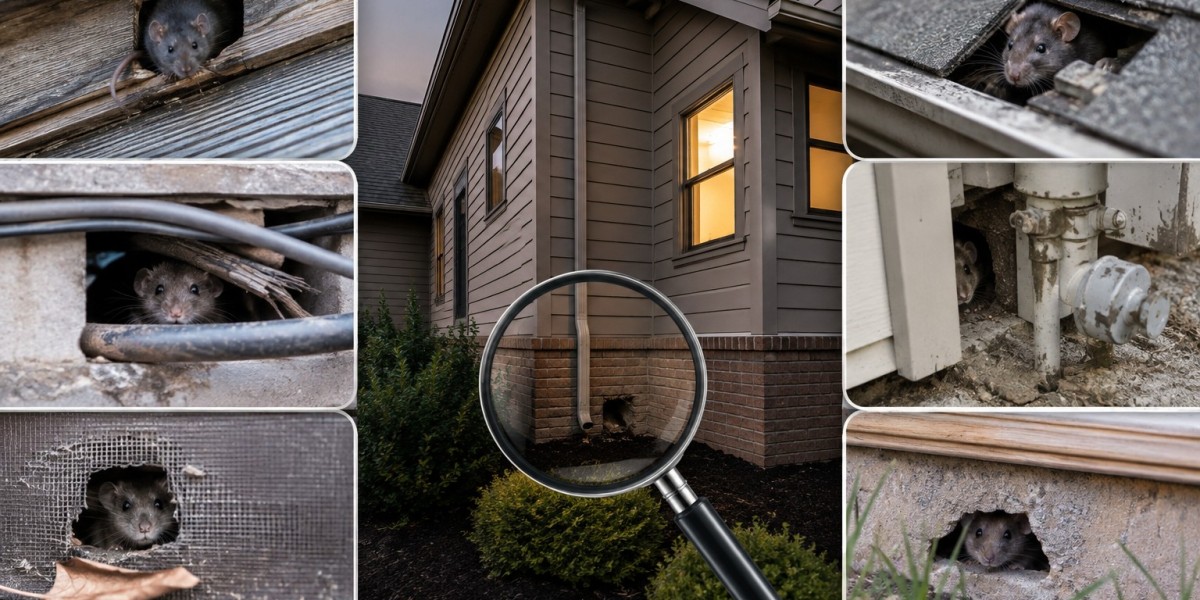


As temperatures start to drop across Toronto, Mississauga, Brampton, Vaughan, Barrie, and the wider Greater Toronto Area, homeowners face a predictable seasonal problem: wildlife looking for a warm place to spend the winter. Attics, chimneys, sheds, and crawl spaces that felt quiet all summer suddenly become prime real estate for raccoons, squirrels, and skunks searching for shelter before the cold sets in.
This isn't random bad luck. It's a well-documented seasonal pattern. Understanding why it happens, what the risks are, and what actually works to stop it can save homeowners and property managers significant time, money, and stress before the problem starts.
This guide covers how to identify early signs of wildlife activity, the real health and structural risks involved, what Ontario law says about handling nuisance wildlife, and why professional wildlife control is usually the safer and more effective path forward for homes and businesses across the GTA.
Why Fall Triggers a Wildlife Invasion Season in the GTA
Every fall, the same pattern repeats across Toronto, Vaughan, Brampton, Mississauga, Barrie, Bradford, King City, and neighbouring communities. As outdoor temperatures fall, animals that spent the summer outside begin actively searching for insulated, dry, predator-free spaces to den for the winter. A home's attic checks every box: it's warm, quiet, dry, and largely undisturbed by humans for much of the day.
Squirrels are especially active in autumn. According to the Canadian Wildlife Federation, grey and black squirrels naturally nest in hollow trees or built nests in tree branches, but they readily adapt to attics when the opportunity presents itself, and a single access point is often all it takes for them to move in and begin raising young there. The Canadian Wildlife Federation also notes that raccoons and squirrels are strong, agile climbers capable of reaching rooflines via overhanging branches, downspouts, and utility lines, which is one of the most common ways they gain access to attics and soffits in the first place.
Skunks follow a different pattern, typically denning under decks, porches, sheds, and foundations rather than climbing into attics, but the underlying motivation is the same: shelter from the coming cold.
For property managers and business owners across the GTA, this seasonal shift matters just as much as it does for homeowners. Commercial buildings, warehouses, and multi-unit residential properties offer the same appeal to wildlife: loading dock gaps, rooftop HVAC housings, and utility penetrations all create potential entry points that are easy to overlook until an animal has already moved in.
Signs Wildlife May Already Be in Your Home
Wildlife intrusions are not always obvious right away. Many homeowners don't realize an animal has moved in until the damage or noise becomes hard to ignore. Common warning signs include:
Scratching or scurrying sounds, especially in the early morning or at dusk, when raccoons and squirrels are most active
Visible entry points, such as torn soffits, damaged roof vents, gaps around chimneys, or chewed holes in fascia boards
Droppings near attic access points, along fence lines, or under decks and porches
A persistent musky odour, which is often the first sign of a skunk denning nearby, or a strong ammonia-like smell from accumulated urine in an attic
Damaged insulation, chewed wiring, or flattened insulation where an animal has created a nesting area
Torn open garbage bins or disturbed compost, which signals wildlife is actively foraging on the property
If any of these signs appear, it's worth acting quickly. The longer wildlife remains undisturbed, the more likely they are to establish a den, and in the case of raccoons and squirrels, potentially give birth to young inside the structure, which significantly complicates removal.
The Real Health and Property Risks of Urban Wildlife
Raccoons, squirrels, and skunks may be a common sight across Ontario backyards, but once they're inside a structure, they create risks that go well beyond noise and nuisance.
Structural damage. Squirrels and raccoons are capable of chewing through wood siding, soffits, and even electrical wiring to create or widen entry points. Chewed wiring inside an attic is a recognized fire hazard, and compressed or urine-soaked insulation loses much of its effectiveness, which can affect a home's energy efficiency over the winter months.
Raccoon roundworm (Baylisascaris procyonis). This is one of the more serious, if underappreciated, health risks associated with raccoon activity. Research published on raccoon roundworm infection in Canadian children found that an estimated 50 to 60 percent of raccoons in British Columbia, Ontario, and Quebec carry this parasite, which is shed in raccoon feces. While human infections remain rare, the parasite can cause serious illness, and young children are considered the highest-risk group because of their tendency to put contaminated hands or objects in their mouths. This is one of the key reasons attics and yards with raccoon latrines should never be cleaned up without proper protective equipment, and ideally, by trained professionals.
Rabies risk. Raccoons and skunks are both recognized rabies vector species in Ontario. The province has run an active wildlife rabies surveillance and control program for decades, and while raccoon-variant rabies cases in Ontario have declined significantly thanks to oral vaccine bait programs, the Government of Ontario notes that the risk has not been fully eliminated and can re-enter the province from bordering U.S. states. This is a key reason direct contact with wild raccoons, skunks, or foxes, especially ones behaving unusually, should always be avoided.
Secondary pest problems. An attic that's been compromised by wildlife often develops additional issues, including odour-attracted insects, mites, and in some cases, secondary rodent activity once entry points are left unsealed.
For commercial property owners, wildlife intrusions carry an added layer of risk: reputational damage, potential health code issues in food-service environments, and liability concerns if wildlife or wildlife waste is discovered by tenants, staff, or customers.
What Ontario Law Says About Removing Wildlife
One of the most common misconceptions homeowners have is that they can simply trap a raccoon or skunk and release it somewhere else. Ontario regulations, set out under the province's Fish and Wildlife Conservation Act, are more restrictive than most people expect.
According to the Government of Ontario, a property owner (or someone acting on their behalf) may capture wildlife that is damaging property, but if the animal is live-trapped, it must be released within one kilometre of where it was captured. This rule exists because relocating animals farther away can spread disease between wildlife populations, and because relocated animals often struggle to survive in unfamiliar territory or attempt to return to their original den. The province's guidance is also clear that removal alone rarely solves the underlying issue: whatever attracted the animal to the property in the first place, whether that's an easy entry point, an accessible food source, or unsecured garbage, typically needs to be addressed directly, or the cycle repeats.
This is a major reason DIY wildlife removal is discouraged. Trapping a mother raccoon or squirrel without confirming whether she has dependent young nearby can leave babies trapped inside a wall or attic, creating both an animal welfare issue and a serious secondary odour and pest problem once they don't survive. Licensed wildlife control operators are trained to check for this before any exclusion work begins, and typically use humane methods such as one-way exclusion doors that allow animals to leave on their own without becoming trapped inside.
Why Professional Wildlife Control Works Better Than DIY
Once wildlife has already entered a home, most DIY approaches fall short for a few consistent reasons:
Entry points are rarely obvious. A squirrel-sized gap can be as small as a few centimetres, often hidden at a roofline, behind a soffit panel, or around a utility penetration. Homeowners without training frequently miss the actual access point, seal the wrong area, and the animal simply finds another way back in.
Timing matters. Sealing an entry point while an animal, or its young, are still inside traps them, which creates a far worse problem than the original intrusion.
Cleanup requires specialized handling. Raccoon latrines and contaminated insulation should be treated as a biohazard given the parasite and disease risks described above. Proper cleanup, sanitization, and insulation replacement typically require equipment and protective measures beyond what most homeowners have on hand.
Full exclusion is a system, not a single step. Effective wildlife control typically involves inspection, humane exclusion, entry-point sealing, and a final inspection to confirm no animals remain, followed by prevention measures to stop future activity.
At Pest Troopers, wildlife removal solutions are built around this exact approach: ethical, humane methods that resolve the immediate problem while protecting both the property and the animal's wellbeing. Rather than a one-time trap-and-hope approach, the goal is a lasting fix, identifying how wildlife is getting in, addressing it at the source, and helping prevent the same animals, or new ones, from returning once the weather turns cold again.
Fall Wildlife-Proofing Checklist for GTA Homeowners
Prevention is significantly less expensive and less disruptive than dealing with wildlife that has already moved in. Before the fall season is in full swing, the Canadian Wildlife Federation and other wildlife authorities recommend the following steps:
1. Trim tree branches away from the roofline. Branches that extend onto or near the roof give raccoons and squirrels an easy bridge to attic vents and rooflines. Keeping at least two metres of clearance between branches and the roof significantly reduces this access point.
2. Install guards on trees, poles, and downspouts. Smooth metal guards wrapped around tree trunks or downspouts make it much harder for squirrels and raccoons to climb up toward the roof.
3. Inspect and repair vents, soffits, and roof gaps. Roof and attic vents should be covered with sturdy, chew-resistant screens rather than the flimsy plastic often installed by default. Damaged fascia boards and soffit panels should be repaired before they become an entry point.
4. Secure garbage and compost. Wildlife is drawn to easy food sources. Animal-resistant lids, securely closed compost bins, and cleaning up fallen fruit or birdseed all reduce the appeal of a property to foraging wildlife.
5. Seal gaps around decks, sheds, and foundations. Skunks and raccoons frequently den under structures with open access underneath. Skirting decks and sheds with hardware cloth buried a few inches into the ground helps prevent digging and denning.
6. Schedule a fall inspection. For homeowners in higher-risk areas, such as properties backing onto ravines, wooded lots, or green spaces common throughout Vaughan, King City, Barrie, and Bradford, a professional inspection before winter can catch small vulnerabilities before they become a full intrusion.
For commercial and multi-unit properties, the same principles apply at a larger scale: rooftop HVAC housings, loading dock seals, and utility penetrations should all be part of a seasonal maintenance inspection.
Why Choose Pest Troopers for Wildlife and Pest Control in Toronto & the GTA
Pest Troopers provides licensed pest control and wildlife removal services across Toronto, Vaughan, Brampton, Mississauga, King City, Barrie, and Bradford, along with the wider Greater Toronto and Hamilton Area and South Simcoe region. A few reasons homeowners, families, property managers, and business owners across these communities choose Pest Troopers for pest and wildlife concerns:
Experienced and certified technicians trained in both general pest control and humane wildlife exclusion methods
Eco-friendly, family-safe solutions, so treatments are effective against pests while minimizing impact on children, pets, and the surrounding environment
Fast and reliable service, including emergency pest control for urgent situations that can't wait
Customized plans for residential, commercial, and multi-unit properties, rather than one-size-fits-all treatments
Transparent, affordable pricing with no hidden costs
Home Pest Shield Programs, subscription-based plans designed to catch and prevent pest and wildlife issues before they escalate
Whether the concern is a raccoon that's already made itself comfortable in the attic, a suspicious scratching sound at night, or simply wanting to wildlife-proof a property before the fall rush begins, Pest Troopers' residential pest control services and wildlife removal solutions are designed to resolve the issue at the source, not just treat the symptoms.
Frequently Asked Questions About Fall Wildlife Control in the GTA
1. Why do raccoons and squirrels suddenly show up in the fall?
As temperatures drop, these animals actively search for warm, dry, sheltered spaces to spend the winter and, in some cases, raise young. Attics, chimneys, and soffits offer ideal conditions, which is why activity noticeably increases in autumn across Toronto and the GTA.
2. Can I just trap and relocate a raccoon myself?
In Ontario, live-trapped wildlife must legally be released within one kilometre of where it was captured; longer-distance relocation is not permitted for most property owners. Relocation also does not address why the animal was drawn to the property in the first place, which is why licensed exclusion and prevention are generally more effective long-term.
3. Is raccoon poop in my attic or yard dangerous?
Yes, it can be. Raccoon feces may contain Baylisascaris procyonis, a roundworm found in a large share of raccoons across Ontario. While human infections are rare, they can be serious, particularly in young children, so raccoon latrines should be handled with caution or left to trained professionals.
4. How do I know if it's a raccoon, squirrel, or skunk in my attic or yard?
Raccoons tend to be noisiest at night, with heavier movement and larger droppings. Squirrels are more active at dawn and dusk, with lighter scurrying sounds. Skunks are usually identified by a strong musky odour and typically den under decks or sheds rather than in attics.
5. Will wildlife come back after I seal the entry points?
If the underlying attraction, such as an accessible food source or another nearby entry point, isn't also addressed, wildlife can return or find a new way in. This is why professional wildlife control focuses on full exclusion and prevention, not just sealing a single hole.
6. Do I need a professional, or can I handle this myself?
Minor prevention steps, like trimming branches or securing garbage, are safe for homeowners to do themselves. Once an animal has already entered a structure, professional involvement is strongly recommended, both because of legal requirements around handling certain species and because of the health risks tied to wildlife waste and potential exposure to rabies vector species.
Protect Your Home Before Wildlife Moves In
Fall wildlife activity across Toronto, Vaughan, Brampton, Mississauga, Barrie, Bradford, and King City follows a predictable pattern every year, which means it's also predictable to prevent. Simple steps like trimming branches, securing food sources, and repairing small vulnerabilities before winter can make the difference between a quiet season and an unwelcome attic tenant.
If wildlife has already made its way into your home or business, waiting rarely makes the problem smaller. Raccoons, squirrels, and skunks settle in quickly, and the longer they stay, the more extensive the cleanup and repair tend to be.
Contact Pest Troopers for a professional inspection and humane wildlife removal solutions tailored to your property, or explore Pest Troopers' full range of pest control services to protect your home or business across Toronto and the GTA this fall.








