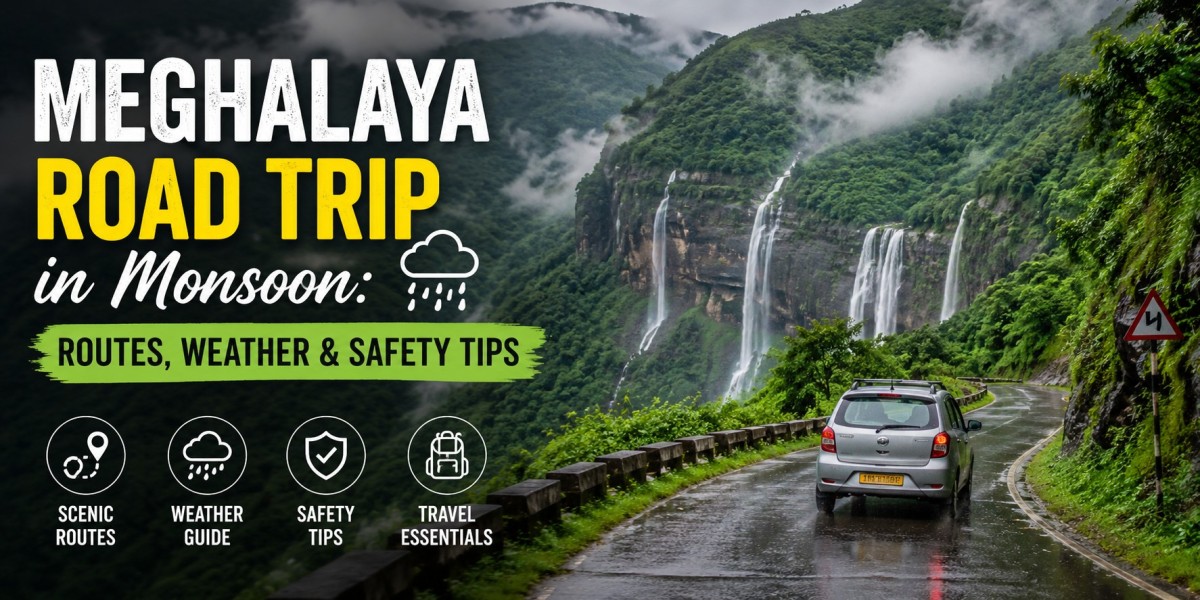


There is something special about driving through Meghalaya during the monsoon. The hills turn deep green, waterfalls become more dramatic, clouds settle over the valleys, and even familiar roads can feel like part of an adventure.
But a Meghalaya road trip during the rainy season is not quite the same as travelling in winter. Heavy rainfall can affect road conditions, visibility and travel times, so a little preparation goes a long way.
If you are planning a road trip to Meghalaya in July, August or September, here is what you should know about the routes, weather, places to visit and essential safety precautions.
Why Take a Road Trip Through Meghalaya During Monsoon?
Meghalaya is known as the “Abode of Clouds”, and the monsoon is when the name really comes alive. The state receives heavy rainfall between June and September, transforming its forests, valleys and waterfalls into a lush green landscape. Meghalaya Tourism also notes that the monsoon is particularly attractive for visitors who want to see the region's waterfalls at their most impressive.
The downside is that rain can make travel unpredictable. A journey that normally takes a few hours may take considerably longer because of wet roads, traffic, poor visibility or temporary disruptions.
For travellers who enjoy scenic drives rather than sticking to a strict timetable, however, the monsoon can be a memorable time to explore.
Best Routes for a Meghalaya Monsoon Road Trip
1. Guwahati to Shillong
For most travellers arriving by air or train, Guwahati is the practical starting point.
The drive towards Shillong takes you through the hills and offers plenty of opportunities to stop and enjoy viewpoints along the way. Umiam Lake is one of the most popular stops before reaching Shillong and makes a good place to break up the journey.
Spend at least a night in Shillong before heading deeper into Meghalaya. This gives you some flexibility if rain affects the next day's plans.
2. Shillong to Sohra
The Shillong–Sohra route is one of the most rewarding drives during the monsoon.
Sohra, also known as Cherrapunji, is surrounded by waterfalls, cliffs, caves and dramatic valleys. During periods of heavy rain, waterfalls can become particularly spectacular.
Nohsngithiang, commonly known as Seven Sisters Falls, is one of the highlights. Meghalaya Tourism describes the waterfall as a spectacular multi-section cascade dropping more than 300 metres.
Other attractions around the route include Nohkalikai Falls, Mawsmai Cave and various viewpoints overlooking the surrounding valleys.
However, do not try to rush through every attraction in one day. Rain, slippery paths and traffic can make sightseeing slower than expected.
3. Shillong to Mawlynnong and Dawki
If your schedule allows, continue towards Mawlynnong and Dawki.
Mawlynnong is famous for its village environment and greenery, while Dawki is known for the Umngot River and surrounding hills. The route offers a different side of Meghalaya compared with the Shillong–Sohra circuit.
During monsoon, however, river activities may be affected by water levels and weather conditions. Always check local conditions before planning boating or other water-based activities.
4. Shillong to Jowai and Krangshuri
Travellers looking for a less conventional route can consider Jowai and the surrounding Jaintia Hills.
Krangshuri Falls is one of the region's well-known attractions, surrounded by forest and dramatic scenery. Meghalaya Tourism specifically advises monsoon visitors to carry waterproof clothing and anti-slip footwear and to monitor weather forecasts for heavy rain and landslide warnings.
This route can work particularly well for travellers who want to explore beyond the usual Shillong and Cherrapunji itinerary.
What Is Meghalaya Weather Like During Monsoon?
Expect rain, humidity, cloud cover and sudden changes in conditions.
The monsoon season generally runs from June to September, with particularly wet conditions in parts of the Khasi Hills. Mawsynram and Sohra are among the areas famous for their extraordinary rainfall.
Do not plan your itinerary around a perfectly clear forecast. A morning can begin with mist and light rain before conditions change later in the day.
For a road trip, the most important thing is not simply the temperature but how much rain has fallen recently. Heavy rainfall can make roads slippery and increase the risk of landslides or temporary access problems.
Build some flexibility into your schedule rather than booking every day down to the last hour.
Is Driving in Meghalaya During Monsoon Safe?
It can be, provided you take the weather seriously.
The biggest mistake is treating a monsoon road trip like a normal summer drive. Roads may become slippery, visibility can drop quickly and water can accumulate in certain areas.
The 2025 advisory issued for the Sohra area specifically warns visitors about the dangers around water bodies, steep areas, cliffs and jungles during the monsoon. It recommends staying on marked trails, wearing sturdy non-slip footwear and checking weather updates.
If you are unfamiliar with mountain driving, hiring an experienced local driver can be a much better option than driving yourself.
7 Essential Safety Tips for a Meghalaya Monsoon Road Trip
1. Check the Weather Before Every Drive
Do not rely only on the forecast you checked before leaving home. Conditions can change quickly in the hills.
Meghalaya Tourism recommends checking daily forecasts and paying attention to warnings related to heavy rain and landslides.
2. Avoid Driving Late at Night
Daylight gives you better visibility and makes it easier to identify slippery sections, damaged roads, falling debris and other hazards.
Start early where practical and leave enough time to reach your accommodation before dark.
3. Keep Your Schedule Flexible
Avoid planning several distant attractions on the same day.
A delayed start or road disruption can quickly turn an ambitious itinerary into a stressful one. Two or three major stops per day are often more realistic during heavy monsoon conditions.
4. Wear Proper Footwear
Flip-flops may be fine at your hotel, but they are not ideal for wet viewpoints, waterfalls or forest paths.
Choose shoes with good grip and carry an extra pair of socks. Waterproof footwear can make a surprisingly big difference.
5. Be Careful Around Waterfalls
Waterfalls are among Meghalaya's biggest attractions during the rainy season, but stronger currents and slippery rocks also make them more dangerous.
Do not climb over barriers for photographs, stand close to unstable edges or enter restricted water areas. The Sohra advisory specifically warns visitors about sudden surges, hidden rocks and strong currents.
6. Keep an Emergency Kit in the Car
Carry drinking water, basic medicines, a torch, power bank, rain protection, snacks and copies of important documents.
A waterproof bag is useful for keeping phones, cameras and documents dry.
7. Listen to Local Advice
If hotel staff, drivers, guides or local authorities advise against visiting a particular location because of heavy rain, take the warning seriously.
Weather conditions on the ground can be very different from what you see online.
What Should You Pack for Meghalaya in Monsoon?
Keep your luggage practical rather than bulky.
Your monsoon packing list should include:
Waterproof jacket or poncho
Quick-drying clothes
Anti-slip walking shoes
Waterproof backpack or dry bags
Extra socks
Umbrella
Power bank
Basic medicines
Insect repellent
Small first-aid kit
Reusable water bottle
Waterproof phone cover
Meghalaya Tourism recommends waterproof bags, rain jackets, umbrellas, anti-slip shoes and quick-drying clothing for monsoon travel.
Should You Book a Meghalaya Tour Package in Monsoon?
A self-drive trip offers freedom, but a professionally organised trip can be more convenient during unpredictable weather.
Travellers who do not know the local roads may prefer Meghalaya Tour Packages that include transport, accommodation and a planned itinerary. Having a local driver can also reduce the pressure of navigating unfamiliar mountain roads in heavy rain.
When comparing packages, check whether the itinerary allows changes due to weather. A flexible operator is generally more useful during monsoon than one offering a rigid schedule.
How to Plan a Better Monsoon Itinerary
Try not to cover too much ground.
A comfortable itinerary could include:
Day 1: Guwahati to Shillong
Day 2: Shillong sightseeing and Umiam Lake
Day 3: Shillong to Sohra
Day 4: Sohra waterfalls and viewpoints
Day 5: Mawlynnong and Dawki, subject to weather
Day 6: Return towards Shillong or Guwahati
You can add Jowai, Krangshuri or other attractions if you have additional days.
The key is to leave room for unexpected delays. During monsoon, flexibility is more valuable than trying to tick every attraction off a list.
Final Thoughts
A Meghalaya road trip during the monsoon can be spectacular. The rain brings out the state's waterfalls, forests and mist-covered landscapes in a way that is difficult to experience at other times of year.
At the same time, it requires respect for the weather. Plan shorter driving days, check conditions regularly, avoid risky areas and give yourself enough time to change plans when necessary.
If you are travelling from another part of India and want help organising transport, accommodation and sightseeing, working with an india tour planner can make the journey easier, particularly when monsoon conditions require last-minute itinerary changes.
With sensible planning and a flexible approach, Meghalaya in the rainy season can turn into one of those road trips you remember long after the journey home.








