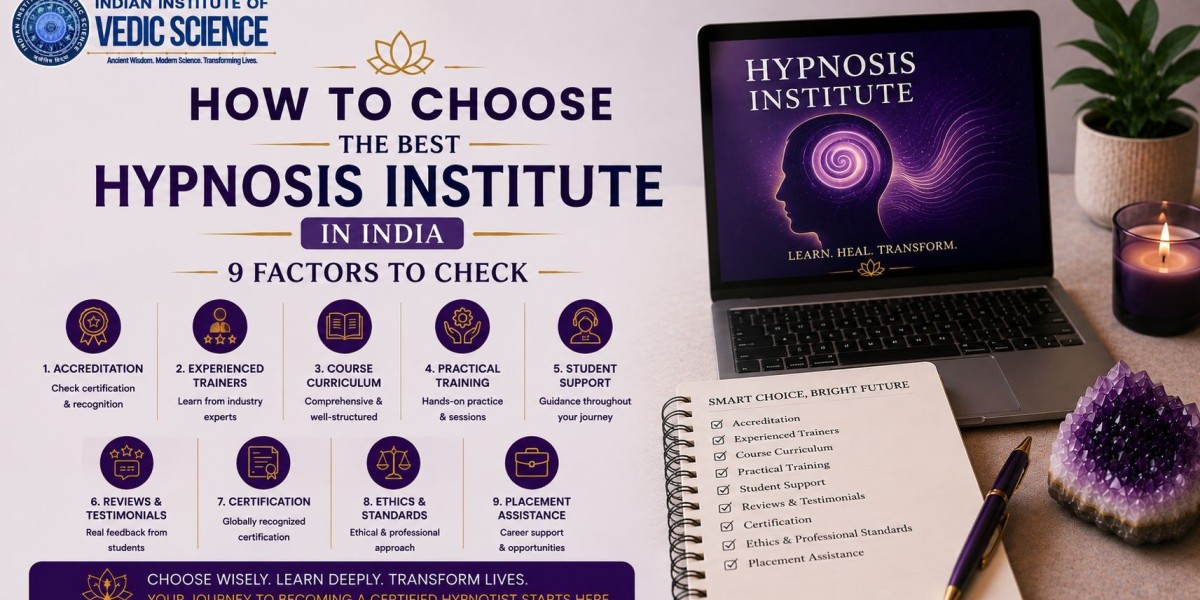


How to Choose the Best Hypnosis Institute in India: 9 Factors to Check
Choosing a hypnosis training institute is an important decision for anyone who wants to study the subject in a structured way. Many programmes may use similar terms, but their curriculum, teaching methods, practical training and certification requirements can differ considerably.
For beginners, the challenge is not simply finding a course. It is finding a programme that matches their learning goals and provides enough guidance to develop a sound understanding of hypnosis.
A Best Hypnosis Institute in India should therefore be evaluated on more than advertising, course fees or certificate claims. Learners should examine the actual curriculum, instructor experience, practical methodology, assessment process and professional scope before enrolling.
This guide covers nine important factors that can help you compare institutes and make a more informed decision.
To identify a quality hypnosis institute, compare its curriculum, faculty, practical training, class format, certification, student support, learning resources, professional scope and overall value. Look for transparent information rather than relying on promotional claims. Practical training and instructor interaction are especially important because hypnosis involves communication and structured techniques that benefit from guided practice.
The right institute should provide a clear syllabus, qualified instructors, practical learning, interactive classes, transparent certification and ongoing student support. Check whether the programme explains its professional scope and whether the certificate represents course completion or a regulated qualification. Online learning can be convenient, but practical interaction should not be overlooked. Compare the complete educational experience rather than choosing an institute solely because it is inexpensive or heavily promoted.
9 Factors to Check Before Choosing a Hypnosis Institute
1. Examine the Curriculum
The first thing to check is what the programme actually teaches.
A structured Hypnosis Course may cover topics such as:
Fundamentals of hypnosis
History and development of hypnosis
Focused attention
Relaxation techniques
Induction methods
Suggestion techniques
Communication and rapport
Session structure
Practical exercises
Professional boundaries
Ethical considerations
The curriculum should follow a logical progression. Beginners should not be expected to understand advanced techniques without first learning the fundamentals.
Also check whether the syllabus provides enough detail to understand what you will actually learn during the programme.
2. Research the Faculty
The quality of teaching can significantly affect your learning experience.
Before enrolling, look for information about:
Faculty experience
Subject expertise
Teaching background
Practical knowledge
Class interaction
Approach to student questions
An experienced instructor should be able to explain concepts clearly and demonstrate how techniques are applied.
Do not rely only on titles or promotional descriptions. Look for meaningful information about the people responsible for teaching the programme.
3. Check the Practical Training
Practical learning is one of the most important factors to evaluate.
Reading about hypnosis is different from practising communication, relaxation or induction techniques.
A quality programme may include:
Instructor demonstrations
Role-play exercises
Guided practice
Peer practice
Live sessions
Practical assignments
Feedback
When comparing Hypnosis Courses Online, ask exactly how students practise techniques and whether instructors provide feedback.
If a programme is entirely theoretical, learners may have fewer opportunities to develop confidence in applying what they have studied.
4. Understand the Class Format
The learning format should fit your schedule and preferred learning style.
Online programmes may include:
Live classes
Recorded lessons
Hybrid learning
Digital study material
Online assignments
Interactive sessions
If you prefer direct interaction, live classes may be more suitable than a programme based entirely on pre-recorded videos.
When evaluating Hypnotherapy Classes Online, find out whether students can ask questions during lessons and whether practical demonstrations are included.
Convenience is valuable, but interaction remains important for a subject that involves communication and guided techniques.
5. Verify Certification Details
A certificate can document completion of a training programme, but learners should understand exactly what it represents.
When comparing Hypnosis Certification Online programmes, ask:
Is an assessment required?
Are practical exercises evaluated?
Is there a final examination?
What are the completion requirements?
What is the exact certificate title?
When is the certificate issued?
Do not assume that every certificate represents the same level of professional qualification.
Certification from a training provider and a regulated professional licence are different things. If you intend to work in a healthcare or clinical setting, check the applicable professional and legal requirements separately.
6. Look at Student Support
Learning does not stop when a class ends.
Students may need clarification about terminology, techniques, assignments or practical exercises.
Useful student support can include:
Faculty doubt-solving
Assignment feedback
Revision sessions
Learning resources
Discussion groups
Course guidance
Access to instructors
A programme that provides ongoing support can make the learning process more manageable, especially for beginners.
Ask the institute how students communicate with faculty and what support is available during and after classes.
7. Check the Learning Resources
Study material can influence how easily learners revise and practise.
Depending on the programme, resources may include:
Course notes
Digital learning material
Demonstration videos
Practice exercises
Assignments
Case examples
Reference material
The availability of resources should be considered alongside teaching quality.
Having a large amount of material does not necessarily mean the programme is better. What matters is whether the resources are relevant, organised and useful for reinforcing classroom learning.
8. Understand the Professional Scope
This is particularly important for learners who intend to use hypnosis professionally.
A responsible training provider should explain what the course prepares students to do and what falls outside its scope.
For example, completing a general hypnosis programme does not automatically qualify someone to diagnose or treat medical or psychiatric conditions.
Students considering Hypnotherapist Certification should therefore verify:
The qualification they already hold
The scope of the training
Applicable local regulations
Whether additional professional credentials are required
What services they can legally provide
Clear information about professional boundaries is an important quality signal.
9. Compare Overall Value, Not Just Price
Course fees naturally matter, but price alone should not determine your choice.
Instead, compare what each programme provides.
Consider:
Curriculum depth
Faculty access
Practical training
Class duration
Study material
Assignments
Assessments
Student support
Certification
Learning flexibility
A lower-cost programme may provide fewer learning components, while a higher-priced programme is not automatically superior.
The better question is: What educational value do I receive for the complete programme?
Online vs Offline Hypnosis Training
Online education can make specialised training more accessible to learners in different locations.
Potential benefits include:
No daily travel
Flexible location
Convenient schedules
Digital resources
Access to instructors from different regions
Easier revision
Offline education may provide face-to-face interaction and direct classroom practice.
Neither format is automatically the right choice. Consider your schedule, learning preference and the amount of practical interaction offered.
What About Clinical Hypnosis Training?
Learners may encounter programmes marketed as a Clinical Hypnotherapist Course.
The word “clinical” should be examined carefully. A course title alone does not establish that a programme provides a regulated healthcare qualification.
If your goal involves clinical or healthcare practice, verify:
The relevant professional qualification
Regulatory requirements
Scope of practice
Recognition of the credential
Whether additional education is required
This distinction is important when comparing programmes and planning a professional pathway.
What Skills Can Training Develop?
A structured programme can help learners develop skills such as:
Communication
Active listening
Clear explanations
Rapport building
Professional interaction
Practical Techniques
Relaxation
Induction
Suggestion
Session planning
Structured communication
Analytical Skills
Understanding client objectives
Selecting appropriate techniques within training
Reviewing sessions
Identifying areas for improvement
These skills can support continued education and appropriate professional development.
Can Beginners Join?
Many introductory programmes are designed for learners who are new to hypnosis.
Before enrolling, beginners should check whether the programme:
Starts with fundamentals
Explains terminology clearly
Provides practical guidance
Includes instructor support
Offers structured assignments
If a programme assumes prior knowledge, it may not be the best fit for someone starting from zero.
How to Compare Institutes Before Enrolling
Create a simple checklist and compare each institute against the same criteria.
Ask:
Is the curriculum clearly explained?
Who teaches the programme?
How much practical training is included?
Are classes live or recorded?
Can students interact with instructors?
What assessment is required?
What exactly does the certificate represent?
Is student support available?
Does the professional scope match my goals?
This approach can help you make a decision based on evidence rather than marketing language.
Why Consider IIVS?
The Indian Institute of Vedic Science (IIVS) offers structured learning opportunities across Vedic and related knowledge systems. Learners researching the Best Hypnosis Institute in India can evaluate factors such as curriculum structure, guided instruction, practical exposure and student support when comparing programmes.
IIVS focuses on structured education and guided learning across its programmes. Students should review the current syllabus, course duration, class format, practical components, assessment and certification requirements directly with the institute before enrolling.
Career Scope After Training
Career possibilities depend on the learner's existing qualifications, experience, training and applicable regulations.
Potential directions may include:
Wellness-related services
Complementary practice
Educational workshops
Personal development programmes
Content creation
Further professional study
Teaching introductory concepts
Those planning to provide healthcare or clinical services should verify the professional requirements that apply to their specific location and role.
Training can provide a foundation, but professional development generally requires continued learning and responsible practice.
Choosing a hypnosis institute should be treated as an educational decision rather than simply a search for the cheapest or most highly advertised course.
The Best Hypnosis Institute in India for one learner may not be the right choice for another. Your decision should depend on curriculum quality, faculty expertise, practical training, class format, certification, student support and your intended professional scope.
Take time to compare these nine factors before enrolling. A transparent programme that clearly explains what you will learn, how you will practise and what the certification represents can help you make a more confident decision.
Start Your Learning Journey with IIVS
Interested in structured learning in hypnosis and related Vedic science disciplines? Indian Institute of Vedic Science (IIVS) offers guided educational programmes focused on structured learning and skill development.
Website: https://iivs.com/
Call or WhatsApp: +91 79826 57336
Book your Free Counselling to discuss your learning objectives and understand the current programme structure before enrolling.
Frequently Asked Questions
How do I choose the best hypnosis institute?
Compare curriculum, faculty experience, practical training, class format, certification, student support, learning resources and professional scope. Do not base the decision only on price.
Is practical training important in hypnosis education?
Yes. Guided practice can help learners develop communication, relaxation, induction and session-structuring skills more effectively than theory alone.
Are online hypnosis courses suitable for beginners?
They can be suitable when the programme starts with fundamentals and provides live interaction, demonstrations, practical exercises and instructor support.
What should I check before choosing hypnosis certification online?
Check the curriculum, assessment process, practical requirements, certificate title, completion criteria and the professional scope associated with the qualification.
Does a hypnosis certificate make someone a clinical professional?
Not automatically. A training certificate is different from a regulated healthcare qualification or professional licence. Applicable professional requirements should be verified separately.
What is the difference between hypnosis and hypnotherapy training?
Hypnosis training may focus on hypnosis concepts and techniques, while hypnotherapy programmes may place greater emphasis on therapeutic applications. The exact scope depends on the curriculum and professional context.
Can I build a career after hypnosis training?
Training can support further development in wellness, education or complementary areas, depending on your existing qualifications and applicable regulations. Continued practice and education remain important.






