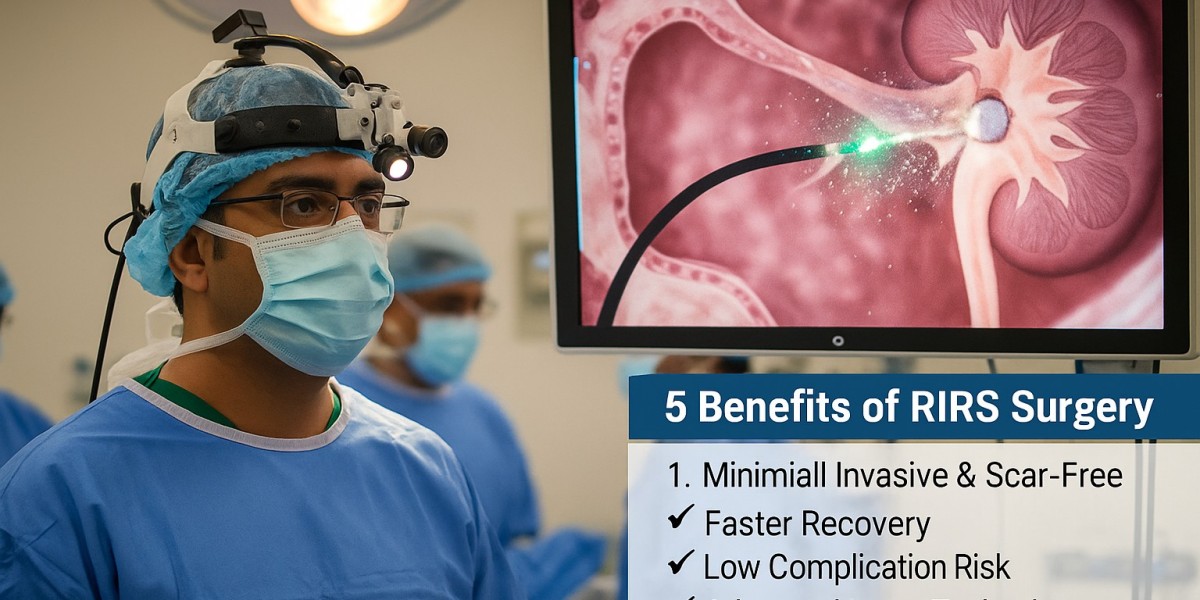


Retrograde Intrarenal Surgery (RIRS) has revolutionized the field of Urology, especially in the treatment of kidney Stones. This advanced, minimally invasive, Endoscopic Kidney Stone Surgery allows surgeons to remove stones through the body’s natural urinary passage — without any external cuts or stitches. Over the past few years, RIRS Surgery has gained tremendous popularity among patients and specialists alike, thanks to its high precision, faster recovery, and remarkable safety profile. It represents a major leap forward from conventional procedures such as open or percutaneous surgeries. In this article, we’ll explore the 5 Benefits of RIRS Surgery, explaining why this innovative Laser Kidney Stone Treatment has become the preferred choice for both doctors and patients seeking safe, effective, and scar-free kidney stone management.
What is RIRS (Retrograde Intrarenal Surgery)?
Retrograde Intrarenal Surgery (RIRS) is a modern, minimally invasive technique used to remove kidney stones through the natural urinary tract, without any external cuts or stitches.A flexible scope called a ureteroscope is passed through the urethra and bladder up to the kidney. Using laser energy, the stones are gently broken into fine fragments that can be easily removed or pass naturally through urine. Because it causes minimal pain, ensures faster recovery, and leaves no scars, RIRS Surgery has become one of the most preferred treatments for kidney stones among both patients and urologists today. It is often referred to as a Laser Kidney Stone Surgery or Scar-Free Kidney Stone Treatment.
When is RIRS Surgery Needed?
According to Dr. Akhil S. Mane, a leading Urologist in Pune, RIRS Surgery is usually recommended when kidney stones are:
- Too large or located in areas that cannot be treated through procedures like Shock Wave Lithotripsy (SWL) or Ureteroscopy (URS).
- Small calcium oxalate stones are positioned deep inside the kidney, making them difficult to reach with conventional methods.
- Cases where previous treatments such as ureterorenoscopy were not successful, or when patients cannot undergo general anesthesia.
In such situations, RIRS Surgery becomes the safest and most effective option. This advanced, Minimally Invasive and Laser-Based Approach allows the stones to be removed without external cuts, ensuring less pain, quicker recovery, and minimal risk of complications. Under the expert care of Dr. Akhil S. Mane, RIRS Surgery in Pune provides a highly reliable and comfortable solution for patients seeking a Modern, Scar-free, and Advanced Urology Treatment to get rid of kidney stones.
5 Key Benefits of RIRS Surgery:
- Minimally Invasive & Scar-Free Approach: One of the main Benefits of RIRS Surgery is that it’s completely minimally invasive. There are no large incisions, the surgeon accesses the kidney through natural urinary passages using a flexible ureteroscope. This reduces the risk of infection, minimizes postoperative pain, and ensures a Scar-Free Recovery, which is both medically and cosmetically beneficial.
- Faster Recovery & Short Hospital Stay: Unlike open surgeries that require several weeks of rest, RIRS allows most patients to return to normal activities within a few days. The procedure causes minimal trauma to surrounding tissues, leading to Faster Healing and a Short Hospital Stay — often just a day. This quick recovery is especially valuable for working individuals and those who want minimal disruption to their daily lives.
- Low Complication and Injury Risk: RIRS is associated with a lower risk of surgical complications compared to open or percutaneous methods. Since it doesn’t involve external cuts, there is minimal bleeding, a lower chance of infection, and less pain. The advanced laser technology and precision of the ureteroscope also reduce the chances of urinary tract or kidney injury, making it a safer and gentler approach to stone removal.
- Advanced Laser Technology & High Success Rate: RIRS Surgery uses Holmium laser energy to break down stones of different sizes and compositions into tiny fragments. This Laser Kidney Stone Treatment in Pune ensures accurate and complete stone clearance, even from difficult-to-reach areas of the kidney. The high precision and flexibility of the ureteroscope result in a Higher Success Rate, often eliminating the need for repeat procedures.
- Comfortable, Safe, and Highly Effective: Patients experience less discomfort during and after RIRS because the procedure is performed under anesthesia and causes minimal tissue damage. Postoperative pain is mild, and painkillers are rarely needed for long. This makes RIRS one of the most comfortable, effective, and Patient-Friendly Kidney Stone Treatments available today.
Dr. Akhil S. Mane – The Best Urologist in Pune for RIRS Surgery:
Retrograde Intrarenal Surgery (RIRS) represents a significant advancement in laser kidney stone treatment and advanced urology care. Its minimally invasive approach, shorter recovery period, and lower complication risk make it the preferred choice for both patients and surgeons. With its high success rate, improved stone clearance, and minimal scarring, RIRS Surgery provides an effective and safe solution for kidney stone patients. Under the expert care of Dr. Akhil S. Mane, one of the Best urologists in Pune, patients receive precise diagnosis, advanced endoscopic treatment, and compassionate post-operative care. His expertise in performing RIRS and kidney stone laser surgery ensures faster recovery, minimal discomfort, and excellent long-term outcomes. As an advanced urology treatment, RIRS combines precision, safety, and comfort, making it an ideal choice for those seeking Laser Kidney Stone Treatment in Pune. surgery is becoming even more effective and patient-friendly, making it a highly recommended choice for managing kidney stones.
Call +91 7689892020 or Visit us at Leela Superspeciality Hospital, Wakad, to Book Your Appointment with Dr. Akhil S. Mane today.










