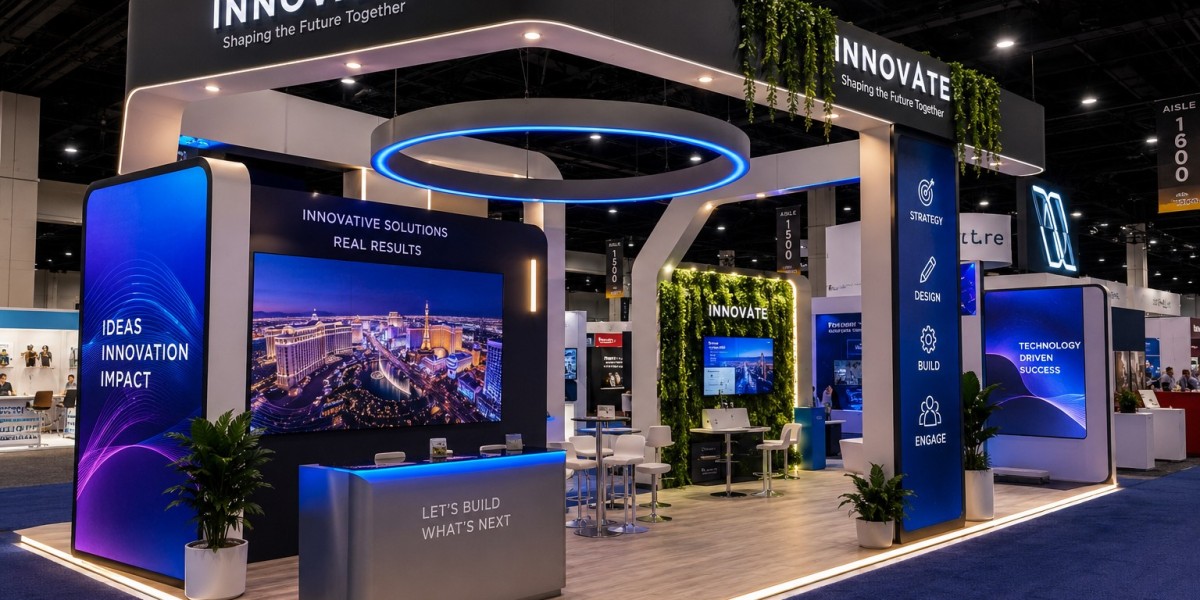


Trade shows give businesses a unique opportunity to meet potential customers face-to-face, introduce new products, build relationships, and strengthen brand recognition. But simply reserving exhibition space is not enough to achieve strong results. Your booth needs to attract attention and communicate your value within seconds. This is why thoughtful trade show display design is so important. A well-planned display can transform an ordinary exhibition space into an engaging environment that attracts visitors, supports conversations, showcases products, and helps your team generate valuable leads.
Understanding Trade Show Display Design
Trade show display design involves much more than selecting graphics and putting up a branded wall. It is the process of planning the complete physical and visual experience visitors encounter when they approach your booth.
This can include booth architecture, wall structures, graphics, signage, lighting, flooring, furniture, product displays, digital screens, interactive technology, storage, meeting areas, and demonstration spaces.
The best designs combine these elements into a cohesive environment. Every component should have a purpose and contribute to your overall exhibition goals.
A strong display should answer several questions immediately. Who is the company? What does it offer? Why should visitors care? What should they do next?
When these questions are answered clearly, your booth becomes easier to understand and more effective at attracting qualified prospects.
Start With Your Trade Show Objectives
Before thinking about colors or booth structures, determine what you want to accomplish at the event.
Some businesses participate primarily to generate leads. Others want to launch products, demonstrate technology, meet existing customers, increase brand awareness, recruit partners, or schedule sales appointments.
Your objectives should influence the design.
If lead generation is the priority, you may need an inviting open layout with several conversation areas.
If product demonstrations are important, you will need dedicated demonstration stations.
If you are launching a product, that product should probably receive prominent visual placement.
Starting with objectives prevents you from creating a booth that looks impressive but does not support your business goals.
Know Your Target Audience
Effective exhibition design begins with an understanding of the people you want to attract.
Consider who attends the event and what they are looking for.
Are your visitors purchasing managers, business owners, technical professionals, executives, consumers, distributors, or industry specialists?
Different audiences may respond to different messages and experiences.
A technical audience might want detailed product demonstrations. Senior decision-makers may be more interested in business results, efficiency, scalability, and return on investment.
Your booth should communicate in a way that feels relevant to the audience rather than trying to appeal to everyone at once.
Develop a Clear Brand Message
Your booth should communicate your brand identity quickly.
Visitors may only glance at your display for a few seconds before deciding whether to stop.
Your company name, logo, main message, and key value proposition should therefore be easy to identify.
A concise headline can be particularly effective.
Instead of filling a wall with detailed information, use one strong message to communicate what your company does or what problem it solves.
Additional information can be introduced through product demonstrations, conversations, brochures, digital displays, or presentations.
Build a Strong Visual Hierarchy
Visual hierarchy helps visitors understand what they should look at first.
Without hierarchy, every graphic, product, headline, and screen competes for attention.
Start by identifying your most important visual element.
This might be your logo, main product, key message, or major campaign.
Then establish secondary elements that provide supporting information.
For example, your main headline could attract attention from the aisle, while supporting graphics explain the benefits after visitors enter the booth.
A clear hierarchy makes the booth easier to understand and prevents visual clutter.
Select the Right Booth Layout
Your booth layout should reflect how you want visitors to interact with your brand.
An open layout can encourage people to enter naturally.
A product-focused layout may place demonstrations in prominent positions.
A meeting-oriented layout may include dedicated areas for private or semi-private conversations.
Think about visitor movement from the aisle into the booth.
The entrance should feel accessible. Important information should remain visible. Staff should have enough space to engage visitors without creating congestion.
A well-planned layout supports both visitor comfort and sales activity.
Make Your Booth Visible From a Distance
Visibility is essential in a crowded exhibition hall.
Your display should be recognizable from several feet away.
Large graphics, clear signage, illuminated logos, tall structures, and strong contrast can help your booth stand out.
Vertical elements can be particularly effective because they can remain visible above neighboring displays.
However, visibility should always be combined with clear communication. A large booth that does not explain what the company does may attract attention without generating meaningful engagement.
Use High-Quality Graphics
Graphics are one of the most visible elements of your booth.
Use high-resolution images and professional layouts that reflect your brand.
Avoid blurry photographs, excessive text, inconsistent colors, and complicated designs.
Your graphics should support your message rather than simply decorate the booth.
A strong product image can communicate value quickly. A carefully selected lifestyle image can help visitors understand how your product fits into their lives.
The right visual can often communicate an idea faster than a paragraph.
Keep Text Easy to Read
Trade show visitors are usually moving rather than standing still.
This means your booth text needs to be readable quickly.
Use short headlines and concise supporting statements.
Large fonts and strong contrast can improve readability.
Avoid filling walls with lengthy descriptions.
If visitors need detailed information, give your staff an opportunity to explain it or provide supporting materials.
The booth should generate interest rather than attempt to contain your entire marketing library.
Use Color Strategically
Color can influence both visibility and brand recognition.
Your booth should generally reflect your existing brand palette so visitors can connect the exhibition experience with your other marketing materials.
However, colors should also be selected for readability and visual balance.
Use contrasting colors to highlight important information.
An accent color can direct attention toward a product, call to action, or interactive element.
Avoid using too many colors without a clear purpose because this can create visual confusion.
Use Lighting as a Design Tool
Lighting is often underestimated in exhibition planning.
The right lighting can make graphics easier to see, highlight products, and create a more inviting atmosphere.
Backlit graphics can create strong visual impact. Accent lights can emphasize specific products. Illuminated logos can improve brand visibility.
Lighting can also influence the mood of the booth.
A carefully designed lighting plan makes the booth feel intentional and professional rather than simply illuminated.
Integrate Technology Carefully
Technology can create interactive and memorable experiences.
Digital displays, touchscreens, virtual demonstrations, interactive presentations, and other tools can encourage visitors to engage with your company.
However, technology should serve a purpose.
A screen playing a generic promotional video may attract limited attention.
A touchscreen that lets visitors explore a product, calculate savings, compare solutions, or experience a service can provide much more value.
Technology should make information easier to understand or the visitor experience more engaging.
Create Product Demonstration Areas
If your product benefits from seeing it in action, demonstrations should be a central part of your booth.
A demonstration can turn abstract features into a real experience.
Make the demonstration area easy to identify from the aisle.
Allow enough space for several people to watch without blocking traffic.
Your staff should also be prepared to explain the product in simple terms and connect its features to visitor needs.
Scheduled demonstrations can create moments of activity that attract additional attention throughout the event.
Design Comfortable Meeting Areas
Trade show conversations can range from quick introductions to detailed business discussions.
Your booth should provide an appropriate environment for both.
Small seating areas can support casual conversations, while larger exhibits may include dedicated meeting rooms.
Meeting spaces should be comfortable without making the booth feel closed.
Use furniture that matches your brand and does not consume more space than necessary.
The goal is to make prospects comfortable enough to continue the conversation while keeping your booth accessible to other visitors.
Include Practical Storage
Storage is an important part of effective booth planning.
Exhibitors often need space for brochures, promotional products, staff belongings, packaging, cables, and other materials.
Without designated storage, these items can quickly create clutter.
Integrate storage into the booth design whenever possible.
Hidden cabinets, counters, closets, and under-counter compartments can keep supplies organized without interfering with the visitor experience.
A clean booth looks more professional and makes important design elements easier to see.
Design for Visitor Flow
Think carefully about how people move through your booth.
Visitors should be able to enter, explore, interact, speak with staff, and exit naturally.
Avoid placing furniture or displays in locations that create bottlenecks.
Your most important information should be visible from the aisle.
Interactive features should be positioned so that people can participate without blocking other visitors.
Good visitor flow makes the booth feel larger, more welcoming, and easier to navigate.
Make Your Staff Part of the Experience
Your booth design may attract visitors, but your team turns that attention into conversations.
Staff should understand the booth layout and know where products, brochures, demonstrations, and meeting areas are located.
They should also understand the main messages communicated through the display.
A consistent approach helps the visitor experience feel professional.
Staff should be visible and approachable without aggressively pursuing every person walking past.
The objective is to create an environment where visitors feel comfortable starting a conversation.
Add Interactive Experiences
Interactive experiences can increase the amount of time visitors spend with your brand.
Depending on your industry, you might offer product trials, touch-screen experiences, games, quizzes, virtual demonstrations, live presentations, or hands-on activities.
The experience should connect to your business.
If the interaction is entertaining but has no relationship to your products or services, it may create attention without generating qualified interest.
Use interaction to help visitors understand your offering or experience its benefits.
Make the Booth Photogenic
A memorable booth can generate attention beyond the physical exhibition space.
Visitors may photograph unique structures, attractive displays, products, demonstrations, or branded experiences.
Creating a distinctive visual feature can encourage social sharing.
This might be an unusual architectural element, a creative installation, a large product display, or an interactive feature.
Make sure your branding remains visible in photographs so that shared content continues to promote your company.
Incorporate Sustainability
Sustainable exhibition practices can be integrated into modern booth design.
Reusable structures, modular components, recyclable materials, energy-efficient lighting, and digital information can help reduce waste.
Modular displays can be particularly useful for businesses attending several events because components can often be adapted to different booth sizes.
Sustainability can also strengthen your brand message when environmental responsibility is important to your customers.
Consider Your Budget
Effective design does not necessarily require an enormous budget.
The key is prioritization.
Invest in elements that directly support your objectives.
If brand visibility is the main goal, prioritize strong graphics, signage, and lighting.
If product demonstrations drive sales, allocate more resources to demonstration technology and presentation areas.
If meetings are the priority, invest in comfortable and functional conversation spaces.
A clear budget helps your design team make practical decisions without sacrificing the most important aspects of the visitor experience.
Plan for Installation
The final booth needs to work not only visually but also operationally.
Consider transportation, assembly, electrical requirements, technology setup, venue regulations, installation schedules, and dismantling.
A complicated design can require additional time and resources.
Working with experienced exhibit professionals can help identify potential challenges before construction begins.
Good planning reduces last-minute problems and helps ensure that the final booth matches the approved concept.
Adapt the Design to the Venue
Every exhibition venue has its own characteristics.
Ceiling heights, aisle arrangements, lighting conditions, venue regulations, loading procedures, and available utilities can all influence your booth.
Your design should therefore be developed specifically for the event rather than copied without modification from another exhibition.
A professional exhibition partner can help account for these requirements during the planning process.
Plan Your Lead Capture Strategy
A beautiful booth is valuable, but business results matter most.
Decide how you will capture and qualify leads before the event.
Digital forms, badge scanning, appointment scheduling, product demonstrations, and staff conversations can all contribute to lead generation.
Your display can support this process by making the next step obvious.
For example, a sign might encourage visitors to schedule a consultation or experience a product demonstration.
The simpler the process, the easier it is for visitors to take action.
Measure Your Trade Show Performance
After the exhibition, analyze the results.
Look at visitor numbers, qualified leads, meetings, product demonstrations, sales opportunities, and other relevant metrics.
Ask your staff which parts of the display generated the most engagement.
Pay attention to common questions and areas where visitors appeared confused.
These insights can help improve future exhibitions.
A successful trade show strategy is rarely built around one event. It develops through continuous testing and refinement.
Work With an Experienced Exhibit Partner
Designing, producing, installing, and managing a trade show display involves many moving parts.
An experienced exhibit company can provide support throughout the process.
This may include concept development, booth design, graphics, fabrication, furniture, lighting, technology, transportation, installation, and dismantling.
Professional guidance can also help you make better use of your budget and exhibition space.
The right partner should understand your objectives rather than simply providing a standard booth package.
Final Thoughts
An effective trade show presence begins with strategic planning and continues through thoughtful design, strong branding, clear messaging, engaging experiences, and practical execution. From the first visual impression to the final lead conversation, every element of your trade show display design should work toward the same goal: attracting the right visitors and creating meaningful opportunities for your business. By combining creativity with functionality and keeping your audience at the center of the process, you can create an exhibition environment that looks professional, communicates your value clearly, and delivers stronger results.









