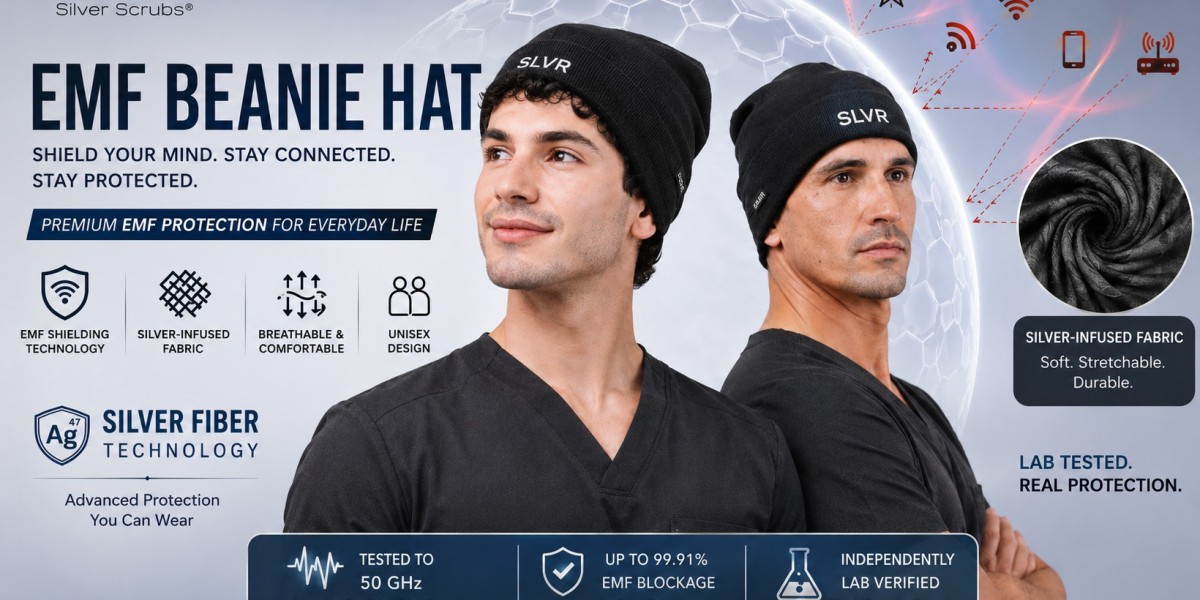


An emf beanie hat looks, from the outside, like any other knit cap. The difference is entirely in the fiber. Understanding why silver fiber is used and how it's incorporated into fabric helps explain what separates a genuine shielding textile from a hat that simply uses EMF as a marketing word.
Why Silver Is the Material of Choice
Silver is one of the most electrically conductive metals available, more conductive than copper or aluminum. Conductivity is the property that allows a material to interact with electromagnetic energy when fine silver fibers are present throughout a fabric, that conductive network is what enables the fabric to function as a shielding layer. This is the entire scientific basis for using silver in this category; it's a conductivity story, not a health or wellness one.
It's worth being precise here, because silver fiber does carry other welldocumented natural properties unrelated to conductivity. This content focuses exclusively on the shielding function; the reason silver appears in an emf beanie hat is its electrical behavior, not anything else.
How Fiber Gets Into the Fabric
There are two broad approaches manufacturers use to get a conductive element into a textile
Coating or printing a conductive layer is applied to the surface of finished fabric, similar to how a screen print sits on top of a shirt.
Weaving into the yarn conductive fiber is blended into the thread itself before the fabric is knitted or woven, so the material is conductive all the way through, not just on the surface.
Woven construction is generally more durable under normal use because the conductive element isn't sitting on the outside layer where it's exposed to abrasion, folding, and repeated washing. A coating can degrade with wear; a woven fiber runs through the structure of the material itself. If you'd like to see this same woven fiber approach documented across a broader product range, SLVR Wear's EMF blocking Silver Scrubs ® line uses the identical construction principle in apparel form.
What 35% Silver Fiber Actually Means
When a fabric composition is listed for example, a blend of silver fiber with polyester and spandex, that percentage tells you how much of the total fiber content is conductive material versus structural material (the polyester and spandex that give the fabric stretch, shape, and durability). A higher percentage of conductive fiber generally means a denser conductive network throughout the textile, though the exact construction and knit density also play a role in how that fiber is distributed across the finished hat.
The Role of Testing Standards
Textile shielding performance is commonly evaluated against established testing methodologies, including military grade standards such as GJB 5792A2021, which measures how effectively a conductive fabric interacts with electromagnetic frequencies across a tested range. When a brand references a specific testing standard by name and number, that's a data point you can look up independently; it's not a vague internal claim.
Construction Element | What It Does |
|---|---|
Silver fiber content | Provides the conductive pathway through the fabric |
Polyester/spandex blend | Provides structure, stretch, and shape retention |
Woven (not coated) build | Keeps conductivity distributed through the material, not just the surface |
Knit density | Affects how continuous the conductive network is |
Testing standard reference | Gives an independently verifiable benchmark |
Certification What OEKOTEX® Actually Confirms
OEKOTEX® Standard 100 certification on silver yarn confirms the material has been independently tested and found free of harmful substances. This certification doesn't relate to shielding performance directly; it's a material safety credential, separate from the conductivity story. Both pieces of information (safety certification and shielding construction) matter, but they're answering different questions.
From Fiber to Finished Beanie
The path from raw silver fiber to a finished emf blocker beanie runs through several stages of fiber blending, spinning into yarn, knitting into fabric, and finally cutting and stitching into the hat's shape. At each stage, the goal is to preserve the conductive network established at the fiber level. A knit that's too loose can create gaps in that network; a construction method that damages the fiber during stitching can reduce it as well.
This is why the finished hat's construction quality is just as relevant as the raw fiber percentage on a spec sheet. If you want to look directly at how this fiber science translates into a finished product, SLVR Wear ™ EMF blocking beanie lists its material composition on the product page rather than relying on unexplained marketing language.
Frequently Asked Questions(FAQs)
Why is silver specifically used in EMF blocking fabric instead of another metal?
Silver has very high electrical conductivity compared to most other metals, and conductivity is the property that allows a fiber network to interact with electromagnetic frequencies, which is why it's a common choice in shielding textiles.
What does a silver fiber percentage on a label mean?
It indicates how much of the total fiber blend is conductive silver versus other structural materials like polyester or spandex, which affect stretch and shape rather than shielding.
Is a woven fabric better than a coated one for EMF blocking beanies?
Woven construction distributes the conductive fiber through the entire thread rather than applying it as a surface layer, which tends to hold up better over repeated washing and everyday wear than a coating.
What is GJB 5792A 2021?
It's a military grade testing standard used to measure how effectively a conductive fabric performs across a tested frequency range, giving an independently referenced benchmark for shielding textiles.
Does OEKOTEX® certification mean the fabric blocks EMF?
No OEKOTEX® Standard 100 certification confirms the yarn was tested and found free of harmful substances. It's a material safety credential, separate from any shielding performance claim.








