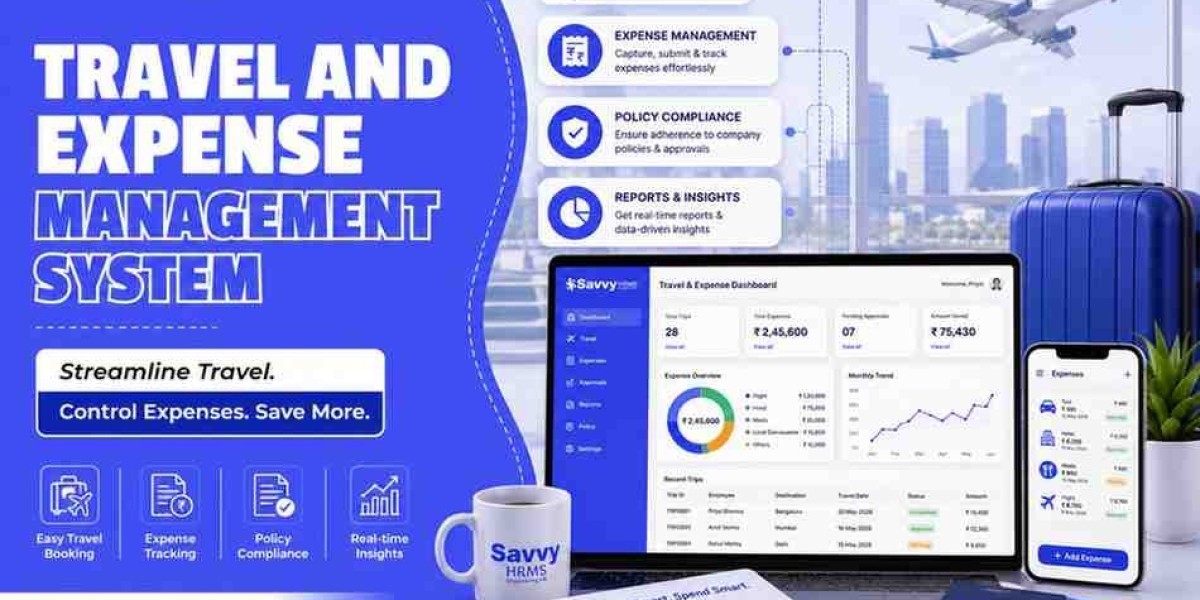


A few years ago, "smart" expense software mostly meant a slightly nicer form to fill out. Today, the same platforms can read a receipt in a second, flag a suspicious claim before it's paid, and predict your team's travel budget for the next quarter based on patterns you didn't even know existed. That's a genuinely different category of tool - and it's changing what businesses should expect from this kind of software.
If you're still picturing expense management as "digital paperwork," it's worth updating that picture. A modern travel and expense management system increasingly relies on AI to do work that used to require a person manually reviewing every single claim - and the difference shows up directly in speed, accuracy, and cost control.
In this article, we'll walk through exactly where AI is making a real difference in travel and expense management, what to realistically expect from it, and where human judgement still matters.
Why AI Made Sense for This Problem in the First Place
Expense management has always involved a lot of repetitive, pattern-based work - reading receipts, checking amounts against policy limits, matching claims to card transactions, spotting duplicates. That's exactly the kind of task AI is well-suited for: high-volume, rule-based, and pattern-driven, rather than requiring deep judgement on every case.
As transaction volumes grow - more employees, more trips, more claims per month - the manual version of this work scales linearly with headcount. AI-powered automation, on the other hand, can absorb that growth without needing a proportionally larger finance team, which is exactly why it's become such a natural fit for this space.
Where AI Is Actually Making a Difference
Automatic Receipt Reading and Categorisation
This is the most visible AI feature in modern expense platforms. Instead of an employee manually typing in the amount, date, vendor, and category from a receipt, AI-powered OCR extracts these details from a photograph in seconds. More advanced systems go a step further, using merchant data to automatically assign the correct expense category - separating a client dinner from a routine grocery run without anyone lifting a finger.
Fraud and Anomaly Detection
Manually catching duplicate claims or inflated amounts across hundreds of monthly submissions is genuinely difficult for a human reviewer. AI models trained on transaction patterns can flag anomalies automatically - a claim submitted twice, an amount that doesn't match typical spending for that category, or a location that doesn't align with an employee's actual travel itinerary.
This doesn't mean every flagged claim is fraudulent; it means finance gets a shortlist of claims worth a closer look, instead of needing to manually scrutinise every single one.
Real-Time Policy Enforcement
Rather than checking policy compliance during a scheduled review, AI-driven systems can evaluate a claim against company policy the instant it's submitted. If an employee tries to submit a hotel expense above the approved limit, the system can flag or block it immediately, rather than approving it and catching the issue weeks later during an audit.
Predictive Spend Forecasting
By analysing historical travel and expense data, AI can identify patterns most finance teams wouldn't catch manually - seasonal spikes around certain quarters, departments that consistently overshoot budgets, or the best time to book travel for lower costs. This shifts budgeting from a reactive, backward-looking exercise into something genuinely predictive.
Smart Approval Routing
AI can also help streamline the approval process itself, learning which types of claims typically get approved without issue and routing low-risk, policy-compliant claims through faster, lighter-touch approval paths - while reserving closer human review for higher-value or unusual claims.
Conversational and Chat-Based Submission
Some platforms now let employees submit or query expenses through simple conversational interfaces - asking "what's my pending reimbursement total?" or submitting a claim by describing it in plain language, rather than navigating multiple form fields.
What This Means for Finance Teams
Less Time on Repetitive Review
When AI handles the first pass of categorisation and policy checking, finance teams spend less time manually reviewing every claim line by line, and more time on the claims that genuinely need human judgement - exceptions, disputes, and edge cases.
Faster Month-End Close
Since AI-driven categorisation and reconciliation happen continuously rather than in a single manual batch at month-end, closing the books becomes a matter of reviewing what's already organised, rather than starting from scratch.
Better Budget Accuracy
Predictive analytics give finance leaders a more realistic picture of upcoming travel costs, which makes budget planning less of a guessing game and more grounded in actual historical patterns.
Reduced Fraud and Leakage
Even a small percentage of duplicate or inflated claims can add up to a meaningful cost over a year, especially at scale. Automated anomaly detection catches a lot of this before payment goes out, rather than after the fact.
What AI Doesn't Replace
It's worth being clear-eyed here - AI in expense management isn't about removing humans from the process entirely. A few things still need human judgement:
Genuine Policy Exceptions
Sometimes a claim is unusual for a legitimate reason - an emergency expense during a client crisis, or a one-off approved deviation from standard policy. AI can flag these as anomalies, but a human still needs to make the final call on context AI can't fully understand.
Setting the Policy Itself
AI enforces the rules you set - it doesn't decide what those rules should be. Defining sensible spending limits, category definitions, and approval hierarchies is still very much a human decision that reflects your company's specific priorities and culture.
Employee Relationships and Trust
When a claim gets flagged or rejected, how that's communicated matters. Automated systems can surface the issue, but resolving disputes or explaining a rejected claim with empathy is still a conversation best handled by a person, not a notification.
Strategic Vendor and Travel Decisions
AI can highlight patterns - like which hotel chain your team uses most often - but deciding whether to negotiate a corporate rate or change travel policy direction is a strategic decision that benefits from human context AI doesn't have.
How to Evaluate AI Claims From Vendors
Not every "AI-powered" feature is equally useful, and it's easy for marketing language to outpace what a platform actually does. When evaluating a system, ask specific questions rather than accepting broad claims at face value:
What exactly does the AI automate - categorisation, fraud detection, forecasting, or all three?
How does the system handle a flagged claim - does it block it, or just notify someone?
Can approval rules and AI thresholds be customised to our specific policies?
How much manual review is genuinely eliminated versus just streamlined?
Is there a way to review and correct AI categorisation mistakes easily?
A platform that can answer these clearly is far more likely to deliver real value than one relying on vague "AI-powered" language without specifics.
What to Expect Going Forward
AI's role in travel and expense management is likely to keep expanding in a few specific directions:
Deeper Integration With Travel Booking
Expect tighter connections between booking platforms and expense systems, where an AI-populated expense report is essentially ready the moment a trip is booked, rather than requiring separate submission after the fact.
More Personalised Policy Application
Rather than one-size-fits-all rules, AI may increasingly apply context-aware policies - adjusting for city cost-of-living differences, role-specific needs, or trip purpose - without requiring finance teams to manually configure every variation.
Proactive Budget Alerts
Instead of finding out a department has overspent after the fact, AI-driven systems are increasingly able to alert managers in real time as spending approaches a threshold, giving them a chance to course-correct mid-quarter rather than after.
Better Fraud Prevention as Data Grows
The more transaction data a system processes, the better its anomaly detection typically becomes, meaning fraud prevention capabilities are likely to keep improving as adoption scales across more businesses and industries.
Getting Started With AI-Powered Expense Management
If you're currently using a manual or semi-manual process, moving to an AI-enabled system doesn't require overhauling everything at once. A practical approach looks like this:
Start with receipt capture and categorisation - this delivers immediate, visible time savings for employees and finance alike.
Layer in policy enforcement once your team is comfortable with digital submission, so rules get applied automatically rather than reviewed manually.
Enable fraud and anomaly detection as claim volume grows, since this becomes more valuable at scale.
Use forecasting and analytics once you have a few months of clean, digital data to actually analyse.
Rolling AI-powered features in gradually tends to build trust in the system faster than switching everything on at once, since employees and finance teams have time to adjust to each change individually.
Conclusion
AI hasn't just made expense management a little faster - it's changed what's realistically possible for finance teams to manage without adding headcount. Automatic receipt reading, real-time policy checks, and fraud detection handle the repetitive, pattern-based work that used to eat up hours every week, freeing people to focus on the decisions that genuinely need human judgement.
That said, AI works best as a layer on top of a well-structured process, not a replacement for clear policies and thoughtful decision-making. The businesses getting the most value from these tools are the ones pairing smart automation with sensible, well-defined expense policies from the start.
If you're looking to bring this kind of intelligence into your own travel and expense process, SavvyHRMS combines AI-powered receipt capture, automated policy enforcement, and real-time spend visibility with SavvyHRMS's broader HR and payroll suite - so your expense data stays connected to the rest of your workforce management, not siloed in a separate tool.
Frequently Asked Questions
1. How does AI actually help with travel and expense management?
AI automates repetitive tasks like receipt reading, expense categorisation, policy checks, and fraud detection, reducing manual review time and catching issues before reimbursement rather than after.
2. Does AI replace the need for a finance team to review expenses?
No. AI handles the repetitive, pattern-based checks, but genuine policy exceptions, dispute resolution, and strategic decisions still require human judgement.
3. Is AI-powered fraud detection reliable enough to trust?
It's reliable for flagging anomalies worth a closer look, but flagged claims should still be reviewed by a person rather than automatically rejected outright, since not every anomaly indicates fraud.
4. Can AI help predict future travel budgets accurately?
AI-driven forecasting analyses historical spending patterns to identify trends like seasonality, which improves budget planning accuracy compared to purely manual estimation, though it works best with several months of consistent data.
5. Will employees need to change how they submit expenses to benefit from AI?
Not significantly. Most AI benefits happen behind the scenes - employees typically just photograph a receipt as usual, and the system handles categorisation and policy checks automatically.
6. How do I know if a platform's "AI-powered" claims are actually meaningful?
Ask specific questions about what exactly is automated, how flagged claims are handled, and whether AI categorisation can be corrected - vague marketing language without specifics is a red flag.
7. Does AI in expense management require a large amount of data to work well?
Fraud detection and forecasting generally improve with more transaction history, but core features like receipt OCR and policy enforcement work effectively from day one, regardless of data volume.
8. Is AI-powered expense management worth it for smaller businesses?
Yes, since even smaller teams benefit from reduced manual data entry and faster processing, and starting with these habits early makes scaling much smoother as the business grows.






