

Few ingredients can change the character of a recipe as quickly as cocoa powder. One spoonful can deepen the flavour of a morning smoothie, turn an ordinary sponge into a rich chocolate cake or make a cold evening considerably more enjoyable with a mug of homemade hot chocolate.
Yet choosing cocoa powder is not always as straightforward as it seems. Natural cocoa, cacao, dark cocoa and Dutch-processed varieties can all look similar on the shelf, but there are important differences between them.
One particularly versatile option is organic dutch cocoa powder, valued for its deep colour and smooth chocolate flavour. Understanding what makes it different can help you choose the right cocoa for baking, drinks and everyday recipes.
What Exactly Is Organic Dutch Cocoa Powder?
Dutch processing refers to treating cocoa with an alkalising agent to reduce its natural acidity. The technique changes both the appearance and flavour of the finished powder.
Compared with natural cocoa, Dutch-processed cocoa generally has a darker colour and a smoother, less acidic taste. This makes it useful in recipes where you want chocolate to taste rich and rounded rather than particularly sharp.
Organic dutch cocoa powder combines this processing method with cocoa produced according to recognised organic standards.
It is worth checking individual product labels, however, as processing methods and certifications can vary between manufacturers.
Why Does Dutch-Processed Cocoa Taste Different?
Cocoa naturally contains acidic compounds that contribute to its characteristic flavour. Alkalisation reduces some of this acidity, which changes the way the cocoa tastes.
Natural organic cocoa powder can have brighter and sometimes fruitier notes. Dutch cocoa is typically mellower, with a deeper chocolate character.
Neither type is automatically better.
If you are making a recipe where a bold, slightly sharper cocoa flavour is welcome, natural cocoa may work beautifully. For brownies, chocolate sauces, desserts and drinks where you prefer something smooth and full-bodied, Dutch cocoa can be an excellent choice.
Organic Dark Cocoa Powder and Colour
The appearance of cocoa can range from light reddish-brown to an extremely dark brown, depending partly on how it has been processed.
Organic dark cocoa powder can give brownies, biscuits and cakes a dramatic appearance, but darker does not necessarily mean stronger or higher quality.
Processing has a major influence on colour. A very dark powder may have a surprisingly smooth flavour, while a lighter natural cocoa can taste more pronounced because of its acidity.
Rather than choosing solely according to colour, think about the flavour and appearance you want from the finished recipe.
Cacao vs Cocoa: Are They the Same?
The cacao vs cocoa debate causes plenty of confusion, largely because the terms are sometimes used differently by manufacturers.
Both ultimately come from cacao beans.
In modern food marketing, “cacao” is commonly associated with products that have undergone less intensive processing, while “cocoa” is often used for roasted or otherwise processed products. However, the terminology alone does not tell you everything about a product.
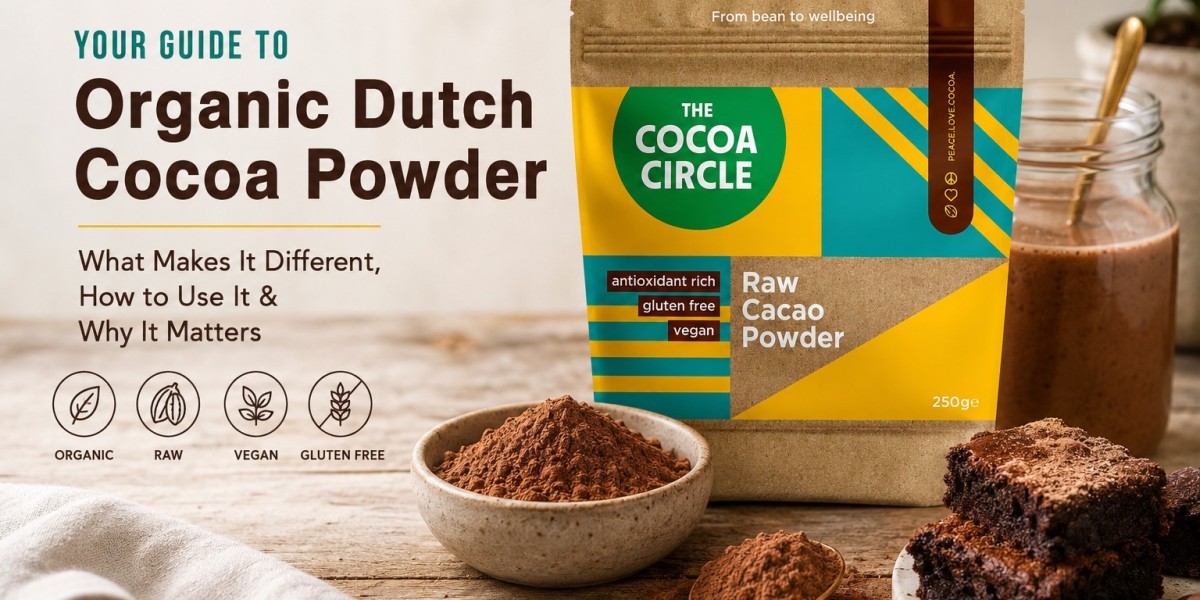
For example, the packaging shown by Cocoa Circle describes its product as raw cacao powder. That should not automatically be treated as the same thing as Dutch-processed cocoa, because Dutch processing specifically involves alkalisation.
This is an important distinction when shopping. Rather than assuming cacao, natural cocoa and Dutch cocoa are interchangeable, read the product description and processing information.
Does the Type of Cocoa Matter When Baking?
Sometimes, very much so.
Baking is chemistry as well as cooking. Natural cocoa retains acidity, while Dutch cocoa has had much of that acidity neutralised.
A cake recipe using bicarbonate of soda, for example, may depend on an acidic ingredient to create the reaction needed for a good rise. Replacing the specified natural cocoa with Dutch cocoa could therefore affect the result.
Recipes using baking powder can sometimes be more accommodating, but following the recipe's specified cocoa type remains the safest approach.
In recipes where rising is not particularly important — such as brownies, chocolate sauce, icing or certain no-bake desserts — there may be more flexibility.
How to Find the Best Organic Cocoa Powder for Your Kitchen
There is no single best organic cocoa powder for every cook or recipe. A better approach is to choose according to how you plan to use it.
Look at the processing method
Check whether the product is natural, raw or Dutch processed. This gives you a much better idea of its likely flavour and behaviour in recipes.
Check the ingredients
Turn the packet over rather than relying entirely on the claims on the front. A straightforward ingredients list makes it easier to understand exactly what you are adding to your food.
Look for appropriate organic certification
If buying organic matters to you, check for recognised certification on the packaging. “Natural” and “organic” are not simply interchangeable descriptions.
Think about your preferred chocolate flavour
For a brighter cocoa character, natural cocoa may suit you. For a smoother and typically darker chocolate profile, organic dutch cocoa powder may be preferable.
Keeping both varieties in the cupboard can also be useful if you bake regularly.
Everyday Ways to Use Cocoa Powder
Cocoa deserves to be used for far more than the occasional chocolate cake.
For an easy breakfast, try stirring a small spoonful into porridge. Banana, berries, nuts and nut butter all pair naturally with cocoa.
It also works well in smoothies. Cocoa blended with banana and milk or a plant-based alternative makes a simple chocolate-flavoured drink without requiring chocolate syrup.
For homemade hot chocolate, mix the powder with a small quantity of warm milk first. Stir it into a smooth paste before gradually adding the rest of the liquid. This simple technique helps prevent lumps.
Cocoa can also be incorporated into yoghurt, overnight oats, chia pudding and homemade granola.
And, of course, there are the classics: brownies, chocolate cakes, biscuits, buttercream, truffles and desserts.
Cocoa Can Work in Savoury Food Too
Using cocoa in savoury cooking might sound unusual, but unsweetened cocoa can provide depth to certain dishes.
A small quantity can complement the warm spices and rich flavours found in some chilli-style dishes, stews and sauces.
The important word here is “small”.
You are not trying to turn dinner into chocolate pudding. Used carefully, cocoa contributes bitterness and complexity rather than an obvious chocolate flavour.
Start with a modest amount and taste before adding more.
How to Get Better Results When Cooking With Cocoa
Cocoa powder is easy to use, but a few simple habits can make a noticeable difference.
Sift it before adding it to cake batter, icing or other mixtures where texture matters. Cocoa has a tendency to form small lumps that can be surprisingly difficult to remove once liquid has been added.
It is also helpful to measure rather than simply adding extra cocoa for a “more chocolatey” result. Too much powder can make some baked goods dry and overly bitter.
When making drinks or sauces, mixing cocoa with a little liquid to form a paste before adding the remaining liquid usually produces a smoother result.
Finally, keep the packet or container properly sealed and store it somewhere cool and dry. Cocoa can absorb moisture and surrounding aromas, so keeping it away from strongly scented ingredients is sensible.
Should You Choose Cacao or Dutch Cocoa?
It depends entirely on what you are making.
Cacao powder can be useful in smoothies, breakfast bowls and recipes specifically designed around its particular flavour and characteristics.
Natural organic cocoa powder is useful when a recipe requires cocoa's natural acidity.
Dutch-processed cocoa is a strong option when you want a darker appearance and smoother chocolate flavour.
Rather than treating the cacao vs cocoa question as a contest with one clear winner, it is more useful to think of them as different ingredients with different strengths.
A More Informed Way to Enjoy Cocoa
The cocoa aisle becomes much easier to navigate once you know what the terminology means.
Natural cocoa retains its acidity and can deliver a brighter flavour. Organic dark cocoa powder can give recipes an impressively deep appearance, while Dutch processing creates a smoother and typically less acidic cocoa.
Cacao is another option again and should not automatically be confused with Dutch cocoa simply because both originate from the same bean.
Brands such as Cocoa Circle also demonstrate why reading the actual product description matters: a product labelled raw cacao powder is not necessarily an organic dutch cocoa powder, and choosing the correct type can make a meaningful difference to a recipe.
Conclusion
Cocoa may look like a simple pantry ingredient, but understanding how it has been processed opens up many more possibilities in the kitchen.
If you enjoy a smooth, deep chocolate character, organic dutch cocoa powder is well worth exploring. If a recipe relies on acidity, natural cocoa may be the better option, while cacao has its own place in drinks, breakfasts and recipes specifically created for it.
The key takeaway is simple: do not choose cocoa on colour or packaging alone. Check how it has been processed, consider what you are making and select the variety that suits the job. With the right cocoa in your cupboard, everything from an everyday bowl of porridge to a weekend batch of brownies can become a little more interesting.






