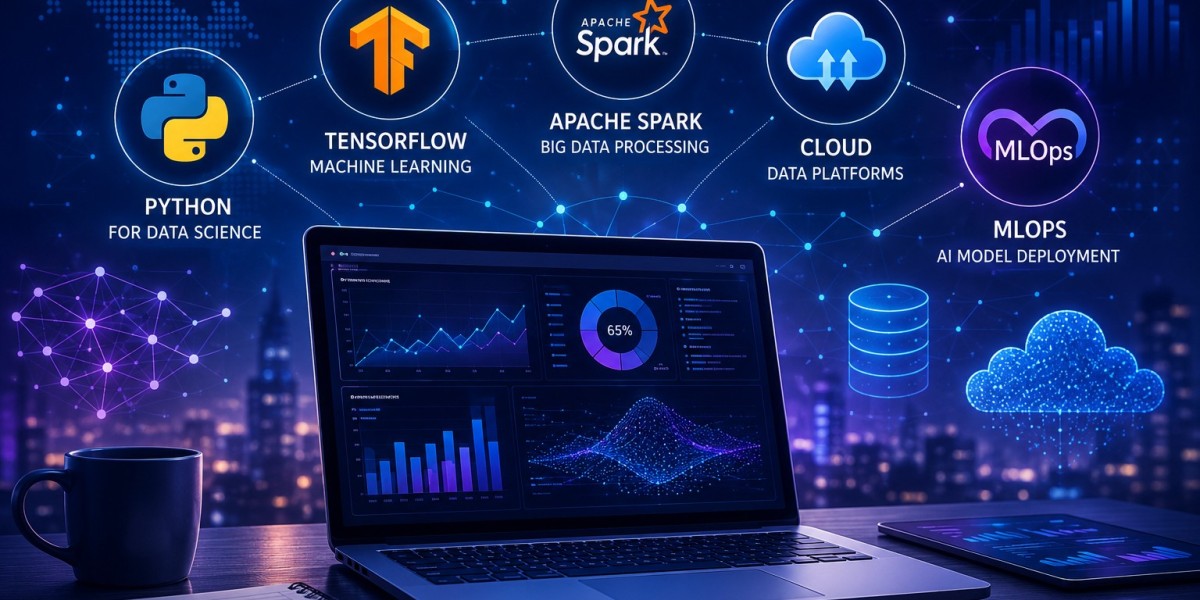


Future-Ready Data Science Technologies Every Professional Should Know
Data science is changing faster than ever. The technologies used by data professionals are also changing as businesses continue to invest in artificial intelligence, big data and automation. Employers today are looking for candidates who understand data analysis and can work with modern tools that support the full data science lifecycle.
If you want to upskill yourself or grow your career in data science, here are the future-ready technologies you must know in 2026.
1. Python for Data Science
For any data professional, one of the most essential skills to master is Python. It is an easy-to-learn programming language, very versatile and has a huge community of developers.
It is used widely for data analysis, data visualisation, machine learning and automation.
Python is the most popular programming language among data scientists. Popular libraries like Pandas, NumPy, and Scikit-learn are built using Python.
2. TensorFlow Machine Learning
TensorFlow is one of the most popular open source frameworks used to develop machine learning and deep learning models. It lets developers build AI apps for image recognition, natural language processing and predictive analytics.
As more companies start to implement AI-powered solutions, knowledge of TensorFlow can be a valuable skill for those interested in machine learning and artificial intelligence.
3. Big Data Processing with Apache Spark
To process large amounts of data, you need powerful processing tools. One of the most widely used technologies for this purpose is Apache Spark.
Apache Spark can handle huge data sets at a much faster speed than traditional data processing systems. It is used extensively for big data analytics, real-time data processing, and machine learning projects; it’s an important technology for modern data professionals.
4. Cloud Data Platforms
With most companies moving to the cloud, cloud data platforms have become a critical part of data science. These platforms enable organisations to store, manage, and analyse large volumes of data without expensive on- premise infrastructure.
Cloud-based solutions also ease collaboration, increase scalability and enable faster deployment of data science projects. Professionals who understand how cloud data platforms work have an edge in today’s job market.
5. MLOps for AI Models Deployment
Training a machine learning model is only half the story. And businesses need to deploy, monitor and maintain those models in real-world settings. That’s where MLOps comes into play.
MLOps is the combination of machine learning and DevOps practices that allow teams to manage the entire lifecycle of AI models. It encourages better collaboration between data scientists and IT teams, whilst ensuring models stay accurate, reliable and up to date.
As organisations continue to invest in AI, MLOps becomes a valuable skill for data professionals.
Why It Matters
The role of data scientist is evolving beyond data analysis. Modern-day professionals are expected to develop models, work with big data sets, work in cloud environments and deploy AI solutions.
You will gain practical data science skills by learning technologies such as Python for data science, TensorFlow, Apache Spark, cloud data platforms, and MLOps, which are in high demand among employers.
Conclusion
Data science is being transformed by powerful technologies, enabling more efficient data processing, machine learning and AI. As companies continue their journey of digital transformation, professionals who can leverage today's data science tools will be in demand.
Whether you are a student, a fresher or a working professional, investing time in learning these future-ready technologies will help you stay competitive and build a successful career in the fast-growing data science field.