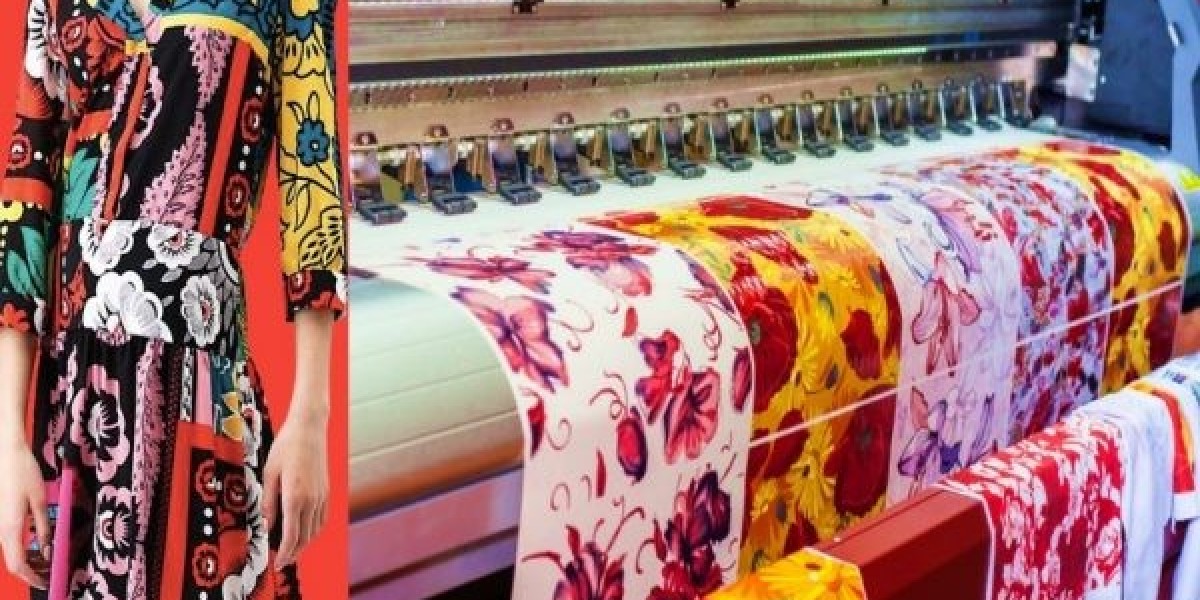


Digital printing on fabric is a modern textile printing method that uses specialized inkjet technology to apply digital designs directly to fabric. Instead of preparing screens, rollers, or other physical printing tools for each design, the printer receives artwork from a computer and deposits ink precisely where it is needed. This allows manufacturers to produce detailed patterns, photographs, gradients, logos, and customized artwork on many types of textiles.
The development of digital printing on fabric has changed the way textile samples, short production runs, fashion collections, home furnishings, and personalized products are manufactured. It offers greater design flexibility and makes frequent artwork changes easier. However, good results depend on selecting the correct ink technology for the fabric, preparing the material properly, managing color accurately, and completing the required fixing and finishing processes.
What Is Digital Fabric Printing?
Digital fabric is a direct-to-textile printing process. A digital file is converted into instructions that control the movement of printheads and the amount of ink released onto the fabric. Tiny droplets are placed at precise locations to create the image.
Unlike traditional screen printing, digital printing does not require a separate screen for each color. This is particularly useful for designs containing many colors, photographic details, fine lines, or gradual color changes.
The process can be used on natural fibers, synthetic fibers, and blends, but there is no single ink that works ideally for every textile. The fabric's fiber composition determines which printing technology is appropriate.
How Does Digital Printing on Fabric Work?
1. Design Preparation
The process starts with a digital artwork file. Designers may create patterns, illustrations, photographs, logos, or repeating motifs using graphic design software.
Before production, the artwork should be checked for image resolution, dimensions, color settings, pattern alignment, and scaling. A file that looks sharp on a small computer screen may become pixelated when enlarged for a large textile application.
For repeat designs, the edges of the artwork must also align correctly. A small error can become obvious when the pattern is repeated across several meters of fabric.
2. Fabric Pretreatment
Some textile printing methods require chemical pretreatment before the fabric enters the printer. Pretreatment helps control how the ink interacts with the fibers and can improve color intensity, definition, and consistency.
The exact treatment depends on the fiber and ink system. The fabric may also need to be cleaned and properly tensioned so that dust, wrinkles, or uneven movement do not affect the print.
3. Digital Printing
The prepared fabric moves through the printer while specialized printheads apply controlled quantities of ink. The printer software determines the position and volume of each droplet according to the digital artwork.
Modern textile printers can produce detailed images with smooth tonal transitions. Because the artwork is controlled digitally, changing from one design to another generally requires much less physical setup than conventional printing.
4. Fixing and Finishing
Printing is followed by a fixing process suited to the selected ink. Depending on the technology, this may involve steaming, heat curing, or another form of thermal treatment.
After fixing, some fabrics require washing to remove unfixed dye and processing chemicals. The finished material may then undergo drying, softening, calendaring, or other finishing operations.
Types of Digital Textile Printing
Reactive Printing
Reactive printing is widely used for cotton, linen, viscose, and other cellulosic fibers. Reactive dyes form a chemical bond with suitable fibers during processing.
This method can produce bright colors and good wash fastness when pretreatment, printing, steaming, washing, and drying are properly controlled. It is commonly used for clothing, bedding, scarves, and other washable textile products.
Pigment Printing
Pigment printing uses colored particles that remain on the fabric surface and are held in place by a binder. Pigment inks can be suitable for a broad range of fabrics.
One advantage is that the process can reduce the need for extensive washing compared with some dye-based systems. Proper curing is essential because insufficient heat or processing time can reduce durability.
Acid Printing
Acid inks are commonly used with materials such as silk, wool, nylon, and other compatible fibers. They can provide strong colors and detailed results, making them useful for fashion fabrics, scarves, and specialized textile products.
Disperse Printing
Disperse printing is mainly associated with polyester and other suitable synthetic fabrics. Heat is used to develop the color so that the dye becomes associated with the synthetic fiber.
It is frequently used for sportswear, flags, banners, soft signage, and polyester-based fashion materials.
Benefits of Digital Printing on Fabric
Detailed and Complex Designs
Digital printing can reproduce fine lines, photographs, shadows, gradients, and intricate patterns. Designers can work with many colors without preparing an individual screen for every color.
Cost-Effective Short Runs
Digital printing is particularly useful when a business needs a limited quantity. Samples, small fashion collections, customized fabrics, and made-to-order products can be produced without the extensive setup normally associated with conventional high-volume printing.
Faster Product Development
Designers can test an idea by producing a physical sample before ordering a large quantity. This helps identify problems with color, pattern scale, image quality, or fabric compatibility early in the development process.
Customization
Each print can be different within the same production workflow. This makes the technology suitable for personalized clothing, interior fabrics, branded textiles, artwork, and customized products.
Less Physical Setup
Because the design is transferred electronically, manufacturers do not need to prepare traditional screens or engraved rollers for every new artwork. This can simplify production when designs change frequently.
Practical Benefits and Key Insights
Businesses considering digital printing should begin by identifying the final purpose of the fabric. A material intended for frequently washed clothing has different requirements from a decorative wall hanging or indoor banner.
The fiber content should be confirmed before selecting the ink. Cotton, polyester, silk, wool, and nylon respond differently to printing technologies. Using an unsuitable ink system can result in weak color, poor adhesion, bleeding, or inadequate durability.
Color management is another important consideration. The color displayed on a monitor may not match the color produced on fabric because screens emit light while textiles reflect it. Printer calibration, suitable color profiles, test prints, and physical approval samples help maintain consistency.
It is also useful to test finished fabric under actual use conditions. Garments may require washing and rubbing tests, while upholstery and curtains may require greater attention to light exposure and surface durability.
Common Challenges and Considerations
Color Accuracy
Color differences can occur because of variations in fabric batches, ink, printer settings, pretreatment, and finishing. Keeping production conditions consistent helps reduce unwanted variation.
Fabric Compatibility
The same printing process cannot be assumed to work equally well on every textile. Fiber composition, weave, surface treatment, weight, and absorbency all influence print quality.
Production Volume
Digital printing is highly flexible for samples and smaller orders. For extremely large production runs with simple, repeated artwork, conventional rotary or screen printing may still offer advantages in production speed and unit cost.
Durability
Print durability depends on the complete process rather than the printer alone. Ink selection, pretreatment, fixing, curing, washing, and fabric quality all affect resistance to washing, rubbing, light, and other forms of wear.
Frequently Asked Questions
1. What fabrics can be digitally printed?
Cotton, polyester, silk, wool, linen, viscose, nylon, and many blends can be digitally printed when the appropriate ink and preparation method are used.
2. Is digital printing better than screen printing?
It depends on the project. Digital printing is well suited to detailed designs, personalization, samples, and short runs. Screen printing can be more economical for large quantities with relatively simple artwork.
3. Does digital printing on fabric last after washing?
Yes, when the correct ink, fabric, pretreatment, fixing, and finishing process is used. Wash durability varies according to the specific printing system and textile.
4. Can photographs be printed on fabric?
Yes. Digital textile printers can reproduce photographs and other detailed images. Image resolution, fabric texture, ink selection, and printer settings influence the final appearance.
5. Is digital fabric printing environmentally friendly?
It can reduce some setup materials and support production based on actual demand, but its environmental impact varies. Ink chemistry, electricity, pretreatment, washing, wastewater, and finishing should all be considered.
Conclusion
Digital printing on fabric provides manufacturers and designers with a flexible method for producing detailed, customized, and small-batch textile designs. Its direct digital workflow makes artwork changes, sampling, and personalization easier than with many conventional printing methods.
The quality of the finished product depends on careful control of the entire process. Selecting compatible fabric and ink, preparing the artwork correctly, managing color, applying suitable pretreatment, and completing the required fixing and finishing steps are all essential. When these factors are matched to the intended application, digital fabric printing can deliver accurate, attractive, and durable textile products.









