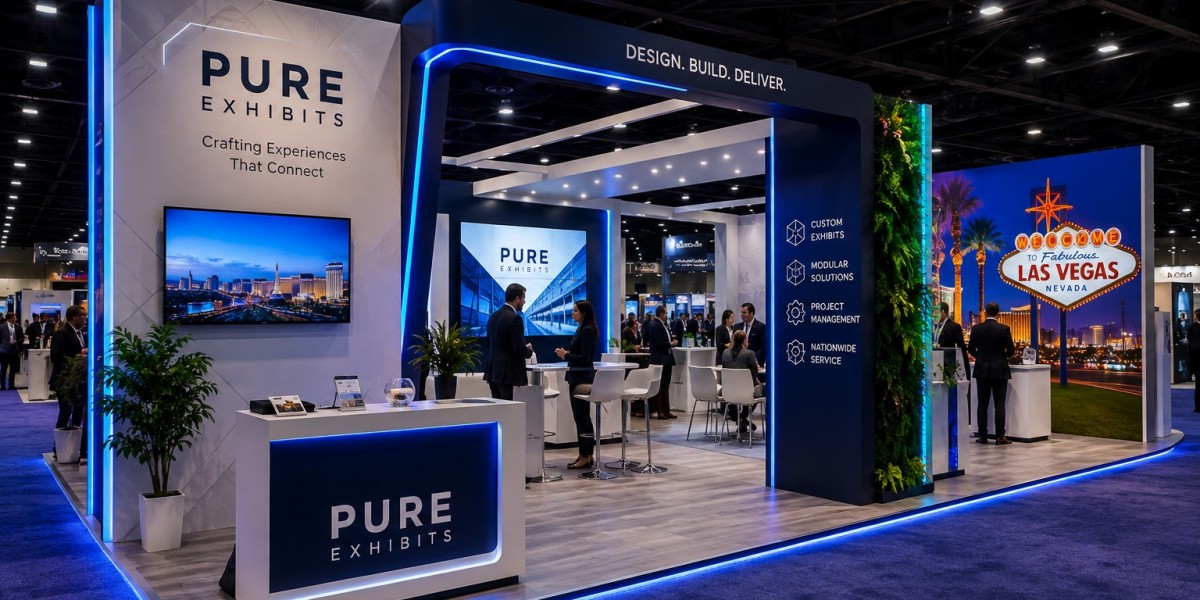


A custom trade show booth can give your company a powerful way to stand out in a crowded exhibition hall, communicate its brand story, and create meaningful interactions with potential customers. Working with experienced Trade Show Booth Builders in USA can help you turn your booth space into a customized brand environment designed around your products, audience, marketing goals, and event requirements.
Unlike standard displays, custom exhibits are developed specifically for your company. From the architecture and graphics to lighting, product demonstrations, meeting areas, and technology, every element can be planned to support your objectives. But before investing in a custom booth, it is important to understand how the process works, what features you can include, and what factors can influence your overall investment.
What Is a Custom Trade Show Booth?
A custom trade show booth is an exhibit designed and produced around the specific requirements of a brand and its event space.
Instead of using a standard configuration, the booth can be customized in terms of:
Layout
Architecture
Branding
Graphics
Lighting
Furniture
Product displays
Meeting areas
Technology
Storage
Visitor flow
This flexibility makes custom booths particularly useful for companies that want to create a distinctive presence at major industry events.
Why Choose a Custom Trade Show Booth?
Trade shows are highly competitive environments. Your company may be surrounded by dozens or hundreds of other exhibitors.
A custom booth can help differentiate your brand through a unique physical experience.
Potential benefits include:
Stronger brand visibility
Greater design flexibility
Better space utilization
Improved visitor engagement
Dedicated product demonstration areas
Customized meeting spaces
More opportunities for interactive experiences
Stronger brand recall
The objective should not simply be to build the largest booth. Instead, your booth should be designed to achieve specific marketing and business goals.
1. Start With Your Exhibition Goals
Before beginning the design process, identify what you want to achieve.
Your objectives might include:
Lead Generation
You may want to attract qualified prospects and capture their contact information.
Product Launch
A new product may require demonstration areas, presentation screens, and additional visitor space.
Brand Awareness
Your primary goal may be to increase visibility and establish a stronger market presence.
Customer Meetings
You may need private or semi-private spaces for discussions with existing customers and prospects.
Networking
Your booth may need comfortable hospitality areas where visitors can spend more time with your team.
Your objectives will influence the booth's layout and features.
2. Understand Your Target Audience
Your booth should be designed with your visitors in mind.
Consider:
Who attends the event?
What industries do they represent?
What problems are they trying to solve?
What information do they need?
What products interest them?
How much time will they typically spend at your booth?
Understanding your audience helps determine the right balance between visual messaging, demonstrations, technology, and conversations.
A booth designed for technical professionals may require detailed demonstrations, while a consumer-facing brand may focus more on visual experiences and product interaction.
3. Work Within Your Booth Space
Custom design provides flexibility, but the available space still determines what is practical.
Booth spaces can range from compact inline exhibits to large island configurations.
A designer should consider:
Entrance locations
Visitor flow
Product placement
Branding visibility
Meeting areas
Storage
Staff movement
Demonstration areas
The goal is to maximize the available footprint without making the space feel crowded.
4. Create a Strong Brand Experience
Your booth should feel like an extension of your company's identity.
Brand elements can include:
Logo
Colors
Typography
Photography
Product imagery
Messaging
Architectural style
A custom booth allows these elements to be integrated into the entire environment.
Instead of simply displaying your logo on a wall, the design can use architecture, lighting, graphics, and materials to create a consistent brand experience.
5. Use Architecture to Stand Out
Custom architecture can give your booth a distinctive visual identity.
Possible elements include:
Branded towers
Curved walls
Hanging structures
Suspended signs
Unique entrances
Product display walls
Custom reception counters
These features can help your booth become visible from different areas of the exhibition floor.
However, architectural elements should serve a purpose. They should enhance branding and visitor experience rather than create unnecessary complexity.
6. Make Your Messaging Easy to Understand
Trade show visitors are busy.
They may pass your booth while looking for a particular product or attending another session.
Your messaging should therefore be concise.
Focus on:
A strong headline
Key benefits
Short supporting statements
Clear product information
A call to action
Avoid filling every available surface with long paragraphs.
Your booth should communicate the most important information quickly and encourage visitors to ask questions.
7. Invest in High-Quality Graphics
Graphics can dramatically influence how professional your booth looks.
High-quality graphics should be:
Sharp
Easy to read
Brand consistent
Visually engaging
Appropriately sized
Consider where visitors will see each graphic.
Large messaging should be positioned where it can be seen from the aisle, while detailed product information can be placed closer to demonstration areas.
8. Use Lighting Strategically
Lighting can change the entire appearance of your booth.
It can be used to highlight:
Products
Logos
Graphics
Architectural features
Reception areas
Meeting spaces
Backlit graphics can provide strong visibility, while focused lighting can draw attention to specific products.
Lighting should complement the overall booth design rather than compete with it.
9. Include Product Demonstration Areas
If your products benefit from demonstrations, dedicate space to them.
A product demonstration can help visitors understand:
How the product works
What problem it solves
What makes it different
Why they should consider it
A custom booth can be designed around the demonstration experience.
For example, a demonstration counter can be positioned near the main entrance so attendees can easily see the product in action.
10. Add Comfortable Meeting Spaces
Trade shows create opportunities for both quick conversations and detailed business discussions.
Your booth can include different types of meeting spaces.
Open Meeting Areas
Suitable for casual conversations.
Semi-Private Areas
Useful for discussions requiring some privacy.
Private Meeting Rooms
Ideal for executive meetings, negotiations, or sensitive conversations.
A custom design can integrate these spaces while keeping the booth open and inviting.
11. Don't Forget Storage
Storage is a practical requirement that is easy to overlook during the design stage.
Your team may need to store:
Personal belongings
Marketing materials
Product samples
Promotional items
Packaging
Spare supplies
A custom booth can incorporate hidden storage behind walls, counters, or display structures.
Keeping these items out of sight helps maintain a clean and professional appearance.
12. Integrate Technology With Purpose
Technology can make your booth more interactive.
Potential options include:
LED screens
Touchscreens
Interactive displays
Digital catalogs
Product videos
Virtual presentations
QR codes
Lead capture systems
The key is to use technology to solve a specific communication or engagement need.
For example, an interactive display could allow visitors to explore multiple products without requiring extensive printed materials.
13. Design for Visitor Flow
Visitor movement should be considered from the beginning.
Your booth should provide an intuitive path from the aisle into the exhibit.
A useful visitor journey might be:
Attract → Enter → Explore → Interact → Discuss → Connect
Strong exterior branding attracts attention.
Open entrances encourage visitors to enter.
Product displays provide something to explore.
Demonstrations create interaction.
Meeting areas support conversations.
A clear call to action creates the next step.
14. Make the Booth Comfortable for Your Staff
Your employees will spend long hours inside the booth.
The design should provide adequate space for staff movement and breaks.
Consider:
Staff storage
Seating
Refreshment areas
Staff-only spaces
Accessible product materials
A comfortable team is more likely to remain energetic and engaged throughout the event.
15. Choose Materials Carefully
Materials influence the appearance, durability, and cost of a custom booth.
Potential materials include:
Wood
Metal
Acrylic
Fabric
Glass
Laminates
Printed panels
Material selection should reflect your brand and intended use.
If you plan to reuse certain components, durability becomes particularly important.
Your booth builder can help you choose materials that balance appearance, functionality, and budget.
16. Consider Reusability
Custom does not necessarily mean single-use.
Some custom booths can be designed with reusable components.
For companies attending multiple events, consider whether elements such as:
Counters
Display systems
Lighting
Furniture
Graphic frames
Structural components
can be reused or adapted.
This can potentially improve the long-term value of your exhibition investment.
17. Plan for Technology and Electrical Requirements Early
Technology requires careful planning.
Screens, lighting, interactive displays, and other equipment may require power and connectivity.
These requirements should be incorporated into the design rather than added at the last minute.
Your booth builder can help coordinate:
Power locations
Cable management
Screen placement
Lighting
Internet requirements
AV equipment
Proper planning helps maintain a clean appearance while ensuring everything functions properly.
18. Consider Trade Show Regulations
Every venue and event may have specific rules.
These can cover:
Booth height
Hanging signs
Rigging
Electrical connections
Fire safety
Flooring
Materials
Installation
Dismantling
An experienced booth builder should review the event requirements before production begins.
This can help reduce the possibility of costly last-minute changes.
19. Understand the Cost of a Custom Booth
Custom booth pricing depends on several factors.
These can include:
Booth size
Design complexity
Materials
Graphics
Furniture
Technology
Lighting
Shipping
Installation
Dismantling
Storage
Instead of focusing only on the initial construction cost, consider the total exhibition investment.
Ask for a detailed proposal that clearly explains what is included.
20. Work With a Full-Service Booth Builder
Managing separate vendors for design, production, graphics, shipping, and installation can make the process complicated.
A full-service booth builder can coordinate multiple stages through one project team.
Services may include:
Consultation
Concept development
Design
3D visualization
Manufacturing
Graphics
Quality control
Shipping
Installation
Dismantling
Storage
Having one primary partner can make communication and project management easier.
21. Ask for 3D Renderings
Before production begins, ask to see how your booth will look.
A 3D rendering can help you evaluate:
Architecture
Graphics
Lighting
Furniture
Product displays
Meeting spaces
Visitor flow
It also allows your team to provide feedback before manufacturing.
Make sure the final approved design clearly reflects your expectations.
22. Plan Your Timeline
Custom booths require coordination between several teams.
A typical project timeline may include:
Initial Consultation
Discuss goals, requirements, budget, and event details.
Concept Development
Designers create the initial booth concept.
Design Review
Your team provides feedback and requests revisions.
Final Approval
The design and specifications are approved.
Production
The booth is manufactured and graphics are produced.
Shipping
The completed booth is transported to the venue.
Installation
The exhibit is assembled and prepared for the event.
Starting early gives you more time to manage changes and unexpected issues.
23. Evaluate the Builder's Portfolio
Before hiring a custom booth builder, review previous work.
Look for examples showing:
Creative architecture
Strong branding
Quality construction
Product integration
Technology
Meeting spaces
Different booth sizes
Try to find projects that are similar to your own requirements.
A company may have an attractive portfolio, but you need to determine whether it can execute the type of exhibit you actually need.
24. Check Communication and Project Management
A custom booth involves many decisions.
You need a builder who communicates clearly throughout the process.
Ask:
Who will manage the project?
How often will updates be provided?
How are revisions handled?
What happens if deadlines change?
Who coordinates with the venue?
Who handles installation?
A dedicated project manager can simplify communication and keep everyone aligned.
25. Think About the Complete Visitor Experience
The booth should not be designed solely for photographs.
Think about what visitors will actually experience.
When someone approaches your booth, they should be able to:
Recognize your brand.
Understand what you offer.
Enter comfortably.
Explore your products.
Interact with your team.
Ask questions.
Have a meaningful conversation.
Take a clear next step.
A booth that supports this journey can be more valuable than one that simply looks impressive.
Custom Booth vs. Standard Booth
A custom booth may be appropriate when:
Your brand needs strong differentiation.
You are attending an important industry event.
You need specialized product displays.
You require meeting rooms.
You want an immersive experience.
Your booth has unique architectural requirements.
A standard or modular solution may be more suitable when:
You attend many events.
Your booth sizes vary.
Reusability is important.
Your budget is more limited.
You need a portable solution.
The decision should be based on your exhibition goals rather than appearance alone.
How to Get the Most From Your Custom Booth
To maximize your investment, provide your booth builder with clear information about:
Your target audience
Brand guidelines
Event objectives
Booth dimensions
Products
Marketing campaigns
Budget
Technology requirements
Meeting needs
Desired visitor experience
Also involve your sales and marketing teams during the design process.
They can provide valuable insight into how the booth will be used during the event.
Common Mistakes to Avoid
Starting Too Late
Custom exhibits require time for design, approvals, production, and logistics.
Overloading the Booth
Too many displays and messages can make the space confusing.
Ignoring Visitor Flow
Make sure visitors can enter and move through the booth comfortably.
Choosing Looks Over Function
The booth should support sales and marketing activities.
Forgetting Storage
Hidden storage helps maintain a clean appearance.
Adding Unnecessary Technology
Every technology feature should serve a purpose.
Not Planning for Reuse
If you attend multiple events, consider reusable components.
Final Thoughts
A custom trade show booth gives your brand the flexibility to create a unique environment that reflects your identity and supports your exhibition goals. From architecture and graphics to lighting, product demonstrations, technology, meeting spaces, and visitor flow, every element can be planned around the experience you want to create.
The key is to start with clear objectives and work with a booth builder that understands both creative design and practical exhibition requirements. Evaluate portfolios, compare proposals, ask about logistics and installation, and make sure the final design supports your long-term trade show strategy. For businesses seeking a professional partner for custom exhibits, experienced Trade Show Booth Builders in USA can help transform your exhibition space into a distinctive and effective brand experience.