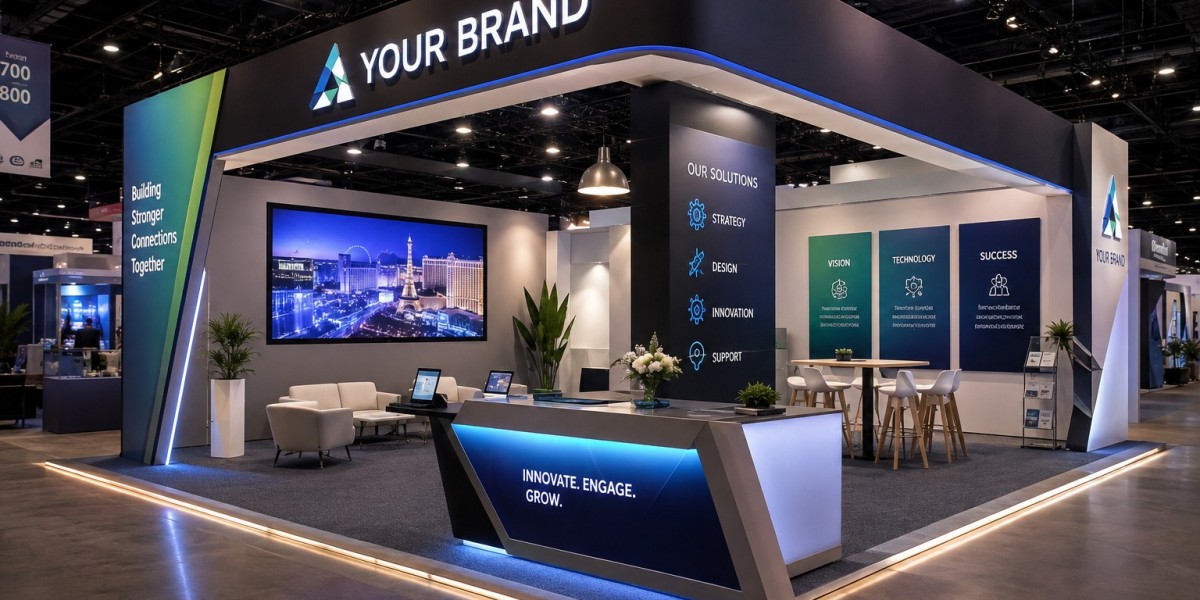


A trade show is one of the few marketing environments where your brand has only a few seconds to capture the attention of potential customers face-to-face. With numerous exhibitors competing for attention, having an attractive and strategically planned trade show display design can make a significant difference in how visitors perceive and interact with your brand. A thoughtfully designed booth can encourage attendees to stop, explore your products, ask questions, and begin meaningful conversations with your team. Rather than treating the booth as a simple physical space, exhibitors should view it as an important part of their overall marketing strategy.
Why Booth Engagement Matters at Trade Shows
Getting people to notice your booth is only the beginning. The real value of an exhibition comes from what happens after someone stops.
A visitor may walk into your booth because an attractive graphic caught their eye, but that initial interest needs to turn into engagement. They may watch a demonstration, speak with a representative, interact with a digital display, examine a product, or schedule a meeting.
These interactions can create valuable opportunities for your sales team. They also allow potential customers to understand your brand in a more personal way than they might through an online advertisement or website.
For this reason, booth design should be created around visitor engagement rather than appearance alone. Every visual and physical element should have a purpose.
Make a Strong First Impression
The first impression happens almost instantly.
When attendees approach an exhibition area, they usually scan multiple booths at the same time. If your display looks confusing, outdated, or overly crowded, they may continue walking.
A strong first impression starts with a clear visual identity. Your company name should be easy to recognize, your primary message should be understandable, and your graphics should look professional.
The design should also communicate your brand personality. A technology company may want a modern and innovative appearance, while a luxury brand may prefer an elegant and refined environment.
The important thing is consistency. The booth should immediately feel like an extension of the company visitors already know.
Use a Clear and Powerful Message
One of the biggest mistakes exhibitors make is placing too much information on their booth walls.
Visitors rarely have time to read long paragraphs while walking through a crowded exhibition hall. Your main message should therefore be short, relevant, and easy to understand.
Think about the one thing you want attendees to remember after leaving your booth.
It could be your most important product benefit, your unique selling proposition, a new product launch, or a solution to a specific industry problem.
Once that message is identified, build the visual hierarchy around it. The main headline should receive the most attention, while supporting information can appear in secondary areas.
This approach makes the booth easier to understand and gives your sales team a natural opening for conversation.
Design for Distance
Your booth needs to communicate before visitors reach it.
This means your design should be effective from different distances. A large headline, recognizable logo, bold imagery, and simple message can often be understood from several meters away.
Small text may look attractive when viewed up close but becomes ineffective from the aisle.
When designing graphics, consider how attendees will actually encounter the booth. They will probably see it while walking, looking at multiple displays, talking to colleagues, or checking their phones.
Your design should therefore require minimal effort to understand.
Create an Open Layout
An inviting booth layout can significantly influence engagement.
When a booth has large physical barriers or too much furniture near the entrance, visitors may feel that entering requires a commitment. An open layout feels more accessible.
Open spaces allow attendees to look inside before deciding whether to approach. They also make it easier for staff members to welcome visitors.
Furniture should support the purpose of the booth rather than occupy space unnecessarily. If you need meeting areas, demonstrations, or product displays, arrange them so visitors can move naturally between different sections.
A good layout should feel organized without feeling restrictive.
Use Lighting to Direct Attention
Lighting can influence where visitors look first.
Strategic lighting can highlight products, graphics, logos, architectural features, or demonstration areas. It can also make the booth feel more welcoming.
For example, a product placed under focused lighting can naturally become a visual focal point. Backlit graphics can increase visibility, while integrated lighting can create a modern appearance.
Lighting should also be comfortable. Extremely bright or poorly positioned lights can make a booth unpleasant to visit.
The best lighting strategy supports the overall design and directs attention without becoming a distraction.
Incorporate Interactive Experiences
People are more likely to remember an experience than a static advertisement.
Interactive elements can therefore play an important role in increasing booth engagement. Depending on your industry, these might include product demonstrations, touchscreens, virtual experiences, interactive presentations, games, quizzes, or hands-on displays.
The interaction should be connected to your brand.
For example, a software company could allow visitors to test a platform through a touchscreen. A manufacturer could demonstrate how a machine works. A technology company could use an interactive simulation to explain a complex product.
The goal is not simply to entertain people. The goal is to create a useful experience that starts a conversation.
Showcase Products Effectively
If your company sells physical products, your display should make those products easy to see and understand.
Avoid placing too many products in a small area. Select the items that are most important to your exhibition objectives.
Give each featured product enough space and provide supporting information where appropriate.
Demonstrations can be particularly effective because they allow visitors to see the product in action. A representative can explain its features while answering questions in real time.
For products that are too large to bring to the event, video demonstrations, models, samples, or digital presentations can provide alternative ways to communicate their value.
Build a Comfortable Conversation Environment
Booth engagement becomes more valuable when visitors have an opportunity to speak with your team.
Your booth should therefore include appropriate areas for conversation. These do not always need to be formal meeting rooms. Depending on the booth size, a standing counter or small seating area may be enough.
The environment should feel professional but approachable.
Staff members should also avoid standing in a way that blocks entrances or makes visitors feel pressured. The design should allow your team to greet people naturally and begin conversations based on their interests.
A comfortable environment can encourage visitors to stay longer and discuss their requirements in greater detail.
Use Technology With Purpose
Technology can make a booth more engaging, but it should be used strategically.
Large screens, LED displays, touchscreens, interactive product catalogs, and digital demonstrations can attract attention. However, technology should solve a communication problem rather than simply fill space.
A video showing how your product works may be more valuable than a generic promotional video. An interactive product selector may be more useful than a continuously playing slideshow.
The best technology helps visitors understand something quickly or participate directly in the brand experience.
Give Visitors Something to Do
A booth becomes more engaging when visitors have an obvious reason to participate.
Consider creating a simple activity connected to your business. It could involve testing a product, answering questions, comparing solutions, experiencing a demonstration, or participating in a short consultation.
This approach gives visitors a reason to spend more time inside your booth.
The activity can also provide useful information to your sales team. For example, an interactive assessment can help identify what type of solution a visitor needs.
This creates a natural transition from engagement to lead generation.
Make Your Brand Memorable
Trade show attendees may visit dozens of booths during a single event. Your goal is to create an experience they remember after the show.
Memorability can come from visual design, interactive elements, unique architecture, demonstrations, useful conversations, or a combination of these factors.
Your brand should have one or two distinctive elements that visitors can associate with your company.
However, being memorable does not mean being unnecessarily extravagant. A simple concept executed well can be more effective than a complicated design that lacks a clear purpose.
Use Color Strategically
Color can influence attention and brand recognition.
Your booth should use colors that align with your existing brand identity. Consistent colors make the company easier to recognize and help connect the booth with other marketing materials.
Color can also be used to create visual hierarchy. A contrasting color might highlight a key message or product, while neutral areas can provide breathing space.
Avoid using too many unrelated colors. A controlled color palette usually creates a more professional appearance.
Make Graphics Easy to Understand
Graphics should communicate rather than decorate.
High-quality images can help visitors understand your products and create an emotional connection with your brand. However, the images need to be relevant.
A technology company might show its product in use. A service provider might use imagery that represents the results it delivers. A manufacturer could showcase a finished application.
Supporting text should remain concise.
When visitors can understand the image and message quickly, the graphic becomes a useful engagement tool.
Design Around Your Target Audience
A booth designed for everyone may end up appealing strongly to no one.
Before creating the display, identify your primary audience. Think about their industry, job roles, challenges, interests, and purchasing priorities.
A booth aimed at business decision-makers may emphasize efficiency, ROI, reliability, and business outcomes. A booth targeting technical professionals may focus more on specifications, demonstrations, integrations, and performance.
Understanding your audience helps determine what information deserves the most visual attention.
Create Different Engagement Zones
For larger booths, dividing the space into functional zones can improve the visitor experience.
One area might introduce the brand, another might demonstrate products, and another might provide space for meetings.
These zones should remain visually connected so the booth feels like one cohesive environment.
Creating distinct areas also prevents different activities from interfering with each other. A product demonstration can happen without disrupting a private business conversation, for example.
Even a small booth can benefit from basic zoning through furniture placement, flooring, lighting, and graphics.
Keep the Booth Uncluttered
A cluttered booth can reduce engagement because visitors do not know where to focus.
Every element should have a reason for being there.
Ask whether each graphic, piece of furniture, product, display, and technology contributes to your exhibition objective. If something does not support the visitor experience, consider removing it.
Clean design gives important messages room to breathe. It also makes the booth easier for visitors to navigate.
An uncluttered environment can communicate confidence and professionalism.
Train Your Booth Staff
Even the best-designed booth cannot create meaningful engagement without effective staff interaction.
Your representatives should understand the purpose of the booth, the main message, featured products, and target audience.
They should also know how to approach visitors without being overly aggressive.
Simple questions can open conversations naturally. Instead of immediately giving a sales pitch, staff members can ask what brought the visitor to the event or what challenges they are currently facing.
The booth design creates the opportunity, but people ultimately create the relationship.
Connect Booth Engagement With Lead Generation
Engagement should eventually support a measurable business goal.
Your booth can include simple lead collection methods such as QR codes, digital forms, appointment scheduling, product consultations, or demonstrations followed by contact requests.
The process should be easy for visitors.
Avoid asking for excessive information unless it is genuinely necessary. A simple process can increase participation and reduce friction.
Your team should also have a clear follow-up process so valuable conversations do not disappear after the event.
Review and Improve After Every Event
Every trade show can provide useful information for future design decisions.
Ask your team which areas attracted the most visitors. Identify which graphics generated questions. Find out which demonstrations kept people engaged and which parts of the booth received little attention.
Visitor feedback can also reveal what worked.
You can then use these insights to improve your next exhibition. Over time, this process can help create a booth strategy that becomes increasingly effective.
Final Thoughts
Effective booth engagement depends on much more than having an attractive exhibition space. It requires a combination of strategic messaging, strong branding, thoughtful layouts, interactive experiences, useful technology, comfortable conversation areas, and a clear understanding of your audience. When these elements work together, your trade show display design can do more than attract attention—it can encourage visitors to stop, interact, learn about your offerings, and begin valuable business conversations. For exhibitors preparing for an upcoming event, investing in a professionally planned display can be an important step toward creating a stronger and more engaging presence on the trade show floor.









