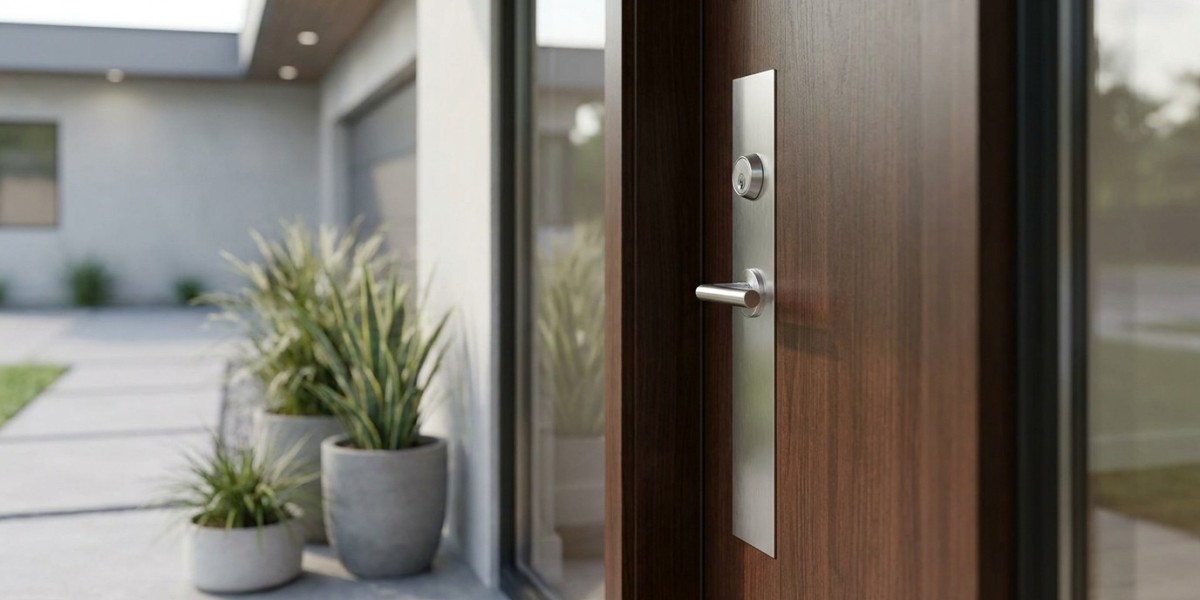


Vinyl door wrap has moved well beyond a niche DIY trend. Today, it sits firmly in the mainstream — used by homeowners refreshing tired interiors, commercial fit-out teams updating office floors, and hospitality groups renovating hundreds of hotel room doors at once without shutting down operations. The core reason for its popularity is straightforward: it delivers a dramatic visual transformation at a fraction of the cost of door replacement, and it does so without the mess, disruption, or lead times that come with traditional renovation work.
At its most basic, vinyl door wrap is a self-adhesive film — typically made from PVC — that you apply directly over an existing door surface. A pressure-sensitive adhesive backing bonds the film to the door when pressed firmly in place, creating a finish that looks purpose-built rather than added on. Modern manufacturing processes have pushed the quality of these films to a point where woodgrain textures, metallic sheens, and stone-effect finishes are genuinely convincing to the eye and to the touch.
The versatility factor matters too. Vinyl door wrapping works on MDF, PVC, timber, glass-panelled doors, hollow-core flush doors, and most smooth painted surfaces. That breadth of compatibility means you can apply the same approach across an entire property — interior doors, cabinet doors, wardrobe panels, and even the front door — with a consistent method and consistent results.
Understanding the Different Types of Vinyl Door Wrap
Choosing the right category of vinyl film before you start is the single decision that most directly determines whether your project looks professional or falls apart within months. The vinyl wrap market splits into four main product types, each suited to different surfaces, budgets, and durability expectations.
Cast Vinyl Door Wrap
Cast vinyl is the top-tier option and the material of choice for professional wrap installers working on complex surfaces. The manufacturing process — pouring liquid vinyl compound onto a casting sheet and allowing it to cure gradually — produces an exceptionally thin, stable film that conforms to curved surfaces, raised panel details, and routed edges without stretching, distorting, or leaving stress marks. It does not shrink over time, which keeps edges sealed and surfaces smooth for years. If you are wrapping a panelled door, a front door with architectural details, or any surface with significant contour changes, cast vinyl is the only material that will perform reliably over the long term.
Calendered Vinyl Film
Calendered vinyl is produced by feeding vinyl compound through heavy compression rollers — a faster, less expensive manufacturing process that results in a thicker, stiffer product. It performs well on flat and gently curved surfaces and represents excellent value for straightforward projects. Kitchen cabinet doors with flat faces, wardrobe sliding panels, and smooth interior flush doors are ideal applications. The limitation appears when you try to wrap it around tight edges or into raised panel recesses — the material resists conforming and the edges tend to lift over time as the film tries to return to its original flat state.
Architectural Vinyl Film
Architectural vinyl film sits in a performance category of its own. The 3M DI-NOC range is the most widely specified product in this segment — a professional-grade film engineered for permanent interior architectural applications including doors, walls, elevator interiors, and furniture panels. These films carry fire-resistance certifications that meet commercial building codes, making them appropriate for healthcare facilities, hotels, offices, and retail environments where standard decorative films would not pass a building inspection. The texture and finish quality in architectural film is also the highest available in the adhesive vinyl category — the woodgrain and stone reproductions are strikingly realistic.
Peel and Stick Vinyl Wrap
Peel and stick decorative vinyl — products like d-c-fix and similar contact-paper-style films — gives casual DIYers and renters a low-commitment entry point into door wrapping. These films are thicker and more forgiving during application, repositionable while you are laying them down, and removable without surface damage when you eventually want a change. The trade-off is a shorter lifespan, less convincing texture reproduction, and limited performance on anything other than flat surfaces. For a child's bedroom door, a rented flat, or a temporary project, they are entirely fit for purpose.
Most Popular Finishes and Why They Matter
The finish you select shapes the entire personality of the wrapped door, and the range available in vinyl door wrap films has expanded considerably over the past decade.
Woodgrain remains the most consistently popular finish category by a significant margin. Oak, walnut, ash, and pine reproductions are particularly sought after, and the best cast vinyl and architectural film versions of these finishes are genuinely difficult to distinguish from real timber at normal viewing distances. Matte and satin woodgrain wraps read most naturally, while high-gloss woodgrain films create a lacquered furniture aesthetic that works beautifully in contemporary kitchens and fitted bedroom furniture.
Solid colour matte finishes have grown sharply in popularity alongside the broader shift toward minimalist and Scandi-influenced interiors. Matte black vinyl door wrap has become something of a design statement in its own right — used on front doors, kitchen cabinet doors, and internal room doors alike. Matte white and matte grey offer the same clean architectural quality and pair easily with most interior colour schemes.
Stone and concrete effect wraps are gaining ground in commercial environments and high-end residential projects. A well-executed polished marble or raw concrete vinyl finish on an interior feature door creates a material richness that would cost ten to twenty times more to achieve with genuine surface cladding.
Where Vinyl Door Wrap Works Best
Vinyl door wrap performs across a surprisingly wide range of door types and environments, which is one of the main reasons it appeals to such a broad audience.
In the home, front door vinyl wrap creates instant curb appeal improvements that repainting cannot match — particularly when you choose a textured woodgrain or a deep matte colour that holds its appearance far longer than exterior paint in a comparable finish. Inside the house, kitchen cabinet door wrapping has become one of the most popular renovation alternatives in the market. Wrapping an existing set of cabinet doors in a new finish — rather than replacing the carcasses and doors entirely — can save thousands while achieving a result that genuinely looks like a new kitchen.
Wardrobe door wrapping is another high-value residential application. Large flat sliding wardrobe panels show vinyl wrap at its cleanest and most impactful, and updating them with a fresh woodgrain or matte colour can shift the entire feel of a bedroom without any structural work.
In commercial settings, vinyl door wrapping has become a standard tool in the office fit-out and hospitality renovation toolkit. A mid-sized hotel chain that wrapped 400 guest room doors as part of a refurbishment project — switching from tired painted timber to a warm walnut architectural vinyl — completed the work without taking a single floor out of service, a result that door replacement could never have achieved on the same timeline or budget.
Step-by-Step Guide to Applying Vinyl Door Wrap
The application process is accessible for a confident DIYer, but the preparation stage determines everything. A poorly prepared surface will cause the best vinyl film to fail, while a properly prepared surface makes even budget film look sharp.
Remove the door from its hinges if your project allows — working flat is significantly easier than working vertical, especially for first-timers. Wipe the entire surface down thoroughly with isopropyl alcohol to strip away any grease, wax, silicone, or cleaning product residue. Even surfaces that look perfectly clean to the eye often carry enough contamination to compromise adhesive bonding. Let the surface dry fully before touching the vinyl.
Measure the door and cut your vinyl film with at least 50mm of excess on every edge. Never cut to the exact size before application — you always trim after the film is smoothed down. Peel the backing liner back gradually from the top as you lay the film down section by section, using a soft rubber squeegee to push air out from the center toward the edges in firm, overlapping strokes.
For any surface with raised panels, edge profiles, or contours, use a heat gun set to a gentle temperature — around 40 to 60 degrees Celsius — to warm the vinyl as you work it into the recesses. Heated cast vinyl stretches cleanly without tearing and conforms around complex shapes that cold film simply cannot follow. Once the entire surface is covered and squeegeed smooth, trim the excess along all edges using a sharp precision craft knife and a metal straight edge. Finish with a gentle heat pass along every trimmed edge to activate the adhesive fully and seal against moisture ingress.
How Long Will Your Vinyl Door Wrap Last?
Lifespan varies based on three factors — the quality of the film, the quality of the installation, and the environment the door operates in.
A professionally installed cast vinyl or architectural film wrap on an interior door comfortably lasts seven to twelve years under normal residential use. Interior wraps avoid direct UV exposure and weather cycling, which are the two primary forces that degrade adhesive vinyl over time. Exterior door wraps using a UV-stabilized, weatherproof film typically perform well for five to eight years before the finish begins showing meaningful fade or edge lift.
DIY peel and stick films have a realistic lifespan of one to three years in active domestic use. Their adhesive systems and material thickness are optimized for easy application and repositionability rather than long-term performance, which is an entirely acceptable trade-off for the right type of project.
Best Vinyl Door Wrap Brands on the Market
The brand you choose has a direct and measurable effect on both the installation experience and the finished result. These manufacturers have established strong reputations across both professional and DIY markets:
- 3M — their 1080 series cast vinyl and DI-NOC architectural film range set the industry benchmark for finish quality, dimensional stability, and long-term adhesion performance
- Avery Dennison — the Supreme Wrap series offers outstanding conformability and a rich texture library trusted by professional installers across Europe and North America
- Oracal — the 975 Premium Structure Cast series delivers reliable mid-to-premium performance with strong UV resistance and an extensive finish selection
- d-c-fix — the most widely available quality brand in the DIY peel and stick segment, with consistent adhesion and a broad decorative range well suited to home projects
- VViViD — a strong value-for-money option in the DIY cast vinyl space, offering better conformability than most budget alternatives at an accessible price point
Mistakes That Ruin a Vinyl Door Wrap Job
Most failed door wrap projects trace back to a small number of avoidable errors that experienced installers never make twice.
Skipping or rushing the surface preparation stage is the single most damaging mistake you can make. Adhesive vinyl will not bond reliably to any surface carrying grease, wax, or silicone — and premature peeling from contaminated surfaces is the most common complaint among first-time wrappers. Clean thoroughly, every time, without exception.
Using calendered vinyl on a panelled or contoured door consistently leads to edge lifting within the first year. The material simply does not have the elasticity to stay bonded around curves and recesses under normal temperature fluctuation. Match the film type to the surface — cast vinyl for complex doors, calendered for flat surfaces only.
Cutting the film to the exact door size before application removes all margin for error and makes trimming cleanly almost impossible. Always leave generous excess and trim after application. And finally, never skip the edge sealing step — raw cut edges exposed to daily handling and moisture are where almost every wrap begins to fail.
FAQs
1. Can you apply vinyl door wrap to an exterior front door?
Yes, but you must choose a film specifically rated for exterior use. Look for UV-stabilized, weatherproof cast vinyl designed for outdoor vertical surfaces. Standard interior films will fade and lift when exposed to prolonged sunlight, rain, and temperature changes. Brands like 3M and Avery Dennison both produce exterior-grade options suitable for front door applications.
2. Does vinyl door wrap damage the original door surface when you remove it?
Quality cast vinyl films use pressure-sensitive adhesives designed to remove cleanly from factory-painted, primed, and smooth PVC surfaces. Surfaces with flaking paint, bare timber, or compromised existing coatings may experience some disruption on removal. If you are uncertain, test the adhesive on a small hidden area before committing to the full application.
3. Can vinyl door wrap go over a door that has already been painted?
Yes, provided the paint is in good condition — fully cured, firmly bonded, and free from peeling or flaking. Vinyl will not adhere reliably to paint that is already failing. Lightly sanding a high-gloss painted surface before cleaning with isopropyl alcohol improves adhesion significantly.
4. Is vinyl door wrapping cheaper than repainting?
For a single door, the costs are broadly comparable. The real advantage of vinyl wrapping over repainting is the finish range — woodgrain, stone, and metallic effects that paint simply cannot replicate — combined with zero drying time, no masking work, and no primer coats required. For multiple doors or an entire kitchen cabinet set, wrapping typically becomes more cost-efficient than repainting at scale.
5. How do you clean a vinyl-wrapped door without damaging it?
Use a soft microfiber cloth with warm water and a mild, pH-neutral soap. Avoid abrasive cleaning pads, solvent-based products, bleach, or steam cleaners — all of which can damage the film surface, strip matte finishes, or lift edges. For gloss vinyl wraps, a vinyl-safe spray detailer keeps the finish looking sharp between regular cleans.
6. Can you wrap a door with glass panels or cut-outs?
Yes. Doors with glass inserts or decorative cut-outs require more careful measuring, cutting, and trimming around the apertures, but the wrapping process itself is the same. Use a sharp craft knife and a fresh blade to cut cleanly around glass edges, and take extra care to seal the vinyl tightly against any framing around the apertures where moisture could penetrate.
7. What is the real difference between vinyl door wrap and contact paper?
Contact paper is a decorative shelf-lining product — thicker, more rigid, and designed for flat horizontal surfaces with low-durability adhesive. Vinyl door wrap is a purpose-engineered film with a higher-quality adhesive system, better conformability for vertical surfaces, and significantly longer durability. The finish quality, texture accuracy, and edge performance of proper vinyl door wrap film is noticeably superior to standard contact paper in every measurable way.








