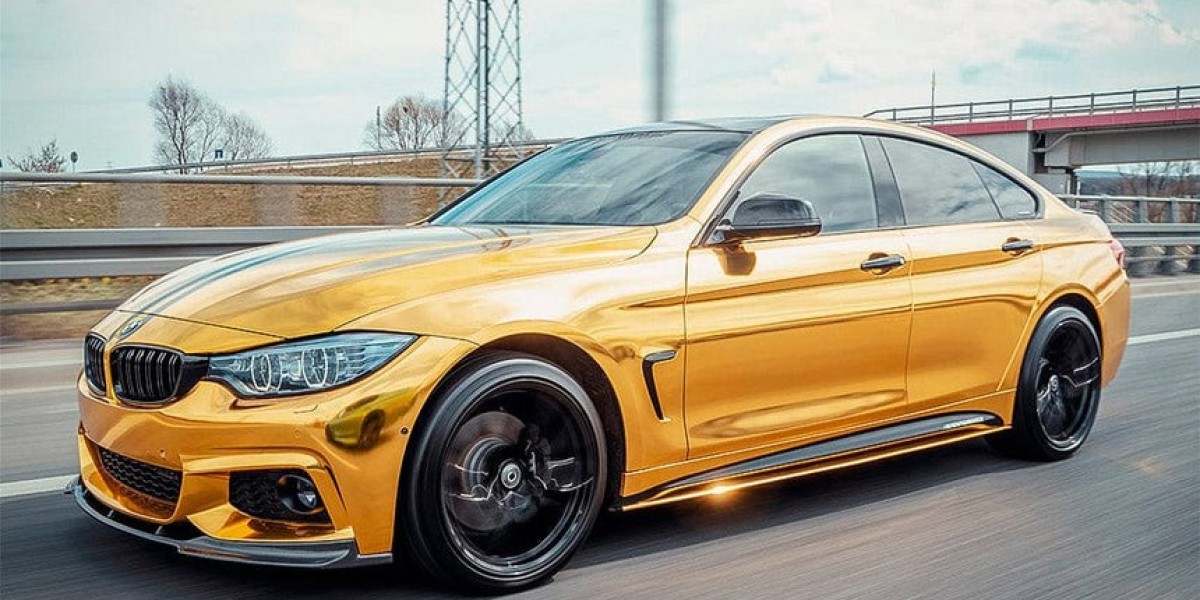


Gold has always carried a visual language that few other colors or finishes can match — wealth, confidence, prestige, and a certain bold unapologetic energy. In the world of vinyl wrapping, gold wrap has translated that language into a physical product that people are applying to cars, motorcycles, interior surfaces, furniture, and architectural features with increasing enthusiasm.
The rise of gold vinyl wrap sits within the broader explosion of the vehicle wrap industry, which the global market valued at over $10 billion in 2023 and continues to grow at a strong annual rate. Within that space, metallic and chrome finishes — gold chief among them — consistently rank as some of the most requested custom wrap colors. Social media has amplified this trend dramatically. A gold-wrapped supercar or a brushed gold interior feature wall photographs in a way that commands attention, and that visual impact drives real commercial and consumer demand.
What separates gold wrap from a painted gold finish is the same thing that separates all quality vinyl wraps from paint — flexibility, reversibility, and the sheer variety of gold interpretations available. You can achieve a rich 24-karat gloss gold, a subtle champagne satin, a dramatic mirror chrome gold, or a refined brushed metallic finish, each creating a completely different mood. No paint job offers that range without a complete respray between changes, whereas a vinyl wrap can be removed and replaced whenever you want something different.
Types of Gold Wrap Films You Need to Know
Gold is not a single finish — it is a broad spectrum of metallic and reflective effects, and the type you choose defines the entire character of your project. Understanding these distinctions before purchasing saves you from expensive regrets.
Gloss Gold Vinyl Wrap
Gloss gold wrap is the classic interpretation — a high-shine, reflective gold finish that catches and throws light dramatically. It reads closest to traditional gold as most people imagine it: bold, lustrous, and impossible to ignore. This finish works particularly well on curved surfaces because the gloss deepens and shifts as viewing angles change, creating a sense of visual movement across the panel. It is the most popular choice for full car wraps where maximum visual impact is the goal.
Matte Gold Wrap
Matte gold takes the same warm metallic tone and removes the shine entirely, replacing it with a flat, light-absorbing surface that reads more like burnished metal than polished gold. The result is considerably more understated — still unmistakably premium, but with a sophistication that gloss gold does not always carry. Matte gold has become especially popular in interior design applications and partial car accents, where restraint is as much a design statement as extravagance.
Chrome and Mirror Gold Wrap
Chrome gold — sometimes marketed as mirror gold — is the most visually extreme interpretation in the category. The film surface acts almost like a true mirror, reflecting the surrounding environment in a liquid-gold distortion that turns any surface into a spectacle. It is the finish of choice for show cars, custom builds, and installations where the entire purpose is to stop people in their tracks. Chrome films are technically more demanding to apply cleanly — they show every imperfection, crease, and fingerprint — and they are best handled by experienced installers working in controlled environments.
Brushed and Satin Gold Wrap
Brushed gold vinyl replicates the appearance of brushed metal — that directional grain texture that high-end hardware and luxury product design use extensively. It sits between gloss and matte in terms of reflectivity and offers a refinement that neither extreme quite achieves. Satin gold occupies similar territory: warmer than matte, quieter than gloss, with a gentle sheen that photographs beautifully and ages gracefully in real-world settings. Both finishes are particularly popular for interior trim, furniture accents, and architectural features where the material needs to complement rather than dominate the space around it.
Gold Wrap for Cars: What Makes It So Appealing?
In the automotive world, a gold-wrapped car is a deliberate statement. It communicates something specific about the owner's willingness to stand apart from convention, and it does so in a way that paint — permanent, expensive to reverse, and ultimately a commitment — simply cannot match with the same level of creative freedom.
The practical case for gold vinyl car wrap over gold paint is compelling. A professional gold wrap costs significantly less than a custom gold paint job of comparable quality. It protects the original factory paintwork underneath, which preserves the vehicle's resale value in a way that repainting actively damages. And when you eventually decide to change the look — whether selling the car or simply wanting something different — the wrap removes cleanly without affecting the paint beneath.
Gold car wraps appear frequently on prestige and exotic vehicles — Lamborghinis, Ferraris, Rolls-Royces, and high-specification SUVs — where the finish amplifies the vehicle's inherent drama. But the trend is by no means limited to supercars. Gloss gold accents on wheels, mirror caps, grilles, and roof panels have become a popular modification across a much wider range of vehicles, allowing owners to introduce gold detailing without committing to a full wrap.
A particularly notable real-world example is the surge in gold-wrapped vehicles used for brand activations and luxury events. Companies launching premium products regularly commission gold-wrapped vehicles as mobile installations — the finish is immediately recognizable across digital and physical environments and photographs with an impact that justifies the investment in marketing terms.
Beyond Automotive: Other Creative Uses for Gold Wrap
Gold vinyl wrap extends far beyond the automotive world, and some of the most striking applications appear in interior design, retail, and product customization.
In interior design, gold architectural wrap film transforms surfaces like column cladding, feature walls, furniture panels, elevator interiors, and door frames with a metallic richness that traditional paint and real metal cladding cannot deliver at comparable cost. Retail environments use gold vinyl extensively in luxury store fit-outs — wall sections, display plinths, and ceiling features all benefit from gold film finishes that communicate premium positioning without the budget of actual gold leaf or polished metal panels.
Product customization is another growing area. Electronics enthusiasts wrap laptops, gaming consoles, and audio equipment in brushed or chrome gold vinyl to create personalized devices that stand out from the factory finish. Furniture designers apply gold vinyl to table legs, chair frames, cabinet fronts, and drawer faces to achieve a luxury aesthetic at a fraction of the cost of gold-finished hardware or genuine metallic surfaces.
Even architecture and signage professionals have embraced gold vinyl as a practical alternative to engraved or painted gold lettering and decorative elements. The film cuts cleanly, adheres firmly to glass, metal, and smooth wall surfaces, and delivers a consistency of finish that hand-applied gold paint rarely matches.
How to Apply Gold Wrap Like a Professional
Applying gold vinyl — particularly chrome and mirror-finish variants — demands more careful technique than standard colors, because metallic and reflective films amplify every imperfection in both the surface and the application process.
Start with an immaculate surface. Clean the application area thoroughly with isopropyl alcohol and a lint-free cloth, removing every trace of grease, wax, polish, and silicone. On vehicle panels, clay bar treatment before the isopropyl clean removes embedded contaminants that wiping alone will not shift. Any debris trapped beneath a metallic film becomes immediately visible because the reflective surface acts as a magnifier.
Measure and cut the gold vinyl with generous excess — at least 50mm on every edge. Work in a temperature-controlled environment where possible; cold temperatures reduce the film's flexibility and adhesive tack, while extreme heat makes chrome films particularly difficult to control during positioning. Peel the liner back progressively as you lay the film, using a felt-edge squeegee rather than a standard rubber tool — felt protects the reflective surface from micro-scratches that rubber can introduce on chrome and gloss metallic films.
Use a heat gun on a low setting for curved surfaces and complex contours, warming the vinyl gradually as you work it into shape. Post-heat the film after application to set the adhesive fully and lock the film in place, particularly around edges, curves, and any recessed areas. Trim edges with a fresh, sharp blade and seal all cut edges firmly. For chrome gold films especially, even minor edge lifting catches light and becomes immediately obvious, so edge sealing is non-negotiable.
How Long Does Gold Vinyl Wrap Last?
Gold vinyl wrap lifespan depends on the film grade, installation quality, and how much environmental stress the surface experiences.
A professionally installed cast gold vinyl wrap on a vehicle exterior typically lasts five to seven years with proper maintenance. Chrome and mirror gold films tend to have slightly shorter practical lifespans — around three to five years — because their surface coating is more sensitive to abrasion, cleaning chemicals, and UV degradation than standard colored vinyl. Interior applications of gold architectural or decorative vinyl last considerably longer, often ten or more years, since they avoid UV exposure, weather, and physical contact entirely.
Regardless of film type, proper care extends lifespan significantly. Hand washing rather than machine washing, avoiding harsh cleaning chemicals, and applying a vinyl-safe protective sealant every few months all contribute to a gold wrap that holds its appearance well past its nominal expected life.
Best Gold Wrap Brands Worth Investing In
The quality gap between premium and budget gold vinyl wrap is wider than in almost any other color category. Metallic and chrome finishes expose manufacturing inconsistencies — color variation across a roll, uneven reflective coating, or adhesive that fails prematurely — in ways that solid matte colors simply do not. Investing in reputable brands protects both the finished result and the time you invest in the installation:
- Avery Dennison — their Supreme Wrap Satin Gold and Conform Chrome series deliver outstanding color consistency, conformability, and long-term adhesion trusted by professional installers globally
- 3M — the 1080 series gold options and specialty chrome films offer benchmark quality in both finish accuracy and installation performance
- Oracal — the 970 Premium Wrapping Cast series includes several gold variants with strong UV resistance and reliable adhesive performance across temperature ranges
- Hexis — a French manufacturer with a strong reputation for metallic and chrome films, particularly popular among European wrap installers for their finish depth and handling characteristics
- VViViD — offers accessible chrome gold and gloss gold options that perform well for DIY projects and partial wraps where professional-grade longevity is not the primary requirement
Common Gold Wrap Mistakes and How to Avoid Them
Gold wrap projects fail in predictable ways, and almost every failure traces back to decisions made before the film touches the surface.
Applying gold vinyl — especially chrome — over an unprepared or contaminated surface is the fastest route to a disappointing result. The reflective surface reveals every dust particle and grease smear beneath the film as a visible bump or discoloration. Preparation is not optional; it is the foundation everything else depends on.
Using a standard rubber squeegee on chrome or mirror gold film introduces fine scratches that permanently dull the reflective surface. Always use a felt-padded squeegee on these finishes, and keep the tool scrupulously clean between passes.
Buying budget chrome gold vinyl from unknown marketplace suppliers is a gamble that rarely pays off. Cheap chrome films frequently show color inconsistency across the roll, develop surface hazing within months of installation, and use adhesive systems that fail prematurely in outdoor conditions. The cost saving at purchase becomes an expensive re-wrap job far sooner than it should.
Rushing the post-heat stage leaves adhesive under-activated and edges vulnerable to early lifting. Take the extra ten minutes to heat the entire finished wrap properly — it is one of the simplest steps and one of the most commonly skipped.
FAQs
1. How much does a full gold car wrap cost?
A professional full gold vinyl wrap on a standard car typically costs between $2,500 and $6,000 depending on vehicle size, film type, and installer location. Chrome and mirror gold wraps sit at the higher end of that range due to the additional skill and time required for clean installation. Partial wraps — accents, roofs, bonnets — cost significantly less.
2. Is gold chrome wrap legal on public roads?
In many jurisdictions, highly reflective chrome finishes are subject to restrictions on road-going vehicles because mirror surfaces can dazzle other drivers. Regulations vary by country and state, so always check your local vehicle standards authority before applying a full chrome gold wrap to a car you drive on public roads.
3. Can gold vinyl wrap be applied over existing paint without damaging it?
Yes. Quality cast gold vinyl wrap uses pressure-sensitive adhesive that bonds firmly during use and removes cleanly from factory paintwork without causing damage. Paint that is already compromised — peeling, flaking, or heavily repaired — may experience issues on removal, so the underlying paint condition matters.
4. How do you maintain a gold-wrapped car?
Hand wash using a pH-neutral car shampoo and a soft microfiber mitt. Avoid automatic car washes with abrasive brushes, pressure washing at close range, and solvent-based cleaning products. Apply a vinyl-compatible spray sealant or wax every two to three months to protect the surface and maintain the gold finish's depth and clarity.
5. What is the difference between gloss gold and chrome gold wrap?
Gloss gold is a high-shine metallic finish with warmth and depth — reflective but not mirror-like. Chrome gold is a true mirror finish that reflects surrounding images clearly, like a liquid gold surface. Chrome is more dramatic and more demanding to apply and maintain, while gloss gold is more forgiving in both application and daily use.
6. Can you wrap interior surfaces with gold vinyl?
Absolutely. Gold vinyl film works excellently on interior surfaces including furniture panels, cabinet doors, wall features, column cladding, and architectural trim. Interior applications avoid UV exposure and weather stress, which significantly extends the film's lifespan compared to exterior use.
7. Does gold wrap look cheap on certain vehicles?
Finish choice and application quality determine the result far more than the color itself. A properly installed brushed satin gold or matte gold wrap on the right vehicle looks genuinely premium. Chrome gold on a budget hatchback may read differently than on a sports car — context and execution both matter. Choosing the right gold variant for the specific vehicle and use case is what separates a compelling result from a poor one.









