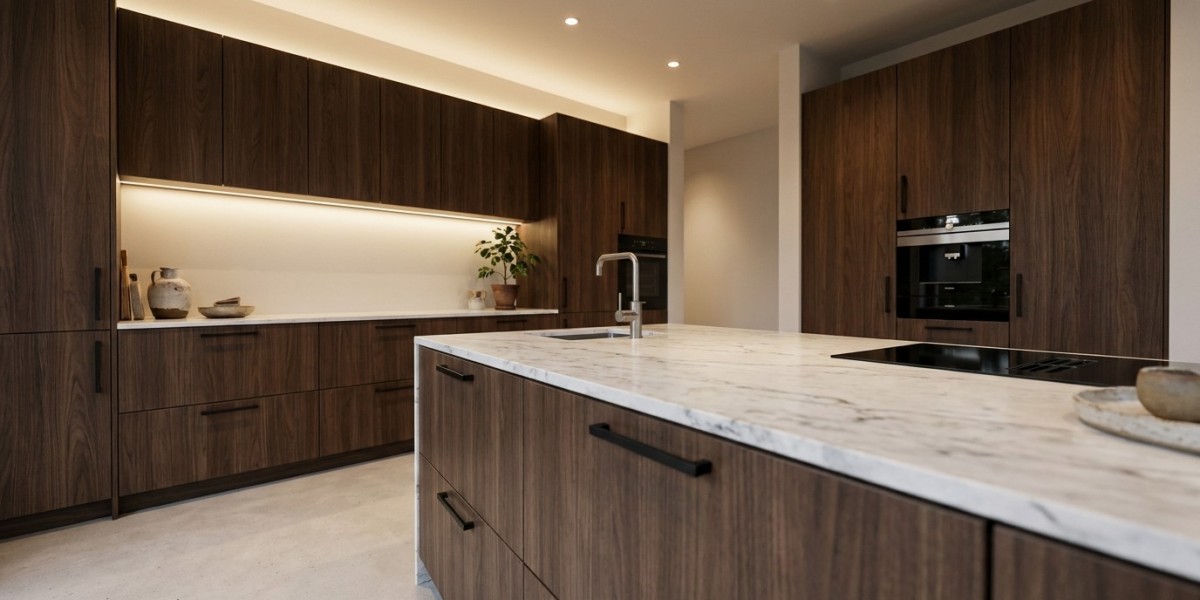


Not long ago, matching cabinet hardware was considered non-negotiable. Every pull the same size, same finish, same style — uniformity was the standard, and deviating from it felt risky. That mindset has shifted considerably over the last several years, and today some of the most celebrated kitchen and bathroom designs deliberately mix different size cabinet pulls as a central feature of their aesthetic.
The shift reflects a broader movement in interior design toward layered, collected-over-time interiors that feel personal rather than catalog-perfect. Matching every hardware piece from the same product range can produce a space that looks precisely assembled but lacks the visual warmth that comes from thoughtful variation. Mixing pull sizes — using longer bar pulls on base cabinets and shorter pulls on upper doors, for example — introduces a sense of proportion and intentionality that elevates a kitchen from functional to genuinely well-designed.
Professional kitchen designers and NKBA-certified practitioners have increasingly incorporated mixed hardware into their project specifications, and major hardware brands like Amerock, Top Knobs, and Richelieu have responded by expanding their collections to include coordinating pulls in multiple sizes designed to work together. The trend is not about randomness — it is about deliberate, considered variation that respects proportion, visual weight, and the functional differences between cabinet types.
Understanding Cabinet Pull Sizes Before You Mix
Before you start experimenting with combinations, you need a solid understanding of how cabinet pull sizing actually works. Without this foundation, mixed hardware choices tend to look accidental rather than intentional.
Standard Cabinet Pull Sizes Explained
Cabinet pulls are typically measured in two ways — overall length and center-to-center distance. Overall length describes the full physical length of the pull from end to end. Center-to-center (CC) measurement describes the distance between the two screw holes, which is the critical dimension for installation since it must align with the holes drilled in your cabinet doors and drawer fronts.
Common center-to-center measurements include 3 inches (76mm), 3.75 inches (96mm), 5 inches (128mm), 6.25 inches (160mm), and 8 inches (203mm). Larger pulls — sometimes called appliance pulls or long bar pulls — run from 10 inches up to 18 inches or more and are typically used on large drawers, pantry doors, and full-height cabinet doors. Knowing your existing hole spacing before shopping prevents the frustrating situation of falling in love with a pull that requires different drilling.
Center-to-Center Measurement: Why It Matters
When you mix different size cabinet pulls across a kitchen, center-to-center consistency within each cabinet type keeps the installation clean and prevents you from needing to fill old holes and re-drill. If your upper cabinet doors currently use 3-inch CC pulls, replacing them with a different pull at the same 3-inch CC measurement is a straightforward swap. Moving to a completely different CC measurement means re-drilling, which adds cost and complexity to what could otherwise be a simple hardware refresh.
This is why many designers choose pulls from the same manufacturer's coordinating collection when mixing sizes — the brand has already done the work of ensuring that different-sized pulls within the same line share common center-to-center options, making mixed installations far more practical.
Design Rules for Mixing Different Size Cabinet Pulls
Mixing cabinet pull sizes successfully is not about ignoring rules — it is about understanding which rules to follow and which to bend. Interior designers who execute this well consistently apply a few core principles that keep mixed hardware looking cohesive rather than chaotic.
The most important principle is to maintain consistency within each zone. Upper cabinets should use the same pull size throughout. Base cabinet doors should use the same pull size throughout. Drawers should use a size appropriate to their width — and larger drawers should use proportionally larger pulls than smaller ones. Varying sizes randomly across the kitchen without a zone-based logic is what creates the chaotic, accidental look that mixed hardware critics often point to.
Visual weight is the second principle worth understanding deeply. A long, heavy bar pull on a small upper cabinet door looks disproportionate and draws the eye awkwardly. A tiny knob on a wide 36-inch drawer front looks visually lost. The pull size should feel physically appropriate for the cabinet surface it lives on — neither overwhelming it nor disappearing against it. As a general guideline, pulls on drawer fronts should span roughly one-third of the drawer's width for optimal visual balance.
Finish consistency is the third anchor point. When you mix pull sizes, keeping the finish consistent across all pulls gives the eye something to hold onto and prevents the varied sizes from reading as mistakes. Mixing sizes in the same brushed nickel or matte black finish reads as a deliberate design choice. Mixing sizes AND finishes AND styles simultaneously creates visual noise that very few kitchens can absorb gracefully.
Best Pull Size Combinations That Actually Work
Some size combinations consistently perform better than others in real kitchen environments, and understanding these pairings gives you a practical starting point rather than guessing from scratch.
Upper Cabinets vs. Lower Cabinets
One of the most widely adopted approaches uses shorter pulls on upper cabinet doors and longer pulls on lower base cabinet doors. A 3-inch or 3.75-inch pull on upper doors feels appropriately scaled to the smaller door format, while a 5-inch or 6.25-inch pull on lower base cabinet doors adds visual weight that anchors the lower run of cabinetry. This size graduation mirrors the way kitchens naturally carry more visual mass at the base, and it creates a subtle but satisfying sense of hierarchy across the room.
Drawers vs. Cabinet Doors
Drawers and cabinet doors serve different functions and experience different usage patterns, which makes using different pull sizes between them both practically sensible and aesthetically logical. Wide drawers — particularly 24-inch and 30-inch bank drawers — benefit from longer pulls in the 5-inch to 8-inch CC range, which distribute hand force more evenly and reduce the mechanical stress on the drawer front over time. Cabinet doors on the same run work well with a shorter pull or even a knob, creating a clear visual distinction between the two cabinet types that helps users navigate the kitchen intuitively.
Mixing Cabinet Pulls with Different Finishes
While keeping a consistent finish is the safer approach when mixing sizes, mixing finishes can absolutely work — it just requires a more disciplined framework to prevent the look from fragmenting.
The two-finish rule is the most practical guideline: choose no more than two finishes across your entire kitchen hardware selection, and apply them with clear logic. Many designers use matte black pulls on lower base cabinets and brushed brass or brushed nickel on upper cabinets — the darker finish grounds the lower zone while the warmer or lighter finish keeps upper cabinets from feeling heavy. This combination has appeared consistently across kitchen design features in publications like Architectural Digest and Elle Decor, reflecting its genuine staying power as a design approach rather than a passing moment.
When mixing finishes alongside sizes, the two variations need to reinforce each other rather than compete. Larger pulls in a darker finish on lower cabinets and smaller pulls in a lighter finish on upper cabinets creates a coherent system. Randomly alternating both size and finish with no zone-based logic does the opposite.
Common Mistakes When Mixing Cabinet Pull Sizes
Even well-intentioned mixed hardware projects go wrong in predictable ways. Recognizing these mistakes before you commit to purchasing protects both your budget and your renovation outcome.
Choosing pulls from completely different design families is one of the most common errors. A sleek, minimalist bar pull mixed with an ornate cup pull in a traditional style creates a jarring clash that no amount of size or finish coordination can resolve. When mixing sizes, stay within the same design language — both pulls should share the same visual vocabulary, whether that is industrial, transitional, contemporary, or traditional.
Ignoring the cabinet door size when selecting pull length leads to proportional imbalance that dominates a kitchen's appearance in an unflattering way. Always measure your cabinet door and drawer widths before selecting pull sizes, and use the one-third rule as a starting point for drawer pulls.
Buying all the hardware before testing a sample is a costly shortcut. Order samples or single pieces of each pull before committing to quantities — see them installed on your actual cabinets in your actual kitchen light before placing a full order. Colors, finishes, and proportions all read differently in product photography than they do in a real space.
Real Kitchen Examples That Nail Mixed Cabinet Hardware
Real-world applications illustrate what mixed cabinet pull sizing actually achieves when executed with care.
A widely shared kitchen renovation in a Brooklyn brownstone used 3-inch matte black bar pulls on upper shaker cabinets and 6.25-inch matte black bar pulls on lower base cabinets and a large island. The consistent finish tied the varied sizes together, while the size difference clearly delineated the upper and lower zones and gave the island a visual anchor appropriate to its scale. The result read as considered and custom rather than mixed.
A Scandinavian-influenced kitchen project featured brushed brass 3.75-inch pulls on all upper doors combined with 8-inch brushed brass bar pulls across a bank of deep drawers. The unified finish with dramatically different sizes created a strong rhythmic quality across the drawer stack that became a focal point of the room rather than an afterthought.
Hardware brand Amerock has published several styled kitchen images in their design resources that specifically demonstrate their coordinating pull collections used in mixed-size configurations — a useful reference if you want to see how a single manufacturer's range handles the combination in practice.
How to Shop for Mixed Cabinet Pulls That Complement Each Other
Shopping for mixed cabinet hardware is more methodical than browsing for a single matching set, but the process is straightforward when you approach it with a clear framework.
Start by identifying your cabinet zones and the pull size logic you want to apply across each zone. Write down the center-to-center measurement required for each zone based on your existing hole spacing or your willingness to re-drill. Then select a finish you want to use consistently — or identify your two-finish framework if you plan to mix.
- Browse coordinating collections from brands like Top Knobs, Richelieu, and Amerock that offer the same design in multiple sizes — this guarantees visual compatibility between your different pulls
- Order physical samples of every pull you are considering before purchasing full quantities — see them on your actual cabinets before committing
- Check center-to-center measurements carefully against your existing cabinet drilling to minimize installation complications
- Calculate quantities accurately by counting every cabinet door and drawer front separately before ordering — mixed hardware projects are more complex to reorder than single-style selections if you run short
FAQs
1. Is it okay to mix cabinet pull sizes in the same kitchen?
Yes, and when done with intention it often produces a more sophisticated result than uniform hardware throughout. The key is applying size variation with a clear zone-based logic — consistent sizing within each cabinet type — rather than mixing randomly across the space.
2. What size pull should I use on drawers versus cabinet doors?
A general guideline is to use a pull that spans approximately one-third of the drawer width for drawer fronts. Cabinet doors work well with shorter pulls — typically 3 to 5 inches CC — scaled to the door size. Larger doors like pantry or full-height cabinet doors benefit from longer pulls in the 8-inch or above range.
3. Can I mix cabinet pulls and knobs in the same kitchen?
Yes. Using knobs on cabinet doors and pulls on drawers is a classic combination that many designers still specify. The functional logic is sound — knobs work well for doors that swing open, while pulls provide better grip for the sliding motion of drawers. Keep the finish consistent across both hardware types for a cohesive result.
4. Do mixed size cabinet pulls affect resale value?
Thoughtfully mixed cabinet hardware generally does not negatively impact resale value and can enhance a kitchen's appeal by making it feel more custom and designed. Poorly executed mixed hardware — clashing styles, random size variation — can read as unfinished to prospective buyers. Quality and intentionality matter more than uniformity.
5. How do I know which pull sizes work together visually?
The most reliable approach is to choose pulls from the same manufacturer's coordinating collection, where the brand has already designed different sizes to work together. If mixing across brands, ensure both pulls share the same design language — similar profile depth, similar end cap treatment, and a consistent finish.
6. Should I use the same finish when mixing pull sizes?
For most kitchens, yes — maintaining a consistent finish while varying size is the approach that most reliably produces a cohesive result. Mixing both finish and size simultaneously requires a more disciplined framework and is best approached with guidance from an experienced kitchen designer or by referencing professional kitchen photography for specific examples.
7. How do I measure cabinet pulls correctly before buying?
Measure the center-to-center distance between your existing screw holes — this is the critical dimension that determines installation compatibility. Then consider the overall length you want relative to the cabinet or drawer size. Most hardware retailers list both overall length and CC measurement in their product specifications, so always check both figures before purchasing.









