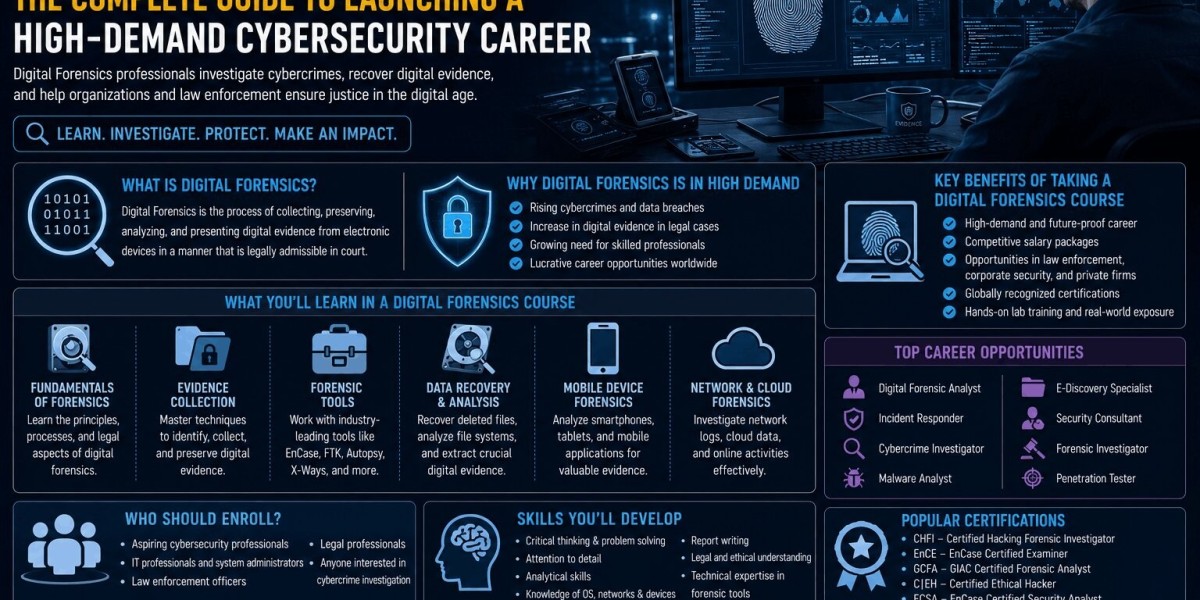


The rapid rise of cybercrime has transformed digital forensics into one of the most valuable disciplines in cybersecurity. From investigating ransomware attacks to recovering deleted evidence and analyzing digital devices, organizations across industries rely on skilled digital forensics professionals to protect sensitive information and uncover the truth behind cyber incidents.
If you're looking to build a rewarding career in cybersecurity, enrolling in a digital forensics course is one of the smartest decisions you can make. Whether you're an IT professional, law enforcement officer, cybersecurity analyst, or someone looking to switch careers, learning digital investigation techniques can open doors to high-paying and in-demand job opportunities.
This comprehensive guide explains everything you need to know about digital forensics education, certifications, career opportunities, and how the right training can help you become an expert investigator.
What Is Digital Forensics?
Digital forensics is the process of identifying, collecting, preserving, analyzing, and presenting electronic evidence during cybercrime investigations. The goal is to uncover digital evidence while maintaining its integrity so it can be used in legal proceedings or organizational investigations. Digital forensic investigators examine data from numerous digital sources, including:
- Computers and laptops
- Smartphones and tablets
- Hard drives and SSDs
- Cloud storage
- Email systems
- Network logs
- USB devices
- Servers
- IoT devices
Every cyberattack leaves digital traces. A trained forensic investigator knows how to collect and analyze these traces without altering the evidence.
Why Is Digital Forensics More Important Than Ever?
Modern organizations face sophisticated cyber threats every day. Data breaches, insider threats, ransomware attacks, financial fraud, and intellectual property theft continue to increase globally. Businesses require professionals who can:
- Investigate cybersecurity incidents
- Preserve electronic evidence
- Identify attack methods
- Recover deleted files
- Trace malicious activities
- Support legal investigations
- Improve future security defenses
This growing demand has significantly increased the need for professionals with specialized digital forensics skills.
What You'll Learn in a Digital Forensics Course
A professional digital forensics course provides practical and theoretical knowledge required to investigate digital crimes effectively. Most comprehensive programs cover topics such as:
Digital Evidence Collection
Learn proper evidence handling procedures that maintain legal admissibility. Topics include:
- Chain of custody
- Evidence preservation
- Disk imaging
- Write blockers
- Data integrity verification
File System Analysis
Students learn how operating systems store information and how deleted files can often be recovered. You'll study:
- FAT
- NTFS
- exFAT
- EXT file systems
- File signatures
- Metadata analysis
Computer Forensics
This module teaches investigators how to analyze computers involved in cyber incidents. Skills include:
- Registry analysis
- User activity reconstruction
- Browser history examination
- USB usage investigation
- Event log analysis
Mobile Device Forensics
Smartphones contain valuable evidence. Students learn:
- Android investigations
- iPhone investigations
- SMS recovery
- Application analysis
- Call log investigation
- Location data examination
Memory Forensics
RAM often contains evidence unavailable on hard drives. You'll learn how to:
- Capture volatile memory
- Analyze malware
- Recover passwords
- Detect hidden processes
Malware Investigation
Understanding malicious software is essential for modern investigators. Training typically includes:
- Malware behavior analysis
- Sandbox environments
- Reverse engineering basics
- Indicators of compromise
Reporting Digital Evidence
Investigators must produce professional reports suitable for management or court proceedings. This includes:
- Documentation
- Evidence presentation
- Investigation timelines
- Expert witness preparation
Benefits of Taking Digital Forensics Classes
Enrolling in structured digital forensics classes offers numerous advantages over self-study. Hands-On Learning Students gain experience using professional forensic software in realistic investigation scenarios. Practical labs improve confidence and job readiness.
Industry-Relevant Skills
Courses are updated to reflect current cyber threats, ensuring graduates remain competitive in today's cybersecurity market.
Expert Guidance
Learning from experienced instructors helps students understand complex investigation techniques more efficiently.
Career Development
Completing recognized training strengthens your resume and demonstrates commitment to cybersecurity excellence.
Why Earn a Digital Forensics Certificate?
A digital forensics certificate validates your technical knowledge and practical investigation skills. Employers increasingly prefer certified professionals because certifications demonstrate standardized competencies. Benefits include:
- Increased job opportunities
- Better salary potential
- Professional credibility
- Industry recognition
- Competitive advantage
- Career advancement
Many hiring managers use certifications as an initial screening criterion when recruiting cybersecurity professionals.
Understanding a Cybersecurity Network Forensics Certificate
As organizations expand their digital infrastructure, network investigations have become increasingly important. A cybersecurity network forensics certificate focuses specifically on analyzing network traffic to detect malicious activities. Students learn how to investigate:
- Network intrusions
- Data exfiltration
- Command-and-control communications
- Insider threats
- Distributed denial-of-service attacks
- Suspicious network behavior
Network forensic specialists often work closely with incident response teams to identify attackers and minimize organizational damage.
Electronic Forensics Training: Expanding Your Investigation Skills
Modern investigations extend far beyond traditional computers. Electronic forensics training prepares professionals to investigate evidence across multiple digital platforms. This includes:
- Mobile devices
- Smart home devices
- Cloud environments
- Virtual machines
- External storage
- GPS devices
- Security cameras
- Internet of Things (IoT) devices
As technology evolves, investigators capable of examining diverse electronic systems become increasingly valuable.
Essential Skills Every Digital Forensics Professional Needs
Successful forensic investigators combine technical expertise with analytical thinking. Key skills include:
Critical Thinking
Every investigation requires logical reasoning and evidence-based conclusions.
Attention to Detail
Small digital artifacts often become the most valuable evidence during investigations.
Problem Solving
Cyber incidents rarely follow predictable patterns. Professionals must adapt quickly and identify hidden clues.
Technical Knowledge
Investigators should understand:
- Operating systems
- Networking
- Cybersecurity
- Programming basics
- Databases
- Cloud computing
Communication Skills
Investigators frequently explain technical findings to non-technical stakeholders, executives, attorneys, and law enforcement personnel.
Career Opportunities After Completing a Digital Forensics Course
The cybersecurity industry offers numerous specialized career paths. Graduates may pursue roles including:
- Digital Forensics Analyst
- Incident Response Analyst
- Cybersecurity Analyst
- Malware Analyst
- Computer Forensics Investigator
- Security Consultant
- SOC Analyst
- Threat Hunter
- Law Enforcement Digital Investigator
- Cybercrime Investigator
These professionals work across industries such as:
- Government agencies
- Financial institutions
- Healthcare organizations
- Law enforcement
- Consulting firms
- Technology companies
- Insurance providers
- Educational institutions
Industries Hiring Digital Forensics Experts
The demand for digital investigation specialists continues to grow across both public and private sectors. Major employers include:
Banking and Finance
Financial institutions investigate fraud, insider threats, and cyberattacks.
Healthcare
Hospitals protect sensitive patient information while responding to ransomware attacks.
Government
Government agencies investigate cybercrime, national security threats, and digital espionage.
Corporate Enterprises
Large organizations maintain internal forensic teams for incident response and compliance.
Consulting Firms
Cybersecurity consulting firms provide forensic investigation services to multiple clients worldwide.
Tools You'll Learn During Digital Forensics Training
Professional investigators rely on industry-standard tools throughout investigations. Common forensic tools include:
- Autopsy
- FTK
- EnCase
- X-Ways Forensics
- Cellebrite
- Magnet AXIOM
- Volatility Framework
- Wireshark
- NetworkMiner
Learning these platforms significantly improves employability.
Choosing the Right Digital Forensics Course
Not every training program delivers the same level of education. When selecting a digital forensics course, consider the following factors:
Comprehensive Curriculum
Choose a course covering computer, mobile, cloud, and network investigations.
Practical Labs
Hands-on experience is essential for mastering forensic techniques.
Experienced Instructors
Industry professionals provide valuable real-world insights.
Certification Preparation
Courses aligned with recognized certifications help accelerate career growth.
Updated Content
Cyber threats evolve rapidly, so your training should reflect current technologies and investigation methods.
Why Choose GI Intelligence for Digital Forensics Investigation Certification?
If you're looking for professional, career-focused training, GI Intelligence offers an excellent opportunity to build practical digital investigation skills through its Digital Forensics Investigation Certification program.
The course is designed to equip students with the knowledge and hands-on experience needed to investigate cyber incidents, collect and preserve digital evidence, analyze forensic artifacts, and produce professional investigation reports. Whether you are an aspiring cybersecurity professional, an experienced IT specialist, or a law enforcement investigator, the program provides real-world scenarios that prepare you for today's evolving cyber threats.
The curriculum emphasizes practical learning, industry best practices, and modern forensic methodologies, helping students develop the confidence to handle complex investigations. By completing the certification, learners strengthen their technical expertise while enhancing their professional credibility in the cybersecurity industry.
Future Trends in Digital Forensics
Digital investigations continue evolving alongside emerging technologies. Future areas of growth include:
- Artificial Intelligence investigations
- Cloud forensics
- Cryptocurrency investigations
- IoT forensics
- Drone forensics
- Automotive digital forensics
- Blockchain investigations
- Industrial control system forensics
Professionals who continue learning will remain highly competitive as these technologies become more widespread.
Conclusion
The cybersecurity landscape is changing rapidly, and organizations need skilled professionals who can investigate digital crimes, recover evidence, and respond to security incidents with confidence. Completing a digital forensics course provides the technical knowledge, practical experience, and investigative mindset needed to thrive in this growing field.
Whether you choose digital forensics classes, pursue a digital forensics certificate, earn a cybersecurity network forensics certificate, or expand your expertise through electronic forensics training, investing in professional education can significantly accelerate your cybersecurity career. With businesses, government agencies, and law enforcement organizations continually seeking qualified investigators, there has never been a better time to enter the field. By selecting a high-quality training provider such as GI Intelligence and committing to continuous learning, you can position yourself for long-term success in one of the fastest-growing and most rewarding areas of cybersecurity.








