

Mahjong has a way of sneaking up on one, perhaps while one was in the next room eavesdropping on an interesting conversation, or perhaps while one was a child who was told that their family members used to get together for hours at a time to play. Either way, it is a wonderful game that is actually very easy to start playing, although it does have a large set of rules that might seem daunting at first. With a few pointers on the rules, the tiles, and the winning hands, one will be able to get out on the floor and enjoy this great game in no time.
Learning the Tiles
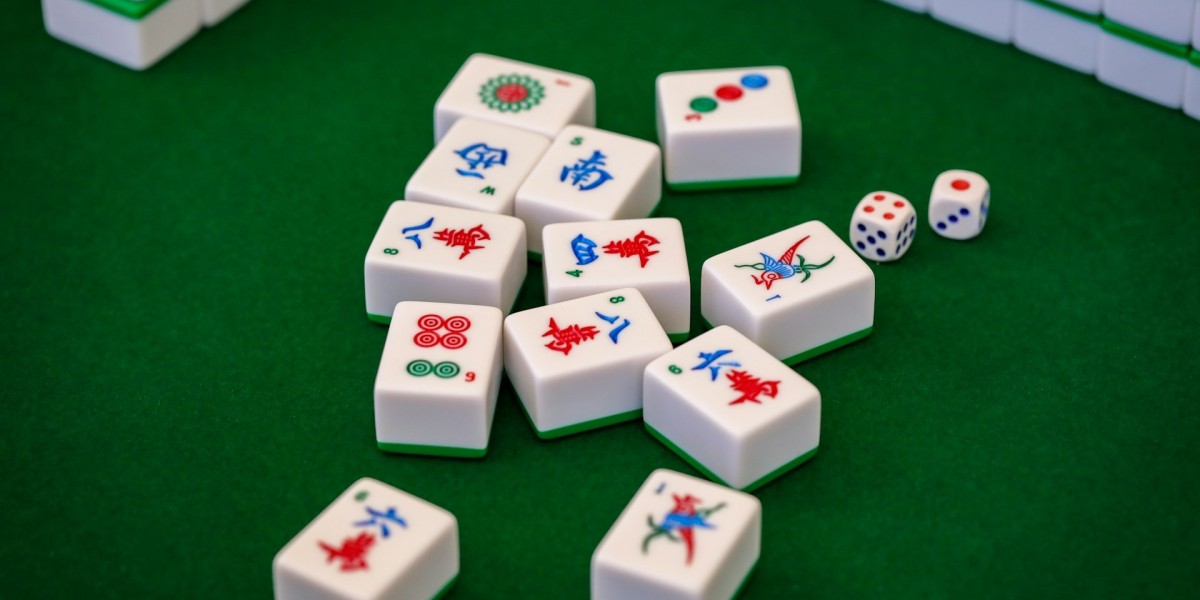
The first step to learning to play is to get familiar with the tiles. A standard set of tiles contains around 144 of them, although this number can vary, according to the variation that one is playing. Within these tiles, there are a few different types:
Suits
These are the numbered tiles, which are grouped into dots, bamboo, and characters, with one through nine of each of these three kinds, with four copies each of the numbers one through nine in each suit.
Honors
The honor tiles are the special-purpose tiles, which are divided into the winds and the dragons. The winds are north, east, west, and south, while the dragons are the red, green, and yellow dragons.
Bonus
Finally, some sets of Mahjong also contain extra tiles, such as the seasons and flowers in some sets, which provide extra points for players when they are collected in one's hand.
Take the time to spend a little bit of time learning how to identify the different tiles before starting to play. The faster one can identify them, the faster the game can get underway.
Understanding How the Game Works
Mahjong is played in a social setting, where between three and four people, most commonly, can sit around a table with the tiles and start playing. Each player has a hand of 13 tiles, and the game aims to collect the four sets and a pair that make up the winning hand.
On one's turn, one will draw a new tile from the wall and then discard one of the 13 in one's hand in order to keep the hand size small and manageable. One builds one's sets and melds, and then one can win the game by collecting the four sets and one pair that make up a winning hand. The details of the melds and the winning hands can vary, according to the type of Mahjong that one is playing, since American, Chinese, Japanese, and other variations all have their own sets of rules. One of the most exciting parts of the game is that when another player discards a tile that would complete one of one's melds, if one is able to complete it, one can call it out and then add it to one's melds in order to claim that set for one's hand.
Learning the Winning Hands
Winning hands can be one of the most difficult aspects to learn Mahjong in Austin. In most cases, most variations of the game will have cheat sheets that one can refer to in order to determine what hands are valid and how one should score them, particularly in the case of American Mahjong. As one becomes a more experienced player, recognizing the hands becomes second nature, and one finds oneself able to finish one's hands quicker, as one can see when one is about to complete a winning hand.
Some Common Beginner Mistakes
In most cases, it is fairly common for beginners to have a few problems at first, especially if one has been learning from a book or one has been playing with a very experienced player. One of the most common mistakes that one might make is that of discarding one's tiles too soon, which can give one's opponents an easy victory. It also might be tempting to make one specific hand instead of another if the other would have been safer, or to be unable to change strategy as one's tiles change. As one plays more of the game, it becomes apparent that one should play one's hand wisely, considering the possibilities before doing anything. It also might be tempting to be too cautious and too slow when making one's moves, although this is less of a problem, since it can help to slow the game down for one's more inexperienced opponents.
Practice Makes Perfect
As with most games, the easiest way to improve one's skills in Mahjong is to practice. The rules one finds confusing at first will become second nature after a few games, and the tiles one takes too long to identify will become faster and easier to handle with more experience. The more one plays, the more one learns the subtleties of the game, especially when it comes to reading one's opponents, predicting their possible hands, and knowing when to change up one's strategy in order to be prepared for whatever they are likely to do.
Austin's welcoming social environment makes learning the game much less intimidating than it might be elsewhere, and most players who come to Austin to play Mahjong have no trouble finding a game that suits their needs and that accommodates their skill level. No matter what one wants to gain from the game, it will only take a single session for one to fall in love with this fantastic activity.









