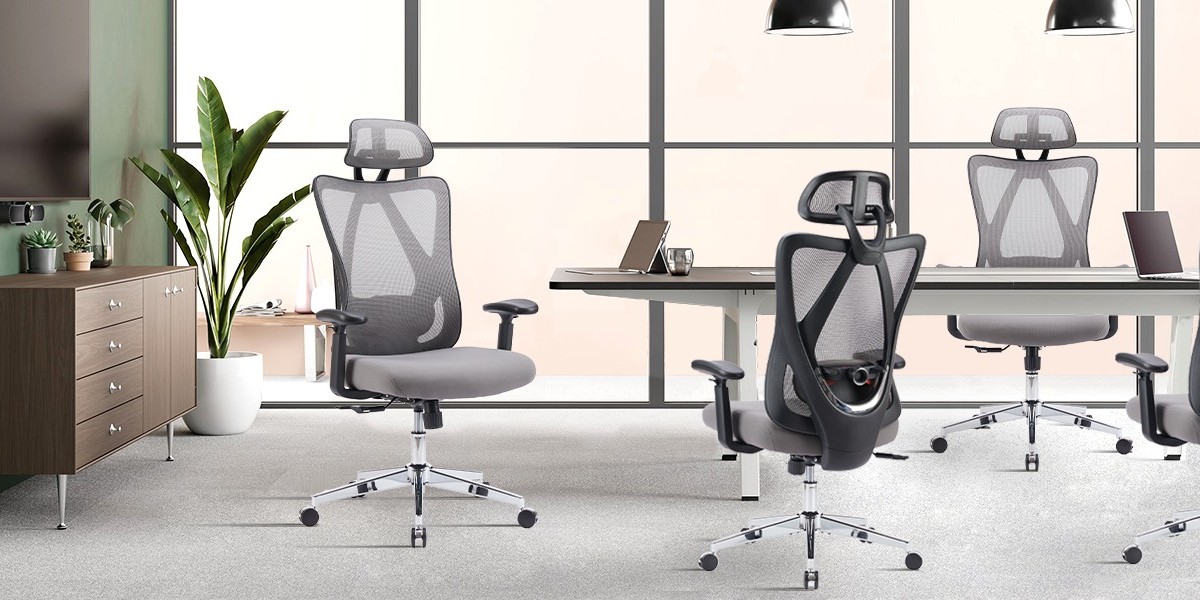


The Ergonomic Chair Market is experiencing notable developments as workplaces, home offices, educational institutions, healthcare facilities, and shared workspaces increasingly prioritize comfort and posture support. Modern users spend long periods sitting at desks, creating greater demand for chairs designed to improve sitting positions, reduce physical strain, and support productivity.
Manufacturers are responding by introducing improved ergonomic features, advanced materials, adjustable components, and contemporary designs. These changes are influencing how businesses and consumers evaluate office seating. Rather than focusing only on appearance and basic functionality, buyers are increasingly considering adjustability, durability, lumbar support, mobility, and personalized comfort.
Growing Focus on Adjustable Ergonomic Features
One of the most important Ergonomic Chair Market Developments is the increasing availability of adjustable features. Users have different body proportions, working styles, and desk configurations, making fixed seating less suitable for extended use.
Modern ergonomic chairs commonly offer adjustable seat height, armrests, backrest angles, lumbar support, and seat depth. Some advanced designs allow users to customize several components independently. This flexibility helps create a more personalized seating experience.
Manufacturers are also paying attention to synchronized movement. Chairs with mechanisms that allow the backrest and seat to move naturally with the user can provide greater flexibility throughout the working day. These features are becoming particularly relevant for professionals who alternate between focused computer work, meetings, reading, and collaborative activities.
Development of Dynamic Lumbar Support
Lumbar support has become a major area of product development. Traditional chairs often use fixed lumbar cushions, while newer models increasingly incorporate adjustable or dynamic support systems.
Dynamic lumbar mechanisms can respond to changes in sitting posture and movement. This approach allows the chair to provide support without forcing the user into one rigid position. Adjustable lumbar depth and height are also becoming more common, giving users greater control over their seating arrangement.
These developments are especially relevant in workplaces where employees may remain seated for several hours. Better support customization can make chairs more adaptable to individual preferences and different work environments.
Smart Features Entering Ergonomic Seating
Technology is creating another area of development within the Ergonomic Chair Market. Smart seating concepts are being explored to provide users with information about sitting behavior, posture, and chair usage.
Connected chairs can potentially incorporate sensors that detect sitting positions or movement patterns. Such technologies may be linked with applications that provide reminders to change positions, stand, or adjust the chair.
Although smart ergonomic seating remains an emerging segment, technological integration could become increasingly important as workplaces adopt connected office environments. Combining ergonomic design with digital tools may help organizations take a more proactive approach to employee comfort and workplace wellness.
Sustainable Materials and Manufacturing
Sustainability is becoming an important consideration in chair development. Manufacturers are exploring recycled materials, responsibly sourced components, recyclable plastics, and lower-impact manufacturing processes.
Some product developers are also focusing on designs that make chairs easier to repair, upgrade, disassemble, and recycle. Instead of replacing an entire chair when one component wears out, modular construction can allow specific parts to be replaced.
Sustainable packaging is another area receiving attention. Reduced packaging materials and recyclable packaging can help manufacturers address environmental concerns while improving supply-chain efficiency.
These developments appeal to organizations that are incorporating environmental considerations into procurement decisions. Businesses may increasingly evaluate seating products according to durability, material sourcing, lifecycle performance, and end-of-use recyclability.
Expansion of Home Office Ergonomics
The growth of remote and hybrid working has significantly changed expectations surrounding office furniture. Employees working from home increasingly seek professional-grade ergonomic seating that can support extended work sessions without occupying excessive space.
Manufacturers are responding with compact ergonomic chairs designed for residential environments. These products often combine adjustable features with visually appealing designs that fit bedrooms, study rooms, and multipurpose living spaces.
Space-efficient designs are particularly valuable for consumers who do not have dedicated offices. Foldable elements, compact bases, streamlined backrests, and smaller footprints can help ergonomic chairs fit into limited spaces while maintaining essential support features.
Customization Becomes More Important
Another significant development is greater product customization. Users increasingly expect seating solutions that accommodate individual preferences rather than relying on a one-size-fits-all approach.
Customization can involve seat dimensions, upholstery, armrest configuration, backrest design, support mechanisms, and finishing options. Organizations may also select different chair specifications for different employee groups depending on job responsibilities and workspace requirements.
Personalized ergonomic solutions can be particularly useful in industries where employees have different working patterns. A designer, software professional, customer service representative, and manager may spend similar amounts of time sitting but require different levels of movement and support.
Improvements in Materials and Cushioning
Material innovation is also contributing to Ergonomic Chair Market Developments. Manufacturers are experimenting with breathable mesh, pressure-distributing foam, flexible polymers, and hybrid materials.
Mesh seating remains attractive because it can encourage airflow and reduce heat buildup. Meanwhile, advanced cushioning materials can be designed to provide support while maintaining comfort during extended periods of use.
Durability is another priority. Commercial workplaces need chairs capable of handling frequent daily use, so manufacturers are developing stronger frames, improved casters, reinforced mechanisms, and longer-lasting upholstery.
Ergonomic Designs for Different Work Environments
Ergonomic seating is no longer limited to traditional corporate offices. Product development is expanding across coworking spaces, educational institutions, gaming setups, healthcare environments, libraries, studios, and home offices.
This diversification is encouraging manufacturers to develop chairs for specific use cases. Gaming-inspired ergonomic chairs may emphasize movement and extended-session comfort, while workplace models may prioritize professional aesthetics and adjustability.
Educational and institutional environments may place greater emphasis on durability and easy maintenance. This broadening application base is creating additional opportunities for product innovation.
Design and Aesthetics Evolve
Ergonomic chairs were once commonly associated with functional designs that prioritized support over appearance. Modern developments are changing this perception.
Manufacturers are increasingly combining ergonomic engineering with minimalist and contemporary aesthetics. Slim profiles, neutral finishes, refined frames, and premium upholstery can make ergonomic seating suitable for modern offices and residential interiors.
This combination of comfort and visual appeal is helping ergonomic chairs become part of broader interior design strategies rather than being viewed simply as workplace equipment.
Future Direction of Ergonomic Chair Market Developments
Future developments are likely to focus on greater personalization, intelligent features, sustainable materials, improved adjustability, and multifunctional designs. Manufacturers that can combine these elements while maintaining affordability and durability may be well positioned to attract a broader customer base.
The next generation of ergonomic chairs could become more responsive to individual users through sensor technology and adaptive mechanisms. At the same time, sustainability may influence material selection, manufacturing, packaging, repairability, and product lifecycle management.
As working environments continue to evolve, seating manufacturers will need to balance technological innovation with practical usability. Consumers are likely to favor products that deliver meaningful comfort improvements without unnecessary complexity.






