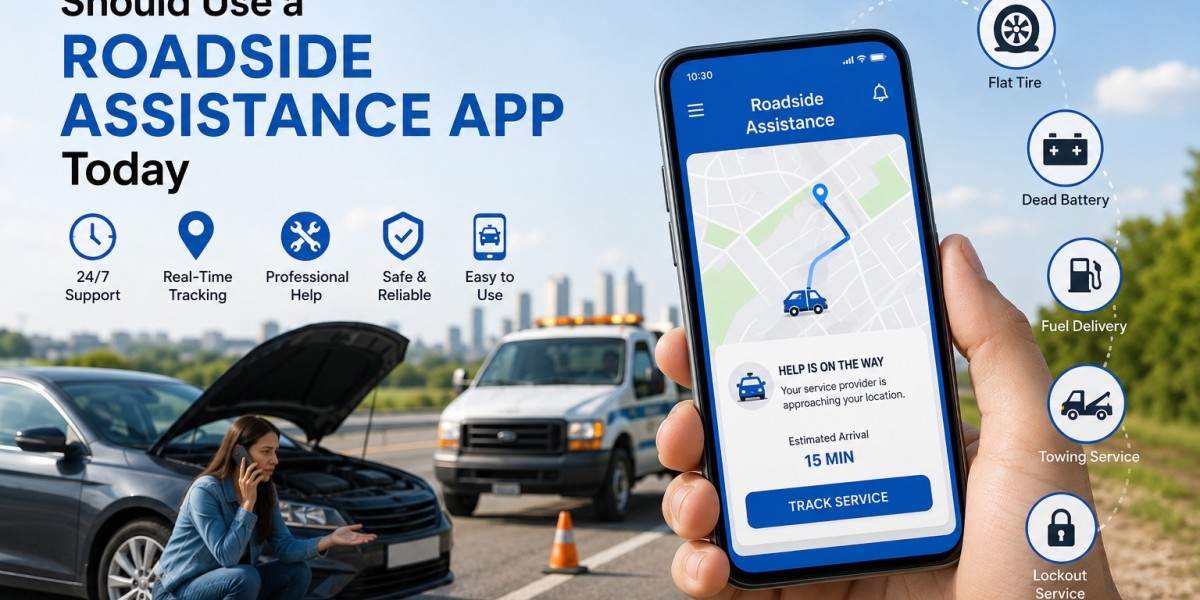


Unexpected vehicle problems can happen to anyone, regardless of driving experience or vehicle condition. A flat tire, drained battery, empty fuel tank, engine failure, or accidental lockout can quickly turn an ordinary journey into a stressful experience. Traditionally, drivers depended on phone directories, local mechanics, or recommendations from nearby people to find emergency help. This process often consumed valuable time and created unnecessary confusion.
Today, digital technology has transformed how drivers respond to roadside emergencies. Mobile applications designed specifically for roadside assistance allow users to request professional help within minutes, track service providers in real time, and receive updates until assistance arrives. These solutions improve communication between drivers and service providers while reducing delays during urgent situations.
As smartphones become an essential part of everyday life, roadside assistance applications are becoming equally important for vehicle owners. Their convenience, speed, and reliability make them valuable tools for handling unexpected incidents efficiently. Behind these solutions, advancements in roadside assistance app development have enabled businesses to create smarter platforms that simplify emergency support for both drivers and service providers.
Common Vehicle Emergencies That Require Immediate Professional Help
Every driver hopes for a trouble-free journey, but unexpected situations remain a reality on the road. Being prepared for these incidents can significantly reduce stress and improve safety.
Some of the most common roadside emergencies include:
Flat or damaged tires
Dead vehicle batteries
Engine overheating
Running out of fuel
Locked vehicles with keys inside
Mechanical breakdowns
Minor accident recovery
Towing requirements
Electrical system failures
In many of these situations, time plays a critical role. Waiting too long for assistance may increase safety risks, especially during bad weather, nighttime travel, or remote highway journeys.
Roadside assistance applications simplify the entire process by allowing users to report their location, describe the problem, and request appropriate support through a few simple steps. Instead of making multiple phone calls, drivers receive quick confirmation and estimated arrival times, reducing uncertainty during emergencies.
Essential Features That Make Assistance Apps More Reliable Daily
The effectiveness of a roadside assistance application depends on its ability to provide quick, accurate, and user-friendly services. Modern applications integrate several technologies that improve both customer experience and operational efficiency.
Important features commonly found in these applications include:
GPS-based location detection for accurate service requests.
Real-time tracking of service providers.
Instant request confirmation.
Multiple emergency service options.
Secure digital payment methods.
Driver and technician communication.
Service history and request records.
Push notifications for status updates.
User ratings and feedback.
Emergency contact integration.
These features work together to reduce delays and improve communication throughout the assistance process. Drivers gain greater confidence knowing they can monitor every stage of their request rather than waiting without updates.
Developers continue improving these capabilities by incorporating artificial intelligence, predictive analytics, and route optimization technologies that help dispatch nearby service providers more efficiently.
Why Mobile Technology Improves Driver Safety During Emergencies
Safety is one of the biggest advantages offered by roadside assistance applications. Roadside incidents often occur in unfamiliar locations where finding immediate help can be difficult. Mobile technology minimizes these challenges through faster communication and accurate location sharing.
Instead of leaving the vehicle to search for assistance, drivers can remain safely inside while requesting professional support. GPS technology automatically transmits their location, reducing the possibility of providing incorrect directions during stressful situations.
Additional safety benefits include:
Faster emergency response.
Reduced exposure to roadside hazards.
Better communication with service personnel.
Live tracking of arriving assistance.
Digital records of service requests.
Reliable access to verified service providers.
These advantages are particularly valuable for elderly drivers, solo travelers, families with children, and individuals driving long distances. Knowing help is only a few taps away creates greater peace of mind throughout every journey.
Business Opportunities Emerging From Digital Assistance Platforms Today
The growing popularity of digital roadside services has also created new opportunities for entrepreneurs and service providers. As consumer expectations continue shifting toward on-demand solutions, businesses are increasingly exploring digital platforms to improve customer engagement and operational efficiency.
Many entrepreneurs researching how to start roadside assistance business online recognize that technology enables faster customer acquisition, better resource management, and broader market reach.
Digital platforms allow businesses to:
Manage service requests efficiently.
Assign technicians automatically.
Track workforce performance.
Improve customer communication.
Analyze service demand patterns.
Maintain transparent billing records.
Expand operations across multiple regions.
These capabilities support long-term scalability while improving overall service quality. Companies adopting digital platforms are often better equipped to respond to changing customer expectations and increasing market competition.
Factors Influencing Development Planning and Overall Investment Needs
Building a reliable roadside assistance application requires careful planning across technical, operational, and business dimensions. Several factors influence project complexity, development timelines, and future maintenance requirements.
Key considerations include:
Platform selection
User interface design
GPS integration
Payment gateway implementation
Real-time communication features
Cloud infrastructure
Data security measures
Third-party service integrations
Administrative dashboard
Ongoing maintenance
Businesses frequently evaluate the roadside assistance app development cost based on these requirements. Costs vary depending on application complexity, supported platforms, security standards, customization requirements, and future scalability plans.
Organizations should focus not only on initial development expenses but also on long-term maintenance, software updates, cybersecurity improvements, and customer support infrastructure. Careful planning ensures that the application remains reliable as user expectations evolve over time.
Comparing Custom Platforms With Ready-to-Deploy Digital Solutions
Organizations entering the roadside assistance market generally choose between building a fully customized platform or adopting an existing framework that can be adapted to their requirements.
A white label roadside assistance app offers businesses a faster entry into the market by providing a pre-built foundation that can be customized with company branding and selected features. This option often reduces implementation time while maintaining essential functionality.
Custom-developed applications, on the other hand, provide greater flexibility for organizations requiring unique workflows, advanced integrations, or specialized customer experiences.
When comparing both approaches, decision-makers should consider:
Business objectives
Available budget
Launch timeline
Long-term scalability
Customization requirements
Technical maintenance capabilities
Future feature expansion
The most appropriate choice depends on organizational priorities rather than following a single universal solution.
Future Innovations Shaping Smarter Roadside Service Experiences Ahead
Roadside assistance technology continues evolving alongside advancements in connected vehicles, artificial intelligence, and smart transportation systems. These innovations are expected to improve response times, service accuracy, and overall customer satisfaction.
Emerging developments include:
AI-powered request prioritization.
Predictive vehicle diagnostics.
Connected vehicle integration.
Voice-controlled emergency requests.
Automated dispatch optimization.
Electric vehicle roadside support.
Remote technical assistance.
Enhanced cybersecurity protections.
As automotive technology advances, assistance platforms will become increasingly intelligent and proactive. Rather than simply responding to emergencies, future systems may predict mechanical issues before breakdowns occur, allowing drivers to address maintenance needs earlier.
Continued investment in roadside assistance app development is expected to support these innovations by integrating advanced technologies that improve operational efficiency and user safety across increasingly connected transportation networks.
Practical Reasons Every Driver Benefits From Digital Road Support
Road travel will always involve some level of unpredictability. Mechanical failures, weather conditions, and unforeseen circumstances can affect even the most experienced drivers. Having immediate access to reliable roadside assistance through a mobile application significantly reduces the stress associated with these situations.
Beyond emergency response, these applications provide greater convenience, transparency, and confidence throughout every journey. Features such as real-time tracking, secure communication, digital service records, and faster response coordination contribute to a safer and more efficient driving experience.
As mobile technology continues advancing, roadside support solutions are becoming an increasingly practical part of responsible vehicle ownership. Well-designed platforms developed through modern roadside assistance app development practices are helping reshape how drivers access emergency services while improving communication between customers and service providers.
Conclusion
Roadside emergencies are unpredictable, but preparation can make a significant difference in how effectively they are handled. Mobile assistance applications have transformed emergency support by making it faster, more transparent, and easier to access whenever help is needed. From improving driver safety to streamlining service coordination, these digital solutions continue to enhance the overall driving experience. As transportation technology evolves, adopting reliable digital tools will remain an important step toward safer, more confident, and more efficient travel for drivers everywhere.