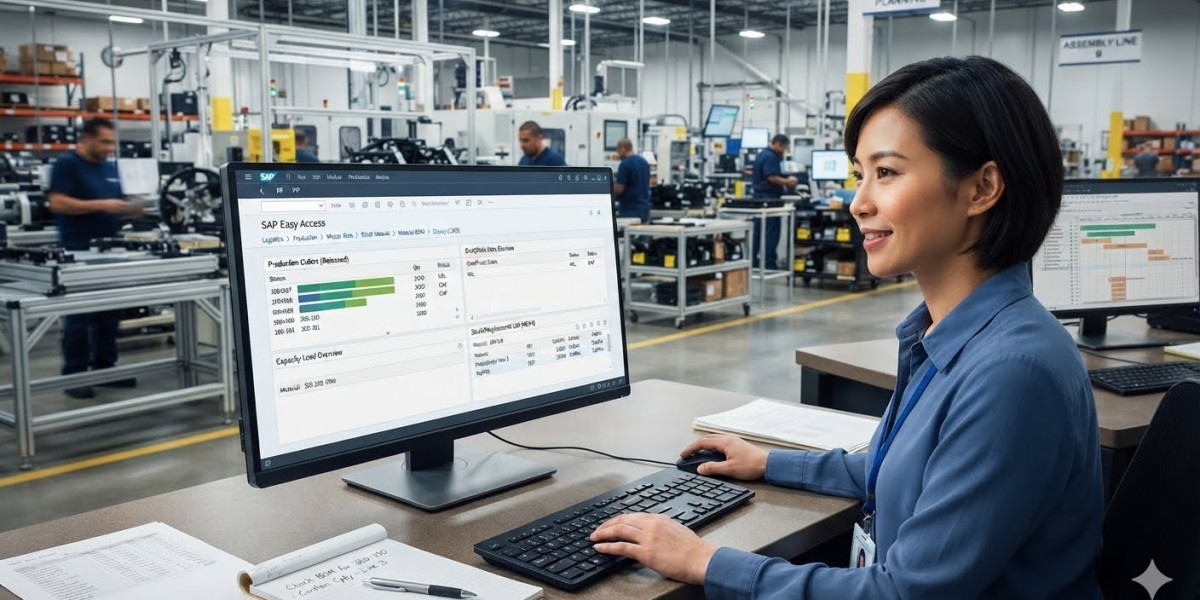


Manufacturing companies live and die by their ability to plan production accurately knowing what to make, how much to make, and when it needs to be ready. SAP Production Planning (PP) is the module that makes this possible inside the SAP ecosystem, connecting demand forecasts, material requirements, capacity planning, and shop floor execution into a single coordinated system. But not everyone needs to master it. So who actually benefits from choosing to learn SAP PP module skills, and is it the right move for your career?
What the SAP PP Module Actually Does
Before deciding whether to learn SAP PP module concepts, it helps to understand its scope. SAP PP handles the entire production lifecycle: demand management, Material Requirements Planning (MRP), Bills of Material (BOM), work centers, routings, production orders, and capacity planning. It integrates tightly with Materials Management (MM), Sales and Distribution (SD), and Quality Management (QM), making it one of the more interconnected modules in the SAP suite. Because of this breadth, the people who gain the most from learning it tend to come from a fairly specific set of professional backgrounds.
Production and Manufacturing Professionals
The most obvious candidates are people already working in production planning, manufacturing operations, or shop floor management. If you currently create production schedules, manage work orders, or coordinate between planning and execution using spreadsheets or legacy systems, learning SAP PP module functionality gives you a structured, integrated way to do your existing job. Professionals in this category typically pick up the module fastest because they already understand the underlying manufacturing concepts discrete, process, and repetitive manufacturing that SAP PP is built to model.
Supply Chain and Operations Managers
Supply chain professionals responsible for demand planning, inventory optimization, or procurement coordination also stand to gain significantly. SAP PP's MRP functionality directly determines purchasing and inventory decisions, so operations managers who understand how planning drives material flow can make far better cross-functional decisions. For this group, learning the module isn't about becoming a hands-on configurator it's about understanding the planning logic well enough to interpret system outputs and troubleshoot supply chain bottlenecks.
Fresh Graduates and Career Switchers in ERP
SAP consulting remains a strong entry point into corporate IT and business consulting careers, and PP is consistently one of the most in-demand modules because nearly every manufacturing company running SAP needs PP consultants. Engineering graduates particularly those from mechanical, industrial, or production engineering backgrounds often find PP a natural fit because the module's logic mirrors what they studied academically: BOMs, routings, capacity balancing, and shop floor scheduling. For career switchers moving from a manufacturing or operations role into IT consulting, SAP PP offers a credible bridge that leverages domain knowledge rather than discarding it.
SAP Consultants Expanding Their Skill Set
Consultants already working in adjacent modules MM, SD, QM, or even PP's newer counterpart, SAP Digital Manufacturing often add PP to become more versatile on integrated implementation projects. Because production planning touches procurement, sales order fulfillment, and quality inspection, cross-module fluency is highly valued by employers and clients. A consultant who can speak to both MM and PP, for instance, is far more useful during integration testing and cutover planning than a single-module specialist.
IT and Functional Analysts Supporting Manufacturing Clients
Business analysts and IT support staff who work with manufacturing clients even if they don't configure SAP themselves benefit from understanding PP terminology and process flows. This knowledge improves communication with end users, speeds up issue diagnosis, and makes requirement-gathering more accurate during upgrades or new implementations.
Who Might Want to Look Elsewhere
SAP PP isn't the right starting point for everyone. Professionals focused purely on finance, HR, or customer relationship management will find little overlap with their daily work, and the learning curve while manageable is steepest for those with no manufacturing or supply chain background at all. If your target industry is services-based rather than production-based, modules like SAP SD, FI, or CRM may offer a more direct career payoff.
Making the Decision
If you're weighing whether to best learn SAP EHS training course skills, ask yourself three questions: Does your current or target industry involve physical manufacturing? Do you already understand production concepts like BOMs, routings, or MRP? And are you aiming for a career in SAP consulting, supply chain leadership, or manufacturing operations? A "yes" to any of these makes SAP PP a strong investment. The module rewards people who bring some domain context to the table, and it opens doors across consulting firms, manufacturing companies, and IT departments that support production-driven businesses making it one of the more durable, industry-anchored specializations within the broader SAP ecosystem.








