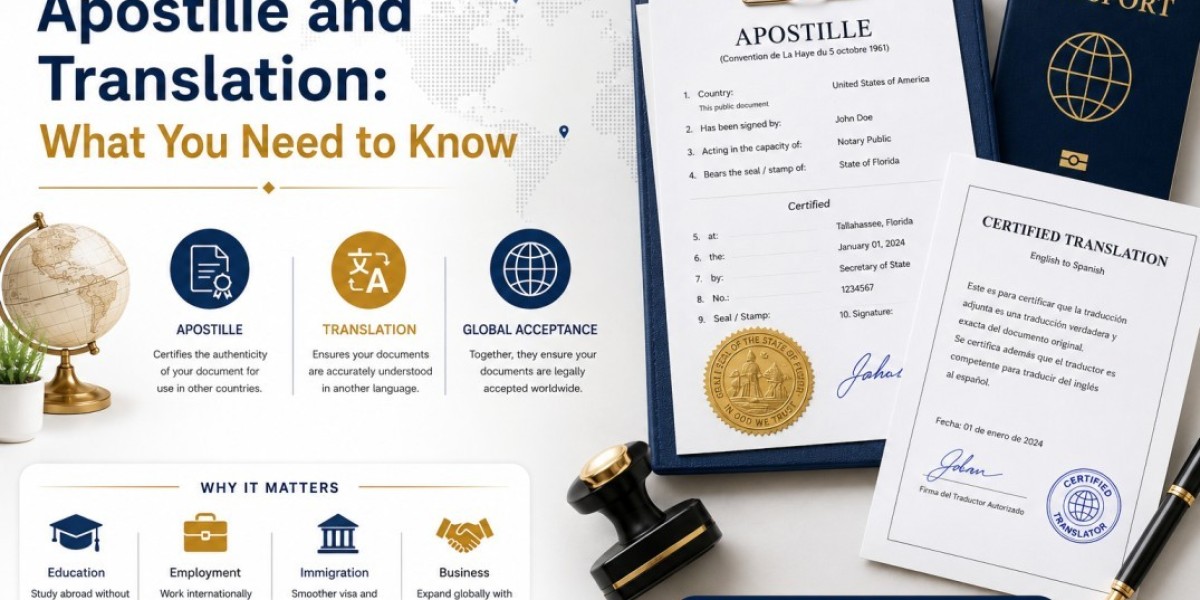


Two commonly required services are apostille and certified translation. Although they are different processes, they are often needed together when documents are being used internationally.
What Is an Apostille?
An apostille is a form of authentication used to verify the origin of a public document for use in another country that recognizes the Hague Apostille Convention.
The purpose of an apostille is to authenticate the signature, seal, or stamp appearing on a document. It helps authorities in another participating country recognize that the document has been properly issued or authenticated.
Documents that may require an apostille can include:
Birth certificates
Marriage certificates
Educational certificates
Degree certificates
Academic transcripts
Power of attorney documents
Affidavits
Business documents
Legal documents
The exact requirements depend on the document type, destination country, and purpose for which the document will be used.
Why Do You Need Translation With an Apostille?
An apostille confirms the authenticity of a document, but it does not automatically translate the document into another language.
For example, imagine that you have an educational certificate issued in India and need to submit it to an organization in another country. The receiving authority may require the certificate to be authenticated and translated into its required language.
In such cases, the process may involve:
Original Document → Authentication/Apostille → Certified Translation → Submission
However, the order and requirements can vary. Some authorities may require the translation to be completed before authentication, while others may have different procedures.
Therefore, it is important to check the requirements of the organization receiving the document before beginning the process.
Apostille vs. Legalization
Apostille and legalization are related to document authentication, but they are not interchangeable in every situation.
An apostille is generally used when the document is intended for a country that participates in the Hague Apostille Convention. When the destination country or specific document does not fall under the applicable apostille process, consular legalization or another authentication procedure may be required.
For this reason, applicants should not assume that every international document only needs an apostille.
Understanding the destination country's requirements can help prevent problems such as rejected documents, repeated submissions, and unnecessary processing time.
When Might You Need Apostille and Translation?
There are many situations where internationally authenticated and translated documents may be required.
Studying Abroad
Students applying to foreign universities may need educational certificates, degree certificates, transcripts, and other academic documents. Depending on the institution and country, these documents may need authentication and translation.
Immigration and Visa Applications
Immigration authorities may request translated versions of personal, educational, employment, or legal documents. In some cases, authentication may also be required.
International Employment
Professionals moving to another country for employment may need to submit educational qualifications, experience documents, professional certificates, or other official paperwork.
Marriage or Family Procedures
Birth certificates, marriage certificates, affidavits, and other personal documents may need authentication and translation when they are submitted to authorities in another country.
International Business
Companies working across borders may need authenticated and translated contracts, incorporation documents, certificates, powers of attorney, and other corporate paperwork.
Why Professional Translation Matters
Official documents often contain important information such as names, dates of birth, registration numbers, qualifications, addresses, signatures, and legal terminology. Even a small translation error can create confusion or result in a document being questioned by the receiving authority.
Professional translators understand the importance of maintaining consistency and accuracy throughout official documents. They can also help ensure that the formatting and terminology are appropriate for the intended purpose.
If you need assistance with document translation, certified translation, apostille, or legalization, you can explore Honey Translations' professional translation services. A professional service can help you understand the document preparation process and identify the type of translation support you may need.
Common Documents That May Require Translation
Different types of documents may require professional translation depending on the destination country.
Educational documents: Degree certificates, diplomas, mark sheets, transcripts, and academic records are commonly translated for education or employment purposes.
Personal documents: Birth certificates, marriage certificates, affidavits, and other personal records may be required for immigration or legal procedures.
Legal documents: Contracts, court documents, powers of attorney, and other legal paperwork often require accurate terminology and careful translation.
Business documents: Companies expanding internationally may need translated incorporation documents, agreements, certificates, and corporate records.
How to Prepare Documents for International Use
Before starting the apostille or translation process, follow a few basic steps.
First, identify the country where the document will be submitted. Next, contact the receiving organization and confirm whether an apostille, legalization, certified translation, or another form of authentication is required.
You should also verify whether the translation must be completed by a specific type of translator or follow a particular certification format.
Make sure that the spelling of names, dates, and other personal information is consistent across all documents. If the receiving authority has provided specific instructions, follow them carefully.
For businesses, students, and professionals handling multiple documents, working with a provider that offers professional document translation and international document support can make the process easier to manage.
Benefits of Using a Professional Service
Working with an experienced translation provider can offer several advantages:
Better accuracy in official documents
Consistent translation of names and terminology
Professional handling of sensitive documents
Support for different document types
Reduced risk of avoidable translation errors
Assistance with international document requirements
However, it is still important to verify the exact requirements with the relevant embassy, government authority, university, employer, or other receiving organization. Requirements can vary depending on the country and purpose of the document.
Final Thoughts
Apostille and translation serve different purposes, but both can be important when official documents are being used internationally. An apostille helps authenticate the origin of a document, while a certified translation makes the document understandable and acceptable to authorities that require another language.
Before submitting any document, always check the latest requirements of the destination country and receiving authority. When professional translation or document authentication support is required, choosing an experienced provider can help make the international document process more straightforward.