

SEO has never been just about finding the right keywords. Anyone who has worked on a large website knows that rankings are influenced by dozens of connected factors. Technical health, internal links, topical coverage, content quality, backlinks, search intent, and competition all affect the final result.
That is where the difference between traditional SEO software and newer approaches such as QSaaS services becomes interesting. Instead of looking at each SEO signal in isolation, QSaaS aims to understand how those signals interact and what those relationships mean for a particular website.
For businesses managing large websites or operating in highly competitive markets, this shift can change how SEO decisions are made.
Traditional SEO Tools Give You Data. What You Do With It Matters
Tools such as keyword trackers, backlink platforms, and technical crawlers are useful for identifying problems. They can tell you which pages are ranking, where broken links exist, which keywords have lost visibility, or how many referring domains point to a website.
The challenge begins after the reports are generated.
An SEO professional still needs to connect the dots.
Imagine discovering that several pages have weak content, a group of commercial pages has poor rankings, and the website has a strong backlink profile. Looking at those findings separately does not necessarily tell you what should be fixed first.
The real question is whether these issues are connected.
Perhaps the weak pages belong to the same topic as an important commercial page. Perhaps their content overlaps, creating unclear topical signals. Maybe internal links are distributing authority poorly. A standard report may identify each problem, but understanding the relationship between them requires human analysis.
This is one of the areas where QSaaS seo services take a different approach.
QSaaS Looks at Relationships Between SEO Signals
The central idea behind QSaaS is relatively simple. SEO signals do not operate independently.
A website's technical structure can influence crawling and indexing. Internal linking affects how relevance and authority are distributed. Content depth contributes to topical understanding. External authority can strengthen important pages. Search intent determines whether a page is actually suitable for a query.
These factors overlap.
Instead of asking only, "Which pages have thin content?" a more useful analysis might ask, "Are these thin pages affecting the topical authority of another page that generates revenue?"
That is a much more strategic question.
This distinction matters because SEO teams often have more problems than they have time to fix. A website audit might produce hundreds of recommendations, but not every recommendation deserves equal attention.
The value of connected analysis is that it can help identify which changes are likely to have the greatest impact.
From SEO Diagnosis to Strategic Recommendations
There is an important difference between identifying an issue and understanding its business impact.
Suppose an e-commerce website has three hundred indexed pages. A traditional crawler may identify duplicate titles, missing descriptions, weak content, redirect chains, and other technical concerns.
Those findings are useful, but they do not automatically establish priority.
A more advanced analytical approach can examine how those issues relate to important sections of the website. For example, a group of pages with overlapping content may be weakening topical signals around a commercial category. Correcting that cluster could potentially be more valuable than fixing dozens of minor metadata issues.
This is where SEO analysis starts moving from diagnosis toward decision-making.
The objective is no longer to produce the longest audit. It is to determine which changes are most likely to improve organic performance.
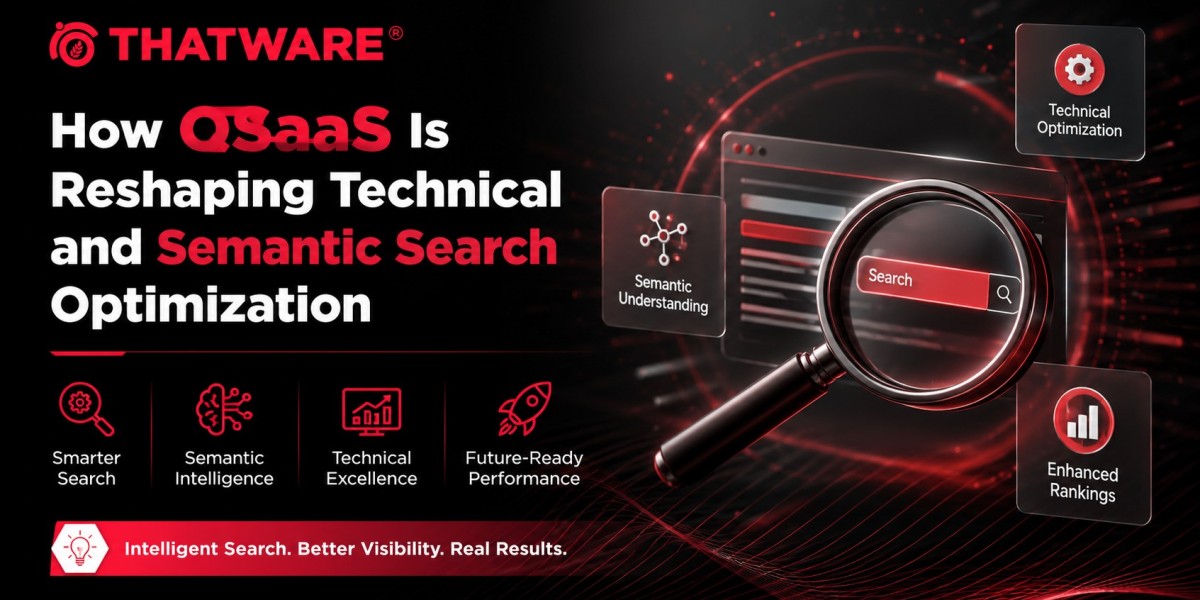
Technical SEO and Semantic SEO Are Becoming More Connected
Technical SEO and semantic SEO were often treated as separate areas. Technical teams focused on crawling, indexing, redirects, performance, and site architecture. Content teams concentrated on keywords, topics, entities, and search intent.
Modern search makes that separation less practical.
Search engines increasingly need to understand relationships between pages, entities, concepts, and user intent. A technically perfect page with weak topical relevance may still struggle. Likewise, excellent content can underperform when search engines cannot properly crawl, index, or interpret the site structure.
This is why businesses exploring semantic SEO optimization tools for AI search engines should look beyond keyword volume and ranking positions.
Semantic optimization is increasingly about context.
A page should make sense within the larger topic covered by the website. Supporting pages should strengthen the main subject rather than compete with it. Internal links should create meaningful relationships. Content should answer the questions users are likely to ask before and after the primary query.
Who Benefits Most From QSaaS?
QSaaS is not automatically necessary for every website.
A small local business with a few service pages may be perfectly comfortable using traditional SEO platforms. If the website has a straightforward structure and competition is manageable, a skilled SEO professional can often make effective decisions using established tools.
The situation changes when the website becomes large or the competitive environment becomes more difficult.
Enterprise e-commerce websites may have thousands of product and category pages. Publishers may manage enormous content libraries. SaaS companies may compete across multiple product categories and international markets.
At this scale, manual analysis becomes increasingly difficult.
There may be thousands of relationships between pages, keywords, entities, links, and competitors. Reviewing each signal separately can consume significant time, while the most important insight may be hidden in the relationship between several signals.
That is where QSaaS services can become more useful.
Implementation Is More Important Than Buying the Tool
One mistake businesses can make is assuming that purchasing an advanced SEO platform automatically produces better SEO decisions.
It does not.
The quality of the output depends heavily on the quality of the setup.
A QSaaS platform needs context. That may include the website's primary business goals, important commercial pages, competitors, target markets, keyword priorities, and other factors that influence how SEO performance should be evaluated.
If those inputs are poorly configured, the recommendations may not reflect the actual business priorities.
That means implementation deserves serious attention. Teams should spend time defining what success looks like before relying heavily on automated analysis.
SEO Analysts Need to Learn a New Way of Reading Data
There is also a learning curve.
SEO professionals who have spent years working with conventional dashboards are accustomed to reading individual metrics. They know what a ranking drop means, how to interpret backlink growth, and how to prioritize common technical issues.
Connected analysis requires another level of thinking.
Instead of simply asking whether a metric has improved, analysts need to understand why several signals are moving together. They also need to question recommendations and compare them against real business conditions.
A practical transition strategy is to use QSaaS alongside existing SEO platforms. Teams can compare the findings, investigate differences, and gradually develop an understanding of how the additional analytical layer changes their decision-making.
Human judgment remains important. Better data does not eliminate the need for experienced SEO professionals.
The Cost Question: Is Better Analysis Worth It?
The answer depends on the cost of making the wrong decision.
For a small website, spending heavily on advanced analytical infrastructure may not make financial sense. A conventional SEO toolkit combined with strong expertise can be enough.
For a large company, the calculation can be very different.
If an incorrect SEO decision affects thousands of pages, a major product category, or a significant source of organic revenue, the cost can quickly become substantial. In that environment, investing in better analysis may be less expensive than repeatedly acting on incomplete information.
This is the real business case for QSaaS.
It is not simply about having more features. It is about improving the quality of decisions when the SEO problem is too complex to understand through isolated metrics alone.
What the Future of SEO Analysis May Look Like
Search optimization is moving toward a more connected model. Technical health, content quality, semantic relationships, entity understanding, internal architecture, authority, and user intent increasingly influence one another.
That does not mean traditional SEO tools are becoming obsolete. They remain valuable for monitoring individual signals and performing essential diagnostics.
The change is in how those signals are interpreted.
For straightforward websites, conventional tools may continue to provide everything an SEO team needs. For complex websites competing in crowded markets, however, understanding relationships between signals can provide a significant analytical advantage.
Businesses such as ThatWare are part of this broader shift toward more advanced SEO analysis, where technical optimization and semantic understanding are considered together rather than treated as completely separate disciplines. As search becomes more contextual and AI-driven, the ability to understand the connections within a website may become just as important as tracking individual rankings.









